

Last updated October 16, 2026
 AC repair
 Furnace & heating
 Ductless mini splits
 Carrier
 Trane
Trane Goodman
Seasonal tune-up and full diagnostic on your Carrier, Trane, or Goodman system - readings shown to you before any repair is proposed
Diagnosis first, numbers second - you approve the repair price before a single part goes in.
Get your free estimateHVAC Warning Signs: A Atlanta Homeowner’s Reference Guide
The No. 1 phrase Atlanta HVAC technicians hear before a major repair isn’t “it stopped working.” It’s “it’s been doing this for a while.” In our experience across Atlanta neighborhoods from Buckhead to East Atlanta Village, most compressor failures, refrigerant leaks, and blower motor burnouts send detectable signals 30 to 90 days before the unit quits. Our Complete Guide to HVAC in Atlanta teaches you to read those weak signals before they become a $4,000 repair. You’ll learn what specific sounds, smells, and utility-bill patterns mean, which ones need same-day attention, and what to document so your diagnostic call is fast and cheap instead of slow and expensive.
Styles & brands we work with
Quick Answer
HVAC warning signs in Atlanta fall into four categories: what you hear (short cycling, clicking, grinding), what you smell (musty, burning, sweet/chemical), what you see (ice on refrigerant lines, water pooling under the air handler, a yellow pilot flame), and what you feel (humid air even while the AC runs). Any burning smell, refrigerant leak odor, or total system shutdown warrants a same-day call. Most other signs can wait 24 to 48 hours if you document them properly. Call (912) 616-5481 for a free estimate on anything that concerns you.
Table of Contents
- Symptom-to-Cause Reference Table: What Atlanta Technicians Listen For
- What You Hear: Short Cycling, Clicking, Grinding, and Hissing
- What You Smell: Musty, Burning, and Sweet Chemical Odors
- What You See: Ice, Water, and Flame Color
- What You Feel: Humidity, Hot Spots, and Weak Airflow
- Atlanta-Specific Warning Signs Generic Guides Miss
- The Utility Bill Pattern That Signals Failure 60 Days Out
- Warning Sign Triage: What Can Wait Until Monday vs. What Needs Same-Day Service
- What to Document Before the Technician Arrives
- Common Mistakes to Avoid
- When to Call a Professional
- Frequently Asked Questions
- The Bottom Line
Symptom-to-Cause Reference Table: What Atlanta Technicians Listen For
Every HVAC symptom maps to a likely cause. Here’s the reference table we use when a Atlanta homeowner calls and says “my system is doing something weird.” Read across from symptom to likely cause to ballpark repair cost. These are the numbers our technicians quote most often in the field.
| Symptom | Likely Cause | Typical Repair Range in Atlanta | Urgency |
|---|---|---|---|
| Short cycling (on/off every 5-10 min) | Oversized unit, clogged filter, refrigerant leak, bad thermostat | $75-$400 | Can wait 24-48 hrs |
| Clicking at startup | Failing capacitor or relay | $150-$350 | Same-day if AC won’t start |
| Grinding or metal-on-metal | Blower motor bearings failing | $400-$800 | Call within 48 hrs |
| Hissing near indoor coil | Refrigerant leak | $200-$1,500 depending on leak location | Call within 24 hrs |
| Musty smell from vents | Mold or mildew on evaporator coil or ductwork | $150-$600 | Call within a week |
| Burning smell at startup | Dust burning off heat strips (normal in fall) or electrical short (dangerous) | $0-$500 | If smell persists >10 min, call same-day |
| Sweet/chemical smell | Refrigerant leak | $200-$1,500 | Same-day if strong |
| Ice on refrigerant lines | Low refrigerant or restricted airflow | $150-$1,500 | Call within 24 hrs |
| Water under air handler | Clogged condensate drain line | $100-$300 | Call within 48 hrs |
| Yellow pilot flame (furnace) | Incomplete combustion, possible carbon monoxide risk | $100-$400 | Same-day, shut off gas if flame is yellow |
| Humid air while AC runs | Refrigerant undercharge, oversized system, failing compressor | $150-$2,500 | Call within 48 hrs |
These ranges reflect what Atlanta homeowners actually pay, not national averages that don’t account for our heat and humidity load. Every repair from Halden Heating and Air Atlanta home comes with a written price before work starts and a written guarantee on the repair itself.
What You Hear: Short Cycling, Clicking, Grinding, and Hissing
Your HVAC system has a sound signature. When it changes, pay attention. Here’s what each sound means in plain English.
Short Cycling
Short cycling means your system turns on, runs for 5 to 10 minutes, shuts off, then starts again 10 minutes later. It’s the most common sound-related warning sign we see in Atlanta homes. In most cases, the cause is one of three things. A clogged air filter restricts airflow, causing the system to overheat and shut down as a safety measure. A refrigerant leak drops the system’s charge, causing pressure sensors to trip. Or the system was oversized when it was installed, which is common in older Atlanta homes where a previous owner added square footage without resizing the AC. Short cycling costs you money in two ways: it roughly doubles the number of start cycles per day, which is the hardest thing on a compressor, and it raises your power bill because startup draws more current than steady running.
Clicking at Startup
A single click when the thermostat calls for cooling is normal, that’s the relay closing. Repeated clicking, or clicking that doesn’t lead to the system starting, usually points to a failing capacitor. The capacitor is the component that gives the compressor and fan motor a voltage boost to start spinning. In Atlanta’s heat, capacitors degrade faster than in cooler climates because heat accelerates chemical breakdown inside the part. A failing capacitor is one of the cheapest fixes a technician can make, usually $150 to $350, but if you ignore it, the compressor eventually tries to start without that boost and burns out entirely. That’s a $2,000 to $4,000 repair. If your system clicks but won’t start, call anyone you trust within the day.
Grinding or Metal-on-Metal
Grinding is the sound of failing bearings in the blower motor. The blower motor is what pushes conditioned air through your ducts. When its bearings wear out, you’ll hear a low rumble or high-pitched screech from the indoor unit. This isn’t a “wait and see” situation. A blower motor that seizes entirely leaves you with no airflow at all, and in July in Atlanta, that’s a health risk, not an inconvenience. Expect to pay $400 to $800 for a blower motor replacement depending on the brand. We service Goodman, Rheem, York, and Lennox systems regularly, and blower motor availability in Atlanta is usually good enough for same-week replacement.
Hissing Near the Indoor Coil
Hissing is almost always refrigerant escaping from a leak. Refrigerant is the coolant that makes cold air possible. It’s not supposed to escape, ever. The system is a sealed loop. When you hear hissing, that loop has a hole. The fix is finding the leak, repairing it, and recharging the system to the manufacturer-specified level. Depending on where the leak is, this runs $200 to $1,500. Leaks in the evaporator coil, which sits inside your air handler, are the most expensive because the coil often needs replacement. Leaks in the line set or at fittings are cheaper to fix. What matters is not ignoring the hiss. A system running low on refrigerant works harder, runs longer, and eventually kills the compressor.
What You Smell: Musty, Burning, and Sweet Chemical Odors
Smell is the sense homeowners trust least but should trust most. Here’s what three specific HVAC odors mean in a Atlanta home.
Musty or Damp Smell from Vents
A musty smell from your vents usually means mold or mildew is growing on the evaporator coil inside your air handler. Here’s why this happens so often in Atlanta. Our summer humidity sits between 70 and 90 percent for weeks at a time. When your AC runs, condensation forms on the coil by design. That condensation is supposed to drain away through the condensate line. But when the line clogs, or when the system short cycles and doesn’t run long enough to drain properly, moisture pools and mold grows. The smell that results is that damp basement odor coming out of your vents. The fix has two parts: cleaning the coil and clearing the drain line. Most AC repair in Atlanta technicians handle this as a standard call, usually $150 to $600 depending on access and the severity of the growth.
Burning Smell at Startup
A burning smell the very first time you run the heat each fall is usually dust burning off the heat strips. That’s normal and goes away in 10 to 15 minutes. But a burning smell that persists, or that smells like hot plastic or electrical fire, is a different thing entirely. That’s a wiring issue, a failing motor, or a component overheating. If the burning smell doesn’t fade after the first 10 minutes of operation, shut the system off at the thermostat and call a professional. Electrical problems inside an HVAC cabinet don’t self-resolve. They escalate.
Sweet or Chemical Smell
A sweet, chemical, or ether-like smell near your indoor unit or coming from your vents is refrigerant. Some people describe it as smelling like nail polish remover or a sweeter version of paint thinner. Refrigerant is what your system uses to produce cold air, as we covered above. If you smell it, you have a leak. Refrigerant leaks should be treated as a same-day or next-day call in Atlanta because running a system low on refrigerant during our heat season puts the compressor under stress it wasn’t designed for. Every week you run low costs you compressor lifespan.
What You See: Ice, Water, and Flame Color
Visual warning signs are the easiest to catch because you don’t need any tools. You need a flashlight and about five minutes.
Ice on Refrigerant Lines
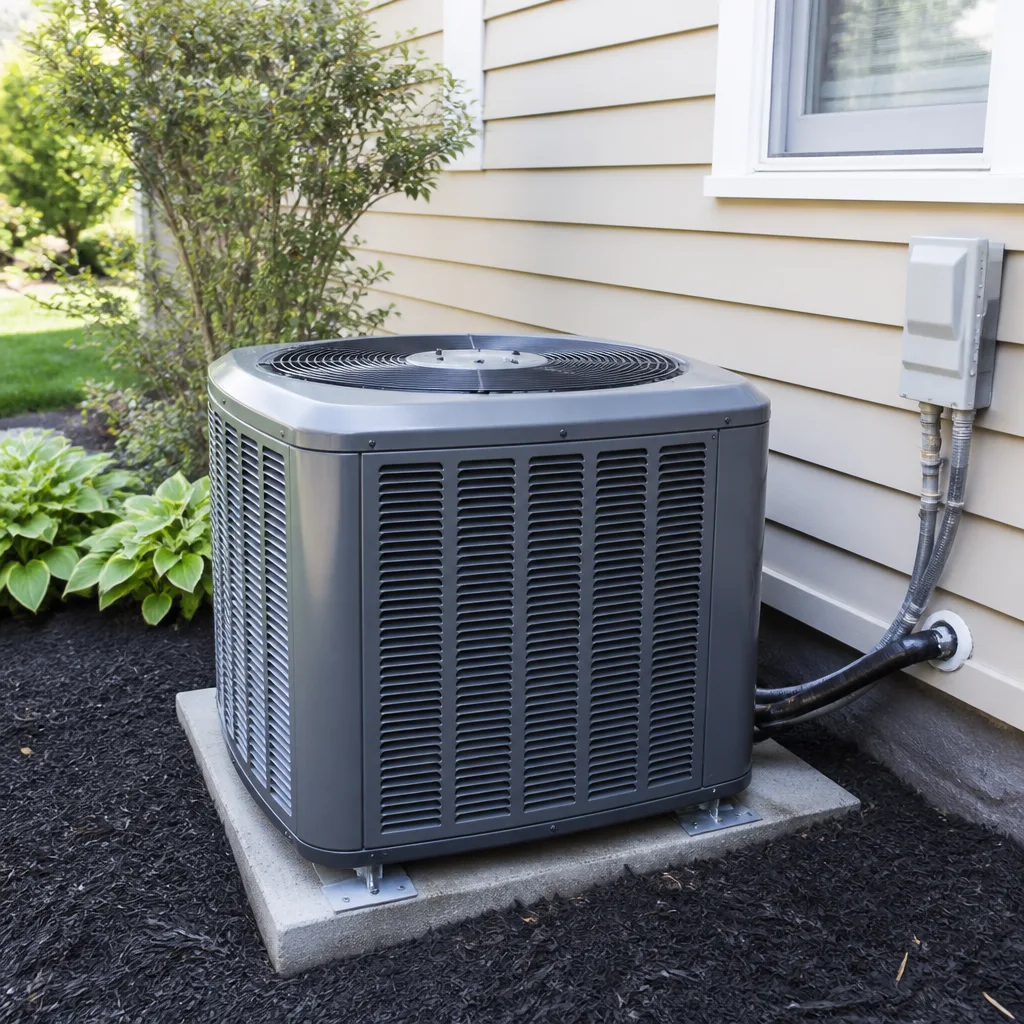
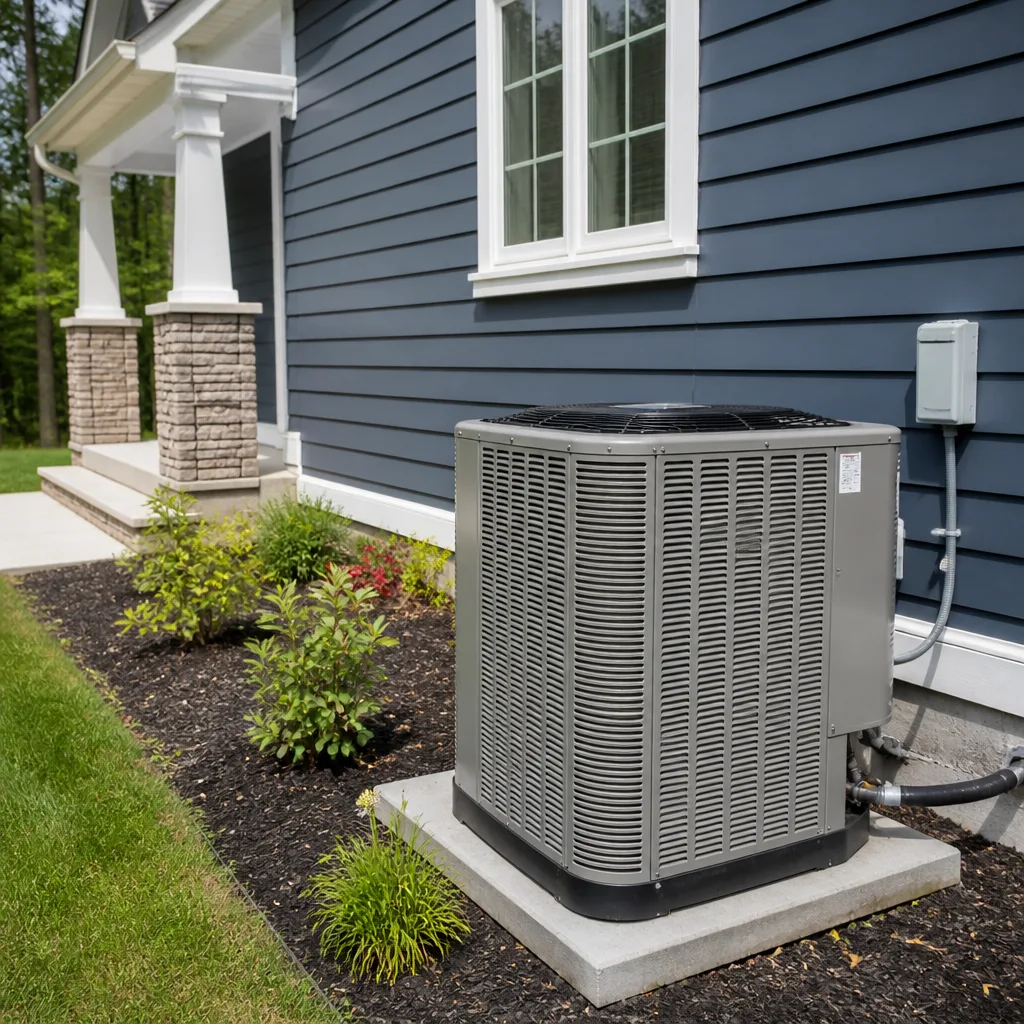
Your outdoor unit has two copper lines running into it. One is insulated, one is bare. If you see ice or frost on either line, your system has a problem: either refrigerant is low or airflow is restricted. In a properly running system, the larger insulated line should be cold but never frozen. Ice means the refrigerant temperature inside the line has dropped below freezing, and that means something is off. It’s counterintuitive, but ice on your AC line is not a sign your system is “extra cold.” It’s a sign your system is struggling. Most Atlanta homeowners who call us about ice on the lines are seeing the early stage of a refrigerant leak. The fix requires a technician to recover, repair, and recharge. Running the system with ice on the lines is how compressors die.
Water Under the Air Handler
Water pooling under your indoor unit (usually in a closet, attic, or basement) is a clogged condensate drain line. Here’s the fix a technician does: they use compressed gas or a wet vac to clear the line, often add a drain pan treatment tablet to slow future growth, and verify the float switch works. In Atlanta homes, this clog happens most often in late summer, after months of high-humidity operation. Some homeowners can clear a very simple clog themselves with a shop vac. But if the water has been pooling for a while, you may have damage to the drain pan or the surrounding drywall. That’s a repair call, not a DIY job. A clogged drain is a $100 to $300 fix. A rusted-through drain pan is a bigger deal.
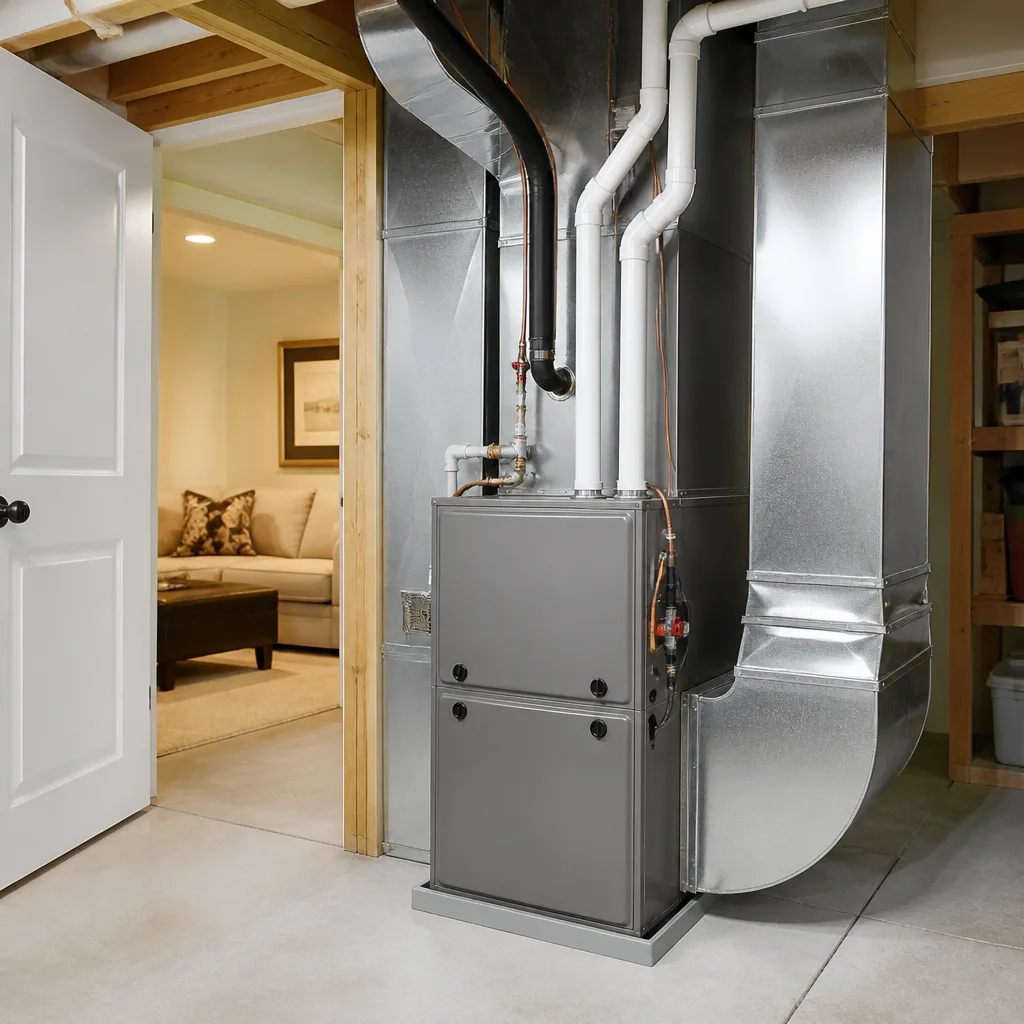
Yellow Pilot Flame on a Furnace
If your furnace has a pilot light (most modern furnaces in Atlanta don’t, they use electronic ignition, but plenty of older homes still do), the flame should be blue with a small yellow tip. A flame that’s mostly yellow or orange is a warning sign of incomplete combustion. Incomplete combustion produces carbon monoxide, which is odorless and potentially fatal. This is one of the few HVAC warning signs that should trigger immediate action: shut off the gas supply to the furnace, open a window in the space, and call a professional before turning it back on. Carbon monoxide is not something to gamble with. If you have a gas furnace and you don’t have a CO detector on each floor of your Atlanta home, install one this week.
What You Feel: Humidity, Hot Spots, and Weak Airflow
Feeling is the most underrated diagnostic tool a homeowner has. Your skin and your fingers tell you things instruments confirm later.
Humid Air While the AC Runs
Your AC has two jobs: lower the temperature and remove moisture from the air. Most people focus on temperature and ignore humidity. But in Atlanta, humidity removal is arguably the more important job. If your AC is running and the thermostat says 72 degrees but the air feels sticky or clammy, something is wrong. The most common cause is a refrigerant undercharge. When refrigerant is low, the coil doesn’t get cold enough to condense moisture out of the air efficiently. The air coming out of the vents will be cool but not properly dehumidified. This is a refrigerant issue, not a thermostat issue, and it won’t fix itself by setting the temperature lower. In fact, setting the thermostat lower makes the problem worse because the system runs longer, the coil freezes, and airflow drops further.
Hot Spots Between Rooms
Every Atlanta home has a room that’s “always been a little warm.” That’s not a personality quirk of the house, it’s an airflow problem. Here’s how to tell it’s an HVAC issue and not just a quirk. Close the door to the warm room and leave it closed for an hour while the AC runs. Then place your hand at the bottom gap of the door. If you feel strong airflow pushing out from under the door, the room is getting supply air but the return path is blocked, meaning air can’t get back to the system. If you feel almost no airflow under the door, the supply duct to that room is restricted, disconnected, or undersized. Either way, this is fixable. Most duct issues in Atlanta homes are due to age, humidity-related deterioration of duct tape, or original design that didn’t account for an added room or a changed layout.
Weak Airflow from Vents
Weak airflow from all vents at once usually means a failing blower motor or a severely clogged filter. Weak airflow from just one or two vents usually means a duct issue. The easiest test: change your air filter if you haven’t in 60 days. In Atlanta’s pollen season from March to May, filters clog faster than the rest of the year because all that yellow pine pollen ends up in your return air. If the filter is new and airflow is still weak everywhere, call a technician. A blower motor losing power is a common warning sign, and catching it early means a $400 repair instead of a $800 replacement plus an emergency service call on a 95-degree day.
Atlanta-Specific Warning Signs Generic Guides Miss
Most HVAC guides are written for a national audience and miss the warning signs specific to Atlanta’s climate, air quality, and housing stock, which is why we also publish Seasonal HVAC Care for Atlanta: Year-Round Homeowner’s Guide. Here are the ones that matter here.
High Indoor Humidity in July Is a Refrigerant Signal, Not a Thermostat Problem
Atlanta’s July average relative humidity sits around 75 to 80 percent. Your AC is designed to pull that down to 45 to 55 percent indoors. If your indoor humidity creeps above 60 percent on a day when the AC is running consistently, the most likely cause is not that your thermostat is set wrong. It’s that your system is undercharged on refrigerant. Here’s the logic. A properly charged system produces a coil temperature cold enough to condense a lot of moisture out of the air. An undercharged system produces a warmer coil, which still cools the air somewhat but doesn’t wring moisture out of it. So you get that Atlanta feeling where the air is cool but sticky. Generic guides will tell you to buy a dehumidifier. A Atlanta technician will tell you to check the refrigerant charge first. A dehumidifier treats the symptom. The leak is the cause.
Pollen Season Clogs Filters Faster Here Than Anywhere Else
Atlanta’s March through May pollen season is one of the most intense in the country. The yellow pine pollen that coats every car and patio also coats your air filter, often in a matter of weeks. A filter rated for 90 days in other markets may be fully clogged in 45 days in Atlanta during spring. A clogged filter is the single most common preventable cause of short cycling, frozen coils, and blower motor stress. During Atlanta pollen season, check your filter every 30 days. This one habit saves more HVAC emergency calls than any other single action.
Attic Installations Age Faster in Atlanta’s Heat
A large share of Atlanta home HVAC systems are installed in attics. Attic temperatures in July can hit 140 degrees. That means every component in your system, including the blower motor, control board, and capacitor, operates in an environment far hotter than the manufacturer’s rated operating range. This is why we replace blower motors and capacitors more often than technicians in cooler climates. If your system is in the attic and it’s 10 years old, pay extra attention to startup sounds. Capacitors fail earlier in attic installs. The good news: capacitor and blower motor replacement is straightforward and parts for common brands like Lennox, Rheem, and Goodman are easy to source in Atlanta.
The Utility Bill Pattern That Signals Failure 60 Days Out
Here’s a number to remember: 15 percent. If your kWh usage in a given month is 15 percent or more higher than the same month last year, and the weather was similar, your HVAC system is working harder than it did last year. In Atlanta’s electricity market, where Georgia Power’s residential rates and our long cooling season make summer bills the biggest energy expense most homeowners have, that 15 percent increase is the earliest reliable signal of a system in decline. It usually appears 60 to 90 days before a component failure. The cause is almost always one of these: a slow refrigerant leak that’s making the compressor run longer cycles to hit the same temperature, a failing capacitor that’s causing multiple start attempts per cycle, or a clogged condenser coil that’s reducing heat rejection and forcing the system to run longer. When you see that 15 percent jump in your Georgia Power bill, don’t write it off as rates going up. Pull up a bill from the same month last year and compare kWh directly. If the kWh is up 15 percent or more, schedule a diagnostic. A diagnostic visit costs far less than a compressor.
Warning Sign Triage: What Can Wait Until Monday vs. What Needs Same-Day Service
This is the section that saves you money. Not every warning sign is an emergency. Knowing which is which prevents both panic-spending and catastrophic neglect.
Can wait until Monday (or next available business day):
- Musty smell from vents, as long as no one in the home has asthma or mold sensitivity
- Water under the air handler that’s not actively spreading
- Weak airflow from a single vent
- A new humming sound that’s quiet and steady
- A slightly sticky feeling in the air but the AC is still cooling
- A capacitor that’s clicking but the system still starts after a delay
Needs same-day service:
- Burning smell that persists more than 10 minutes after startup
- Sweet or chemical smell indicating refrigerant leak
- Yellow or orange pilot flame on a gas furnace
- Complete system shutdown on a day above 90 degrees
- Ice on refrigerant lines, especially if the AC has been running for hours
- Grinding noise from the blower motor
- Any sign of electrical arcing: visible sparks, popping sounds, or a breaker that trips repeatedly
Here’s the rule of thumb. If the issue is costing you a little efficiency, it can wait for a scheduled appointment. If the issue is actively damaging a component, or if it’s a safety risk, it’s same-day. A refrigerant leak is both, which is why any sweet smell or hissing sound should get a same-day call. Call furnace repair in Atlanta for any gas-related issue immediately.
What to Document Before the Technician Arrives
Here’s something most homeowners don’t know. The diagnostic fee you pay a technician covers their time to find the problem. If you give them a 30-minute head start in the form of documentation, you’re very likely to get a faster diagnosis and a more accurate quote. Here’s what to document before you call for service.
- Utility bills for the last 3 months. Screenshot the kWh usage page from your Georgia Power account. This tells the technician whether the system has been working harder than baseline and gives them a clue about slow-developing problems like refrigerant leaks or a failing compressor.
- Photos of the outdoor unit. Take two photos: one of the unit from 8 feet away showing the whole condenser, and one close-up of the copper lines where they enter the unit. If you see ice or frost, photograph that too. A photo taken at 6 a.m. of ice on the lines is worth more than a description of “there was some ice at some point.”
- Timestamps of the behavior. Write down when the sound starts, how long it lasts, and what the system is doing when it happens. “Clicking at 7:15 a.m., system starts after 3 attempts, runs 10 minutes, shuts off” is a diagnosis in itself. “It’s been acting weird” is not helpful.
- Filter history. Note the date you last changed the filter and the brand/type. A technician can’t tell if your filter is a month old or a year old by looking at it. A clean-looking filter can still be a problem if it’s the wrong MERV rating for your system.
- Any recent work done on the home. Drywall work, attic insulation, a new roof, or even a renovation in another part of the house can affect your HVAC’s performance. A technician who knows you just had your attic re-insulated may check airflow differently than one who assumes the house is unchanged.
This documentation habit is exactly how we work at Halden Heating and Air Atlanta. Our technicians arrive with live arrival times you can track, and when you call (912) 616-5481, a real person answers, 24/7. The info you document is the info our tech uses to cut diagnostic time.
Common Mistakes to Avoid
- Setting the thermostat lower to “fix” humidity. In Atlanta, this is the single most common homeowner response to sticky air, and it’s wrong. It makes the problem worse by stressing the compressor and freezing the coil. Humidity issues mean refrigerant charge or airflow, not temperature setpoint.
- Ignoring a utility bill increase because “rates went up.” Rates do go up, but kWh usage is a direct measure of how hard your system is working. Compare usage to the same month last year. A 15 percent jump in kWh with similar weather is a system warning, not a rate change.
- Running the AC with ice on the lines. Some homeowners think ice means the system is extra cold. It means the system is starving. Running it frozen is how you turn a $300 fix into a $2,500 compressor replacement.
- Putting off a capacitor repair because the system “still starts.” A failing capacitor still starts the system, for now. Every start attempt with a failing capacitor is wear on the compressor. That’s like driving a car with a dying starter battery and ignoring it. Eventually the bigger, more expensive component fails.
- Not changing the filter during pollen season. In Atlanta, a filter that works for 90 days in other months may need changing in 30 to 45 days from March through May. The pollen load here is extreme. Check monthly.
- Waiting for the system to completely die before calling. The phrase “it’s been doing this for a while” is the most expensive sentence in Atlanta HVAC. Components send signals for 30 to 90 days before they fail. Respond to the signal, not the shutdown.
When to Call a Professional
Call a professional when the warning sign involves refrigerant, gas, electrical components, or a compressor. These are the systems where a DIY attempt can cause real injury or turn a $200 fix into a $2,000 replacement. Refrigerant requires EPA-certified handling. Gas furnaces produce carbon monoxide when combustion is incomplete. Electrical panels and capacitors retain dangerous voltage even after the system is off. The risk isn’t worth the savings. Halden Heating and Air Atlanta offers free estimates on repairs in Atlanta. Written prices before any work starts on every job. Call (912) 616-5481 and a live person answers, day or night. Every repair comes with a written guarantee and a free second visit if the repair fails, automatically. That’s our 365-Day Done Right Promise, backed by the Relay Home Co. network and The Relay Visibility Guarantee.
Frequently Asked Questions
The most missed warning sign in Atlanta is a 15 percent or greater increase in monthly kWh usage compared to the same month last year. Most homeowners blame it on rates, weather, or “the house getting older.” It’s usually a refrigerant leak, failing capacitor, or clogged condenser coil. Pull your Georgia Power bill and compare kWh directly. Call (912) 616-5481 for a diagnostic if you see that jump.
You likely have a refrigerant leak if you hear hissing near the indoor coil, smell a sweet or chemical odor near the unit, see ice on the refrigerant lines, or feel humid air while the AC runs despite the thermostat reading a cool temperature. Any one of these is enough to schedule service. Call (912) 616-5481 and we’ll send a technician with a written price before any work begins.
No. Running your AC with ice on the refrigerant lines forces the compressor to work against a restriction, which generates heat the compressor wasn’t designed to handle. This is how compressors die. Turn the system off or set it to fan-only and call a professional. In Atlanta’s summer heat, the impulse is to keep cooling, but a day of heat is cheaper than a compressor replacement.
Most Atlanta HVAC companies charge between $75 and $150 for a diagnostic visit, often waived if you proceed with the repair. Halden Heating and Air Atlanta provides free estimates. Call (912) 616-5481 and we’ll send a technician to assess the issue and provide a written price before any work starts. No surprise charges at the door.
A burning smell that fades within 10 to 15 minutes of startup is usually dust on the heat strips, which is normal the first time you run the furnace each season. A burning smell that persists, or that smells like plastic or electrical fire, means a component is overheating or wiring is failing. Shut the system off and call a professional. If your furnace is gas-powered and you smell burning plus a yellow flame, shut off the gas and call immediately.
The rough rule is the $5,000 rule: if the repair cost multiplied by the age of the system in years exceeds $5,000, replacement usually makes more sense. A 12-year-old system with a $500 repair? Repair it. A 15-year-old system with a $1,200 repair? Replacement starts looking smart. The best way to get an honest answer is a diagnostic from a company that doesn’t earn commission on replacement sales. Call (912) 616-5481 for a free estimate and a straight answer.
The Bottom Line
HVAC systems in Atlanta work harder than almost anywhere in the country. That means warning signs show up earlier and more often here. The homeowner who learns to read those signs, the sound of a failing capacitor, the smell of a refrigerant leak, the 15 percent jump in a July power bill, saves thousands over the life of a system. The homeowner who waits for total failure pays for emergency service, a dead compressor, and a miserable few days without cooling in Georgia heat. Document what you observe, triage what can wait versus what can’t, and call a professional when the signal says so. Halden Heating and Air Atlanta has been serving Atlanta since 2004 as part of the Relay Home Co. network. We answer the phone 24/7 with a live person, send technicians you can track to the door, and put every price in writing before work starts. Call (912) 616-5481 for a free estimate. Every repair is covered by our 365-Day Done Right Promise.
Written by Andre Fuller, Owner at Halden Heating and Air Atlanta, serving Atlanta since 2004.
See the difference
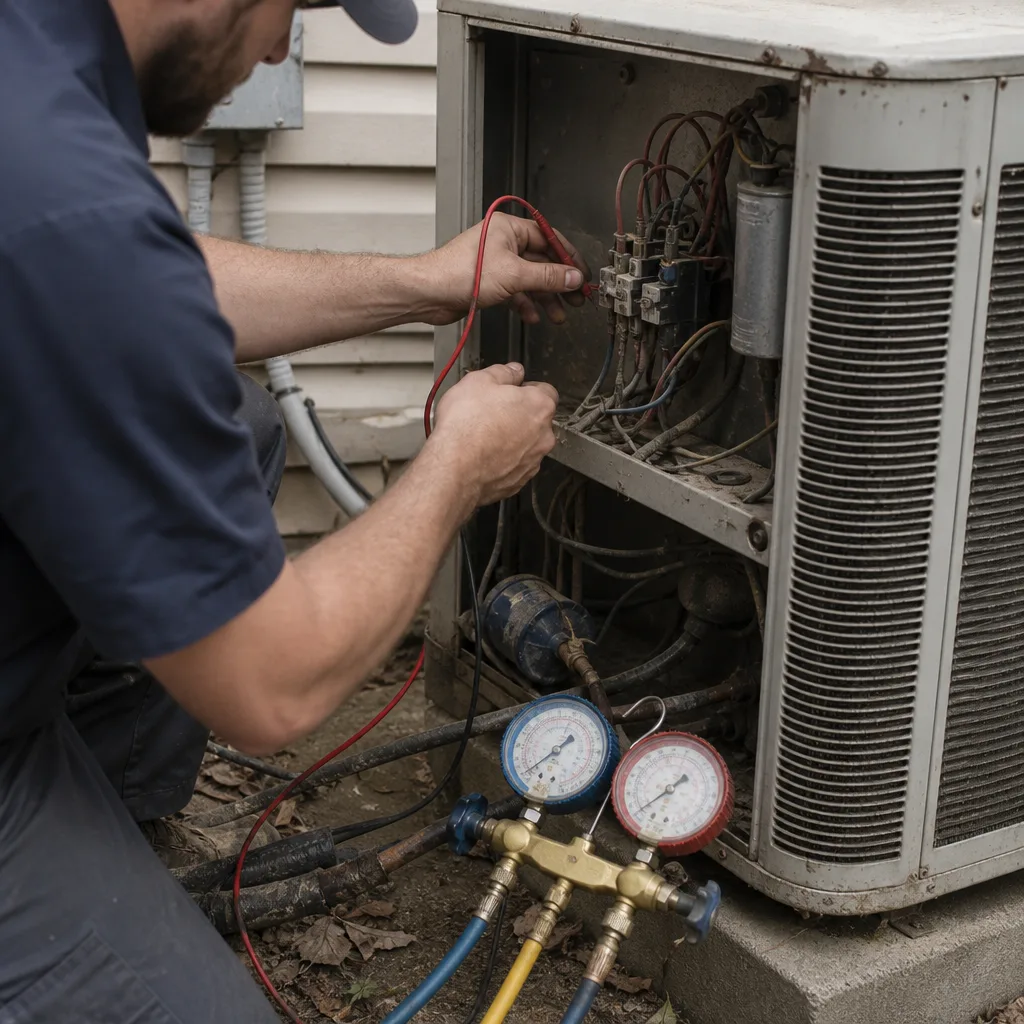 Before
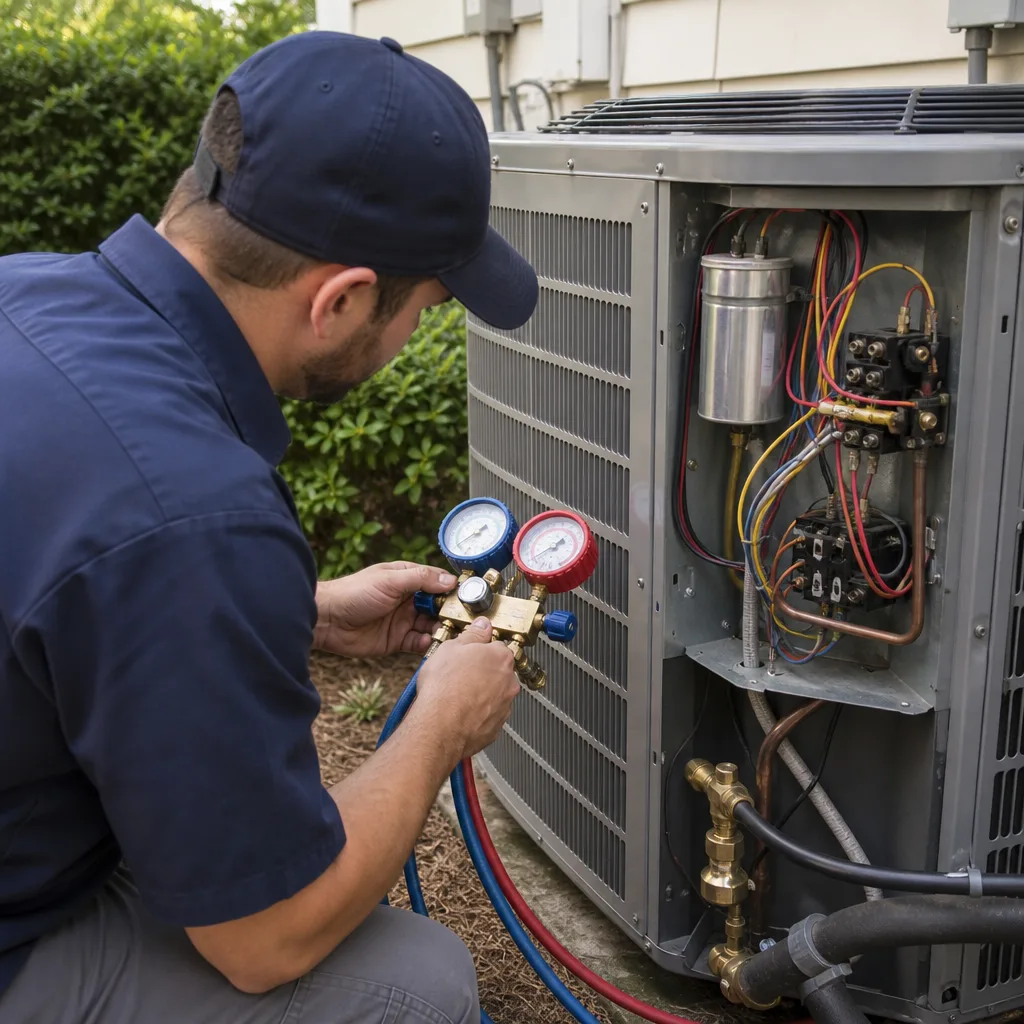
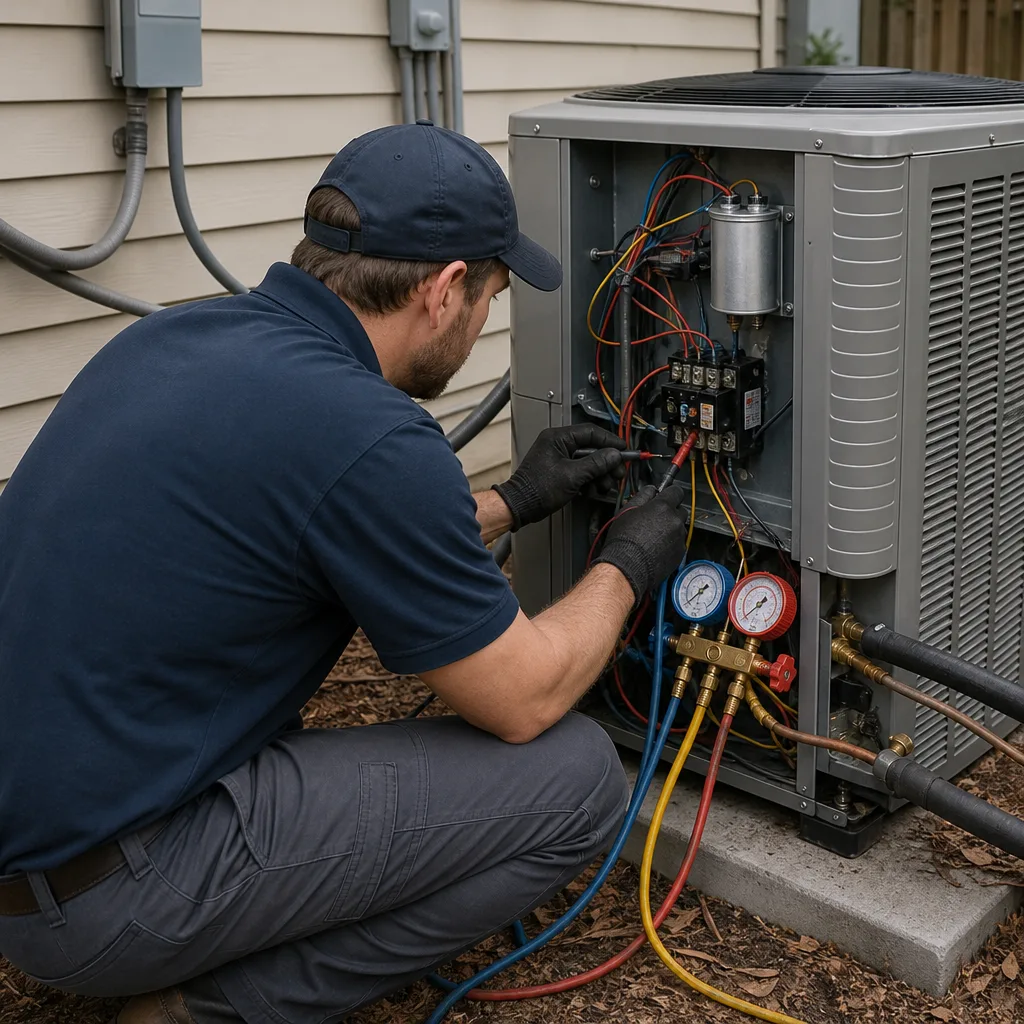
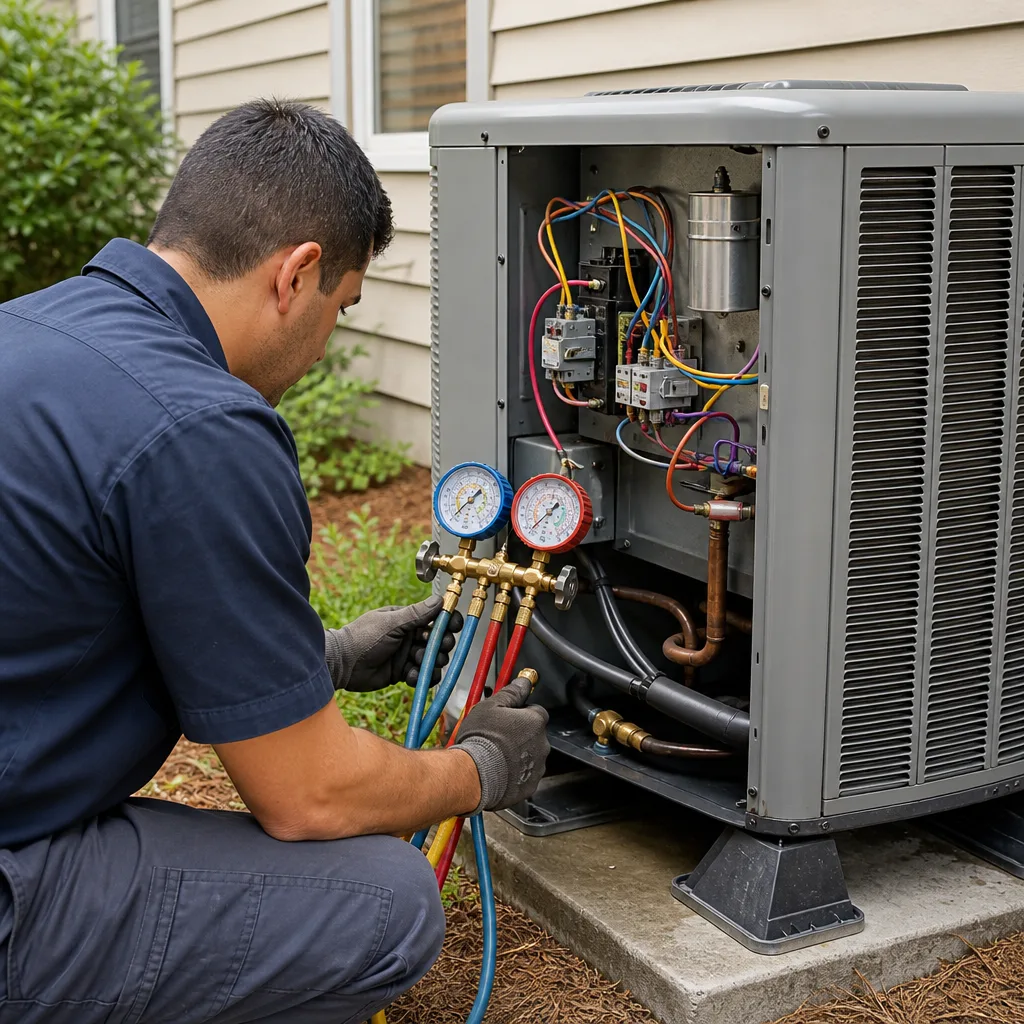 After
After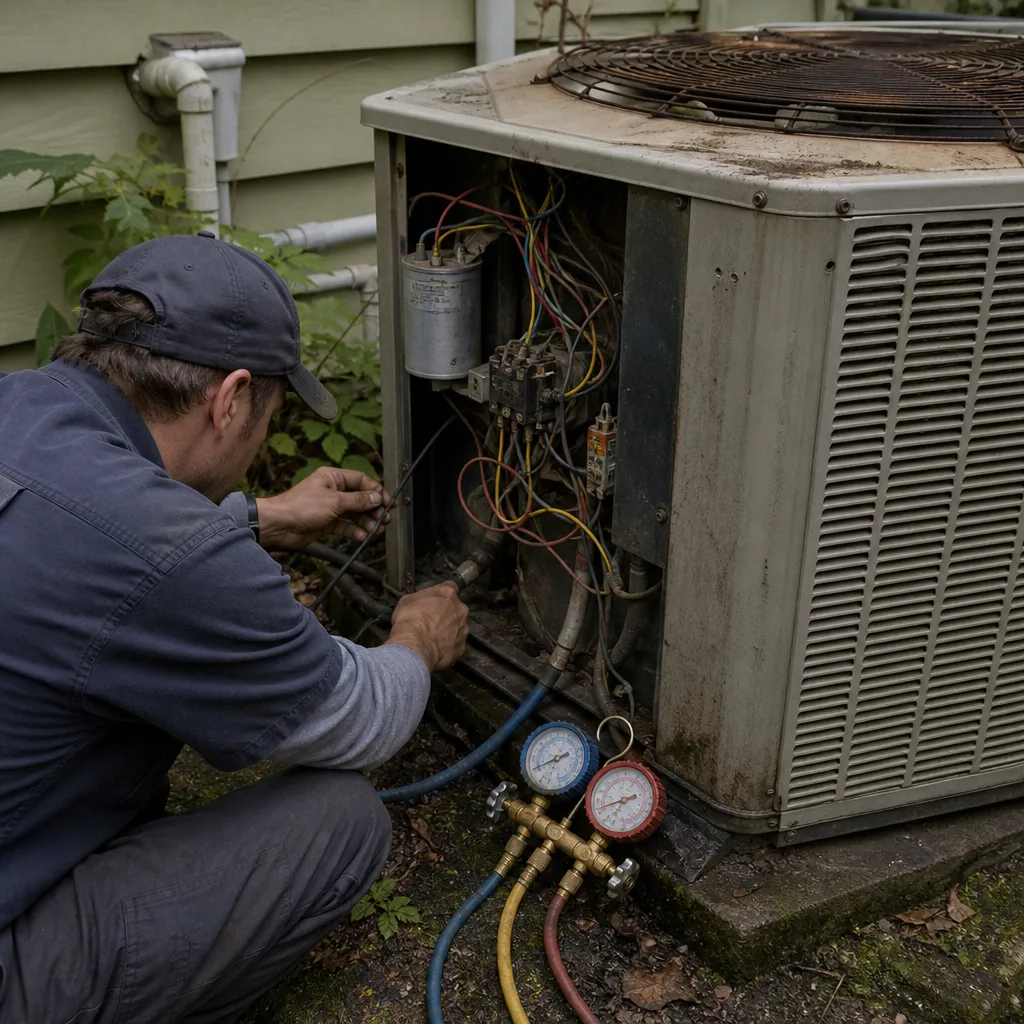 Before
 After
After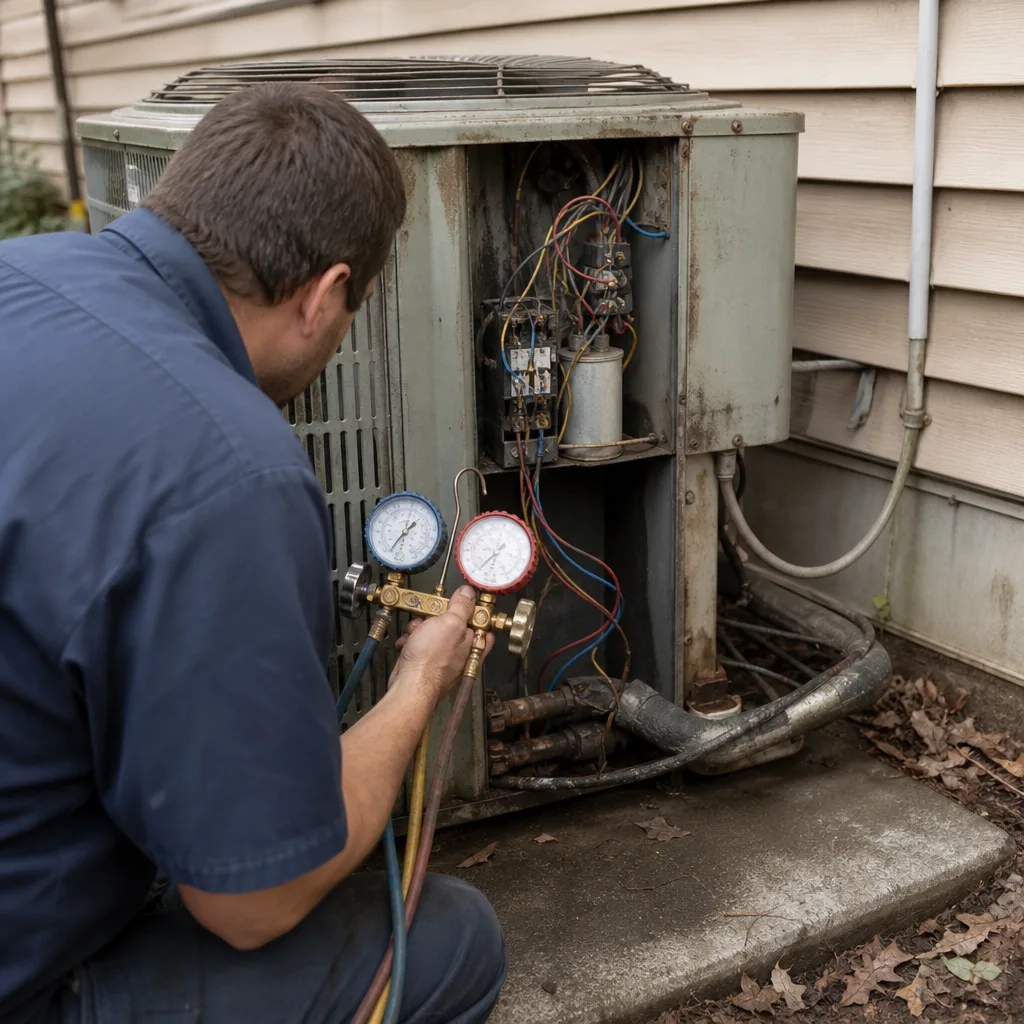 Before
 After
After