

Last updated October 16, 2026
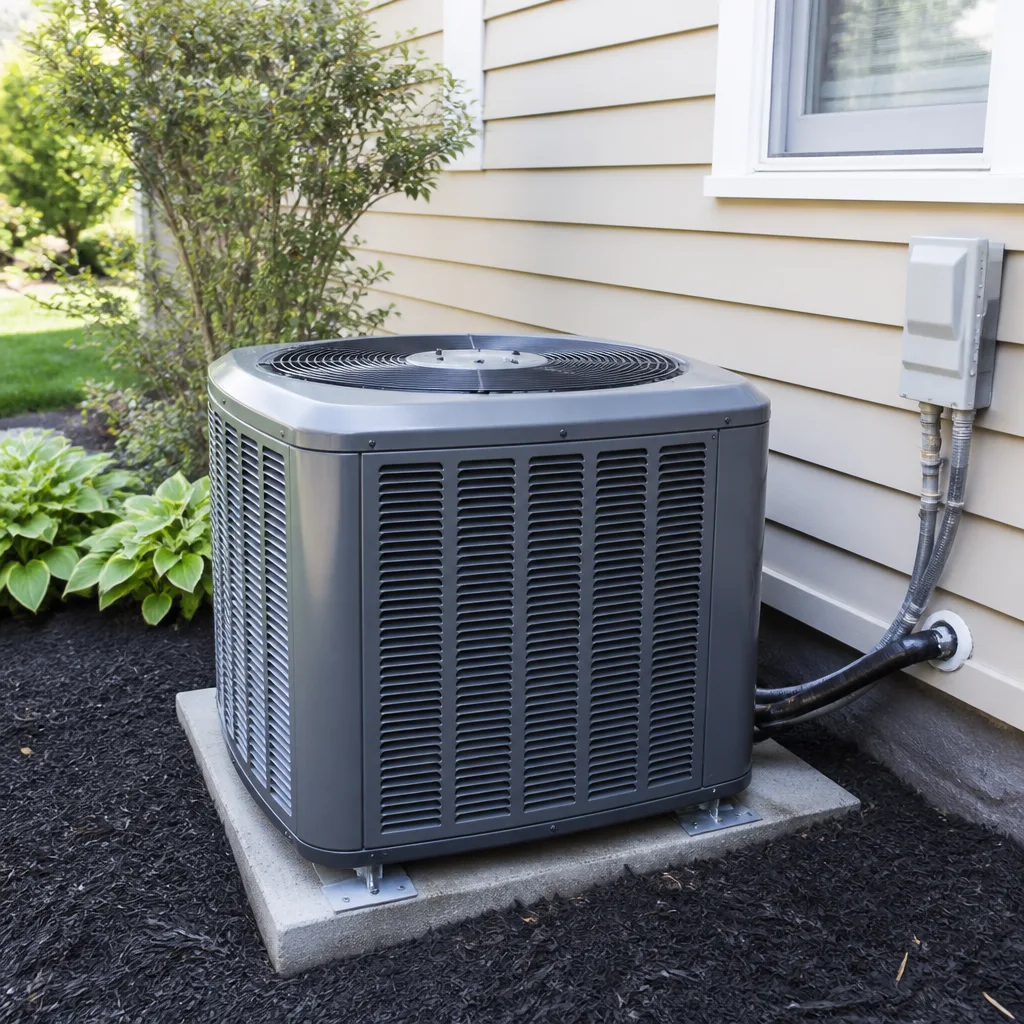 AC repair
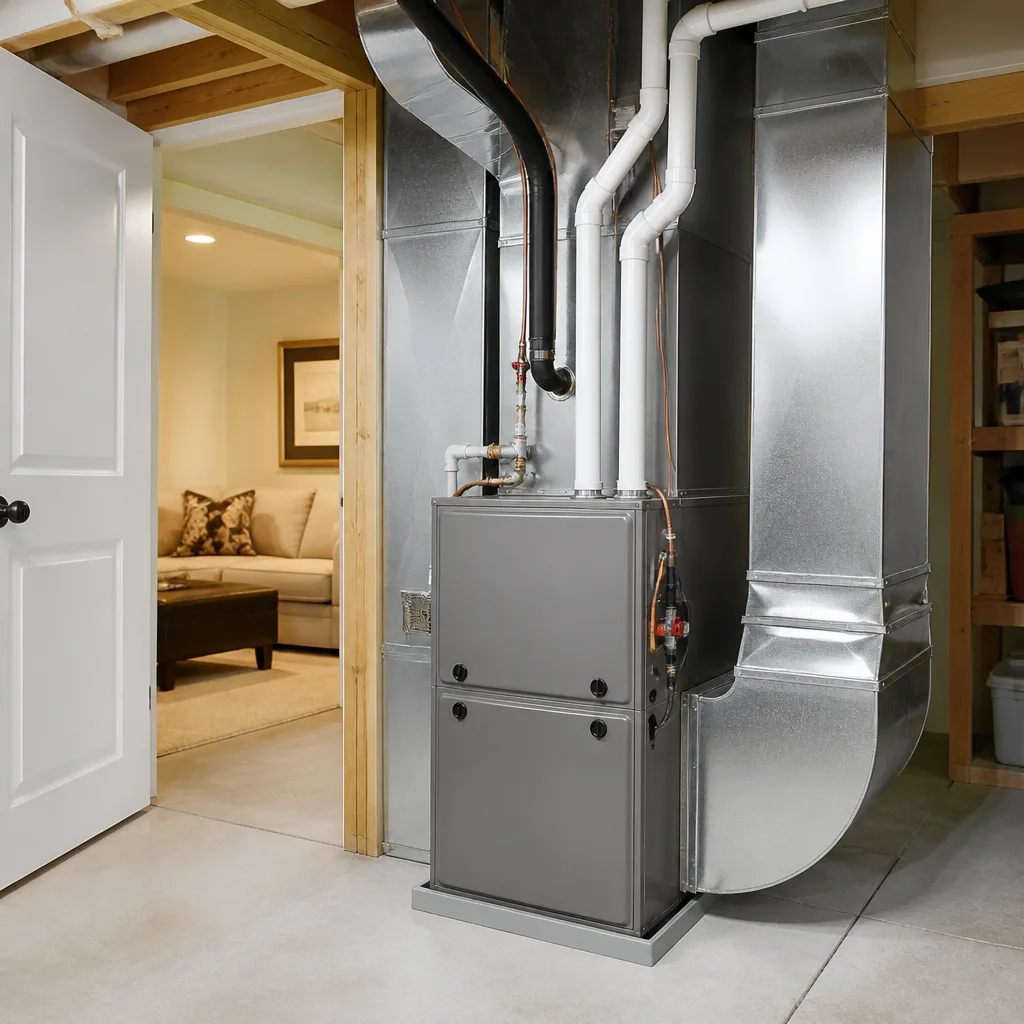 Furnace & heating
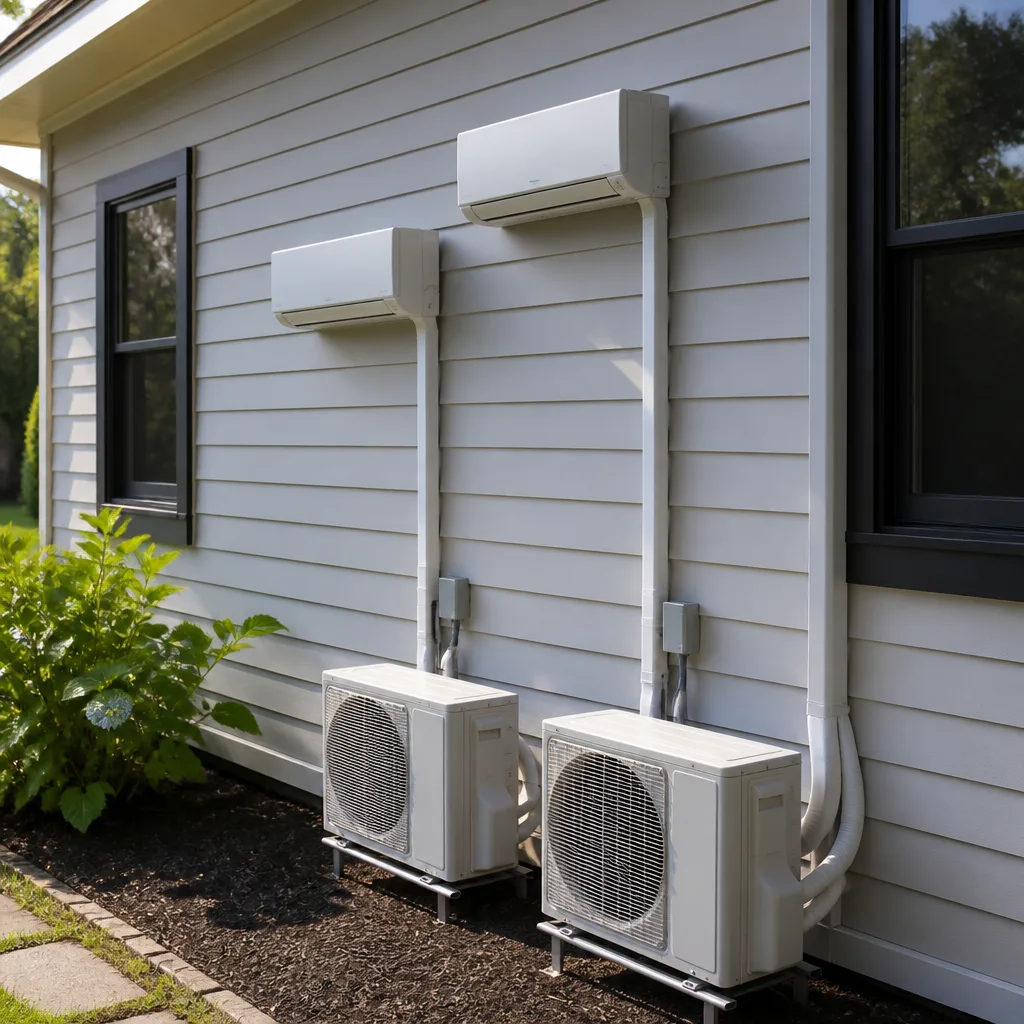 Ductless mini splits
 Carrier
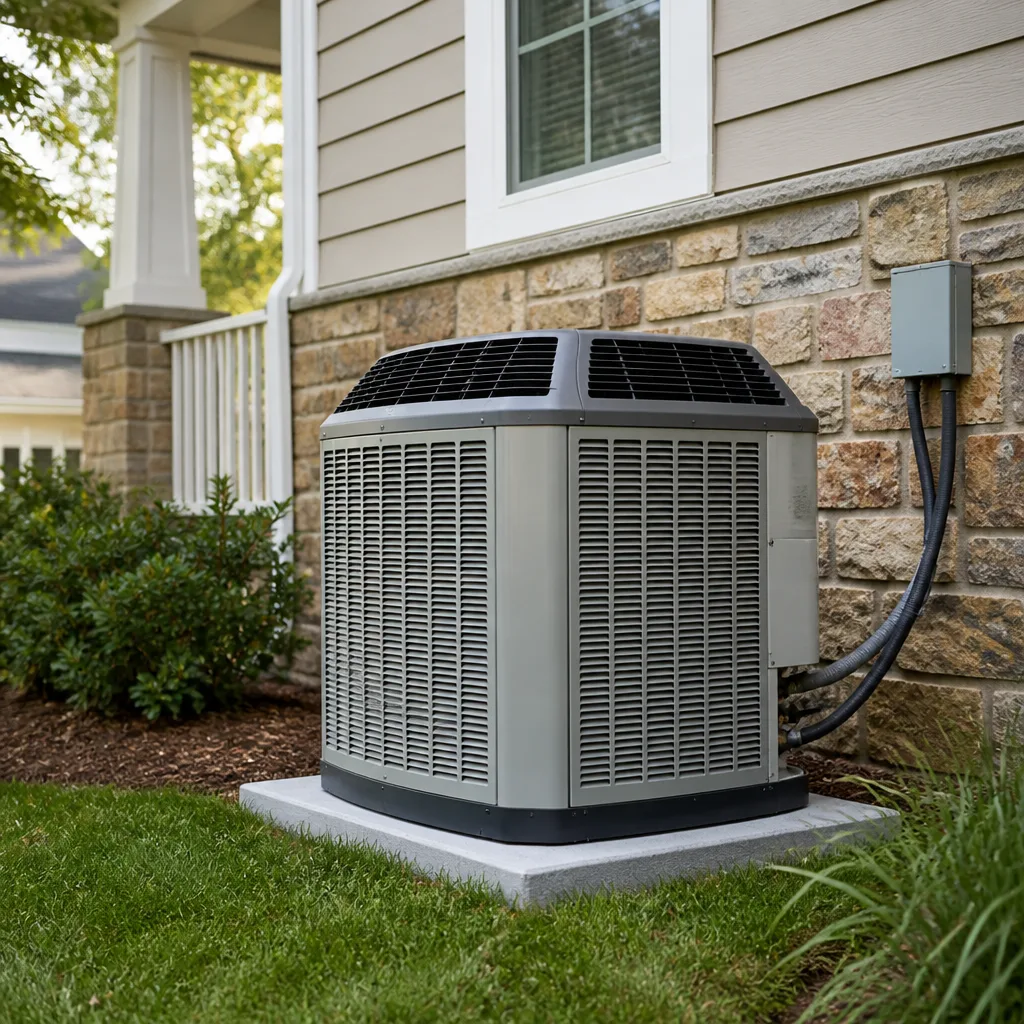 Trane
Trane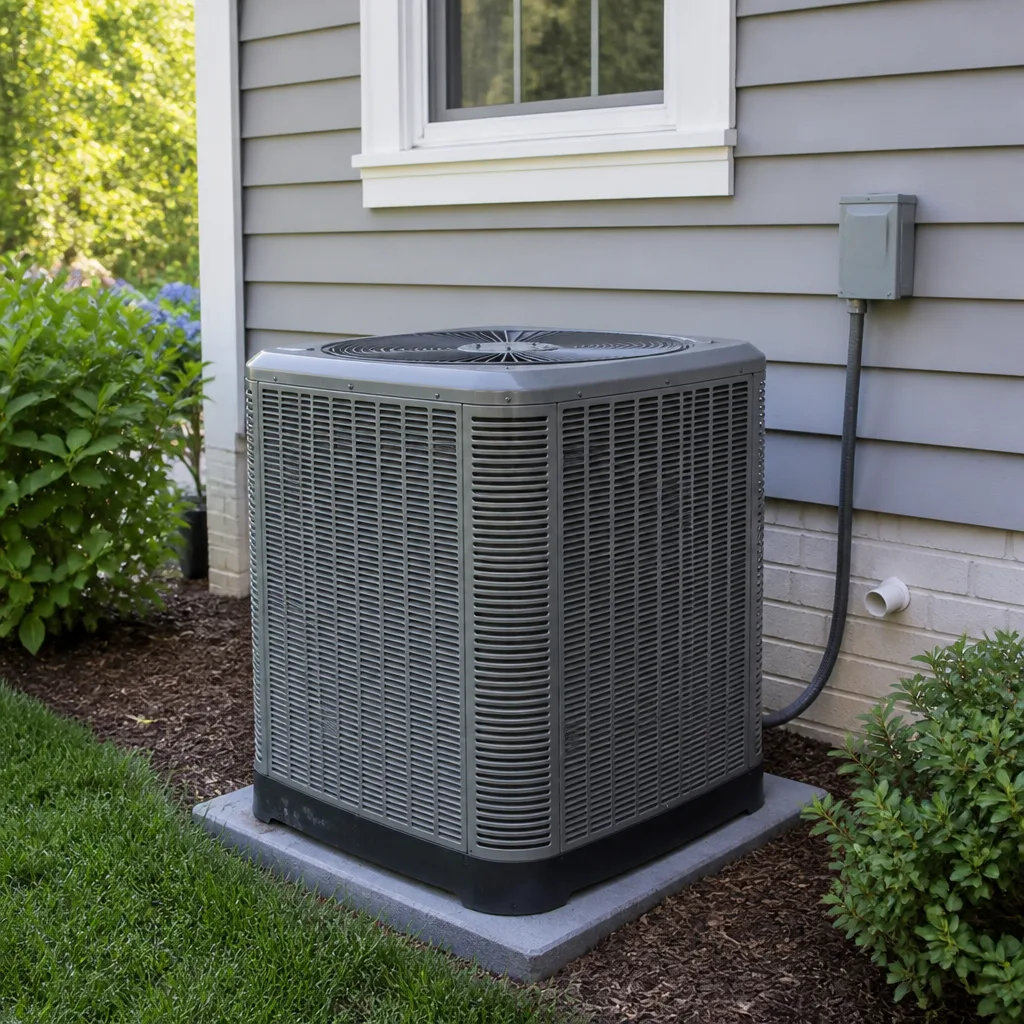 Goodman
Seasonal tune-up and full diagnostic on your Carrier, Trane, or Goodman system - readings shown to you before any repair is proposed
Diagnosis first, numbers second - you approve the repair price before a single part goes in.
Get your free estimateHow to Hire a HVAC Contractor in Atlanta: A Step-by-Step Guide
Georgia requires HVAC contractors to hold a state license, but there is no public-facing, easy lookup tool most Atlanta homeowners know about. That means an unlicensed contractor in a branded truck gets hired every single day across metro Atlanta, from Buckhead bungalows to Decatur ranches. This guide walks you through the exact 90-second credential check, the five questions that separate real contractors from quote-bait operations, and the reasons the lowest bid in Atlanta is often the most expensive by year three. For more guides & resources, visit our blog. We’re Halden Heating and Air, and we’ve been doing this work since 2004.
Styles & brands we work with
Quick Answer
The fastest way to hire an HVAC contractor in Atlanta is to verify the Georgia license on the Secretary of State’s database, require a written price before any visit, and ask five specific questions about pricing transparency, photo documentation, parts warranties, financing disclosures, and technician tracking. Contractors who refuse to quote in writing before arriving self-select out immediately. A legitimate contractor will happily provide a license number and a locked written price before a single tool leaves the truck.
Table of Contents
- Why Atlanta’s Climate Makes Contractor Choice Matter More
- The 90-Second Georgia License Check Most Homeowners Skip
- Five Questions That Separate Real Contractors from Quote-Bait Operations
- What HVAC Work Actually Costs in Atlanta Right Now
- Why the Lowest Quote in Atlanta Is Statistically the Highest Total Cost
- Red Flags Unique to Atlanta’s Post-Storm Surge Market
- What Your Booking Confirmation Should Contain Before You Open the Door
- Common Mistakes to Avoid
- When to Call a Professional
- Frequently Asked Questions
- The Bottom Line
Why Atlanta’s Climate Makes Contractor Choice Matter More
Atlanta summers are not a suggestion. From late May through September, daytime highs routinely sit in the low 90s with humidity that makes 92 feel like 102. Your air conditioner runs 2,000 to 2,800 hours per year in metro Atlanta, compared to about 1,200 hours in a city like Boston. That’s the equivalent of driving your car an extra 12,000 miles a year. The system wears faster, fails more often, and punishes shortcuts harder. When an undersized unit or a rushed installation finally quits in mid-July, it quits on the hottest day of the year, and every contractor in the metro is booked solid. That’s the moment bad decisions happen. A homeowner with a 20-minute window and a rising thermostat will hire the first truck that answers. Learn to spot trouble early with our HVAC Warning Signs: A Atlanta Homeowner’s Reference Guide. This guide exists so that the decision you make in that 20-minute panic window is already 90% made before the heat hits.
Atlanta’s climate also has a second season that gets less attention: winter. From November through February, Atlanta temps swing wildly. A Monday can be 48 degrees, a Wednesday 28. We see furnaces fail most often during those rapid swings, when systems cycle hard and heat exchangers stress. The same contractor you choose for AC work in summer is the one you’ll call for furnace repair in Atlanta in January. Choosing once, correctly, covers both halves of the year.
The 90-Second Georgia License Check Most Homeowners Skip
Georgia’s Secretary of State issues HVAC contractor licenses through the State Construction Industry Licensing Board. The license you’re looking for is called a Conditioned Air Contractor license. It comes in two classes. Class I covers HVAC systems up to 175,000 BTU heating and 5 tons (60,000 BTU) cooling. That’s basically every single-family home in Atlanta and all but a few massive Buckhead estates. Class II is unrestricted, covering commercial and industrial systems. If a contractor shows up quoting residential work, a Class I license is sufficient. If they don’t have either, they are not legally permitted to work on your equipment.
Here’s the exact process, step by step:
- Go to the Georgia Secretary of State’s website and open the Professional Licensing Boards division.
- Select “Verify a License” and choose “Conditioned Air Contractor” from the board dropdown.
- Enter the contractor’s name or license number. The state database will return the license class, issue date, expiration date, and any disciplinary actions.
- Confirm the license is active (not expired, not suspended) and that the name on the license matches the name on the quote.
- Check for complaints or board actions. Even one substantiated complaint about unfinished work or permit fraud is a disqualifying event.
This takes 90 seconds. Almost nobody does it. We know because we’ve asked hundreds of Atlanta homeowners, and fewer than one in five has ever run a license check before booking. The result is a market where unlicensed crews operate constantly, especially between April and September when demand outpaces supply.
Five Questions That Separate Real Contractors from Quote-Bait Operations
Credentials get a contractor in the door. Behavior tells you whether they’re the contractor you want. These five questions, asked before booking, separate transparent businesses from operations built on vague quotes and door-step surprises. We recommend asking every single one, every single time. A contractor who hesitates on any of these isn’t worth the slot on your calendar.
1. Will you give me a written price before you arrive?
This is the single fastest filter in the industry. A contractor who cannot quote a repair price before arriving is either running a diagnostic-then-negotiate model or hasn’t structured their pricing in a way that can survive written scrutiny. We deliver a written price before any work starts, on every job, without exception. Not an estimate range. Not a ballpark. A locked number. Contractors who refuse to do this aren’t protecting themselves from misdiagnosis; they’re protecting their ability to change the number at the door.
2. Do you photograph the work before and after?
Photo documentation is the difference between trusting a stranger and verifying a professional. Before-and-after photos mean you can see the old part, the new part, and the installation quality without standing over the tech’s shoulder. It’s a simple request that most old-school operations can’t accommodate, and it’s a standard part of how we run every job. If a contractor dismisses the request as unnecessary or says “we don’t do that,” move on.
3. What are the exact terms of your parts warranty?
Every parts warranty has fine print. Some cover the part but not the labor to install it. Some cover labor but only for 30 days. Some exclude specific components entirely. Ask for the warranty terms in writing before you pay. At Halden Heating and Air, every repair comes with a written guarantee. If the repair fails within the coverage window, we come back at no charge. That guarantee is automatic, included with service, not an add-on line item.
4. How does your financing work, and what are the actual disclosure terms?
Financing disclosures matter because most Atlanta homeowners don’t have $8,000 sitting ready for a system replacement. The relevant numbers are the APR, the term length, and whether there’s a promotional period that ends with deferred interest. A contractor who won’t share these specifics before you sign is likely hiding something. Transparent shops will lay out the full financing picture in writing before installation day, so you know the monthly payment and the total cost of borrowing, not just the monthly payment.
5. Will I get a live arrival time and be able to track my technician?
In 2026, “we’ll be there between 8 and 12” is not a scheduling process. It’s an admission that the company has no dispatch software. We send our technicians out with a live arrival time you can track to your door, the way you track a ride share driver. Background-checked, uniformed technicians. Not a four-hour window and a shrug. If a contractor can’t tell you exactly when they’ll arrive, they’re showing you how the whole engagement will go.
What HVAC Work Actually Costs in Atlanta Right Now
Atlanta HVAC pricing sits slightly above the national average because of local market conditions: peak-season demand, high parts availability costs, and a labor pool stretched thin by new construction in the northern suburbs. For a detailed look at current rates, see our HVAC Cost Breakdown: The Atlanta Homeowner’s Reference for 2026. Here’s what we see across metro Atlanta in 2026, based on the work we perform and the quotes our customers share with us:
- AC diagnostic call: $79 to $149, depending on the company and whether the diagnostic fee is credited toward the repair.
- Capacitor replacement: $150 to $300, part and labor included.
- Refrigerant recharge (topping off the coolant your system needs to produce cold air): $200 to $600, depending on the refrigerant type and amount. Older systems using R-22 cost more because the refrigerant itself is out of production.
- Condenser fan motor replacement: $350 to $650.
- Evaporator coil replacement: $1,200 to $2,400, including parts, labor, and system vacuum.
- Full AC replacement (3-ton system): $6,500 to $11,000 installed, depending on efficiency rating and brand.
- Full furnace replacement (80,000 BTU): $3,800 to $7,200 installed.
- Complete HVAC system (furnace + AC): $9,500 to $16,000 installed.
These are real ranges for Atlanta’s market, not national averages. The variance comes down to equipment efficiency (SEER2 rating), brand, ductwork condition, and whether the contractor pulls permits. Always ask whether the quote includes permit fees; for details on what’s required, read HVAC Permits, Codes & Inspections in GA: What You Need to Know. Contractors who skip permits quote lower, and you pay later.
Why the Lowest Quote in Atlanta Is Statistically the Highest Total Cost
There’s a pattern in this market that we’ve watched for two decades. A homeowner gets four quotes for a system replacement. Three land between $9,000 and $12,000. One comes in at $6,800. That quote wins. Then, within 36 months, the homeowner has spent an additional $2,000 to $6,000 on repairs, retrofits, and corrections. The low bid wasn’t low. It was deferred.
Here’s how those hidden costs pile up in Atlanta specifically:
- Undersized equipment: A 2.5-ton unit in a home that needs 3 tons will run constantly in July, never fully cooling, and racking up repair costs. The fix is a full replacement, which is not covered by any warranty because the error was in the original sizing.
- Skipped permits: The City of Atlanta requires a mechanical permit for system replacements. When the next buyer’s inspector finds an unpermitted install, the homeowner pays for retro permits and corrections, often $1,500 to $3,000 by closing.
- Refrigerant incompatibility: Installing a new R-410A or A2L unit on old R-22 line sets without proper flushing contaminates the system and voids the compressor warranty. That’s a $2,000-plus mistake that usually appears in year two.
- No ductwork assessment: A new high-efficiency unit on leaky 1980s ductwork loses 20 to 30 percent of its capacity. The homeowner pays for efficiency they never receive, and the system works harder for the life of the equipment.
The lesson isn’t “don’t take the lowest bid.” It’s “know why the lowest bid is low.” If the contractor can’t explain the equipment sizing, the permit plan, and the ductwork evaluation in writing, the discount is coming from somewhere you can’t see.
Red Flags Unique to Atlanta’s Post-Storm Surge Market
Atlanta gets hit hard by spring and summer storms, tornado warnings, hail events, and the occasional tropical system pushing north from the Gulf. Every time, the same thing happens: out-of-state crews pour into the metro, rent hotel rooms, and work homeowners’ insurance claims and emergency repairs for a few weeks before leaving. Some are legitimate. Many are not. Here’s how to spot the difference:
- Fresh license numbers: A legitimate Atlanta contractor has a Georgia license with issue dates going back years. Storm-chasers often have licenses issued within the last 90 days. Check the issuance date on the Secretary of State database.
- Out-of-state plates and temporary signage: Magnetic truck signs, rental vans, and out-of-state plates are the standard look of surge-market crews. A 2004-founded Atlanta company doesn’t operate from a rented minivan.
- Pressure to sign today with a cash discount: Storm-surge operations survive on volume and speed. They need your signature now, often with a discount for cash. Legitimate companies issue written quotes that hold for a defined period.
- No local address: Ask where the company’s office is. If the answer is “we’re traveling through” or a PO box, that’s the end of the conversation. We’re at Halden Heating and Air Atlanta home based right here in metro Atlanta, and we’ve been serving this market since 2004.
- Skipped diagnostics: Storm chasers often skip system diagnostics and quote a full replacement immediately, because that’s where the margin lives. A real contractor diagnoses first and recommends replacement only when it’s actually needed.
None of this means every post-storm contractor is a bad actor. But the licensing patterns, the vehicle signage, and the quote behavior tell you a lot about who is running a legitimate long-term business versus who is working a six-week window.
What Your Booking Confirmation Should Contain Before You Open the Door
You’ve filtered the contractors. You’ve checked the license. You’ve asked the five questions. Now it’s time to book. The confirmation you receive should be a real document, not a text that says “see you Thursday.” Here’s the pre-arrival checklist we recommend every Atlanta homeowner run before opening the door:
- Written price, in the confirmation: The quote should be locked and sent to you before arrival, not negotiated on site.
- Technician name and photo: You should know who is coming before they ring the bell. Our techs arrive background-checked and uniformed, with a live arrival time you can track.
- License number, in writing: The confirmation should include the company’s Georgia Conditioned Air Contractor license number so you can run the look-up yourself.
- Scope of work in plain English: What exactly is being repaired or replaced, in terms you can read without a trade dictionary.
- Warranty terms attached: Not a verbal promise. Written guarantee terms, included with the confirmation.
- Arrival window of 60 minutes or less, with tracking: No four-hour blocks. Live arrival time, trackable on your phone.
If any of these six items is missing, cancel the appointment and restart the search. Bad-faith operators disqualify themselves at the booking stage more often than at any other point in the process, because they’re counting on you not asking.
Common Mistakes to Avoid
- Skipping the license check: It takes 90 seconds, and Atlanta has one of the highest rates of unlicensed HVAC activity in the Southeast during peak season. Run the check every time.
- Hiring based on the lowest quote: The $6,800 system typically costs $12,000 by year three once you add the corrections, the permit retrofits, and the lost efficiency. Understand why a quote is low before accepting it.
- Ignoring permit requirements: The City of Atlanta requires mechanical permits for system replacements. Unpermitted work becomes a problem at resale, and it can be flagged by the city’s code enforcement during routine inspections.
- Accepting a verbal warranty: In Georgia, a verbal warranty is not a real warranty unless you enjoy small claims court. Get it in writing, get it specific, and get it attached to the invoice.
- Letting a post-storm contractor rush the decision: Storm-surge crews are built for speed, not accountability. When the pressure to sign today comes from a contractor with a 60-day-old license and a rented van, that’s your signal to slow down.
- Not asking about the refrigerant type: If your home still has an R-22 system, you need to know that before a repair quote arrives. R-22 is out of production, and its price per pound has tripled. A contractor who doesn’t flag this upfront is not protecting your budget.
- Hiring without checking AC repair in Atlanta specialties: Not every HVAC company handles every type of failure. A company that specializes in residential split systems may not be the right choice for a multi-zone ducted system in an older intown home.
When to Call a Professional
Some situations don’t allow for a seven-step hiring process. When your AC stops cooling on a July afternoon and the indoor temperature hits 88 degrees, you need a contractor now. That’s when your preparation pays off. Since you’ve already checked the license, asked the five questions, and reviewed the booking requirements, you can make a fast call with confidence. Halden Heating and Air Atlanta offers free estimates in Atlanta, including AC installation in Atlanta for full system replacements. Call (912) 616-5481 and a live person answers, 24 hours a day, seven days a week. No voicemail tree, no next-business-day callback.
Frequently Asked Questions
You verify a contractor’s Georgia Conditioned Air Contractor license by visiting the Secretary of State’s Professional Licensing Boards website, selecting the license verification tool, and entering the contractor’s name or license number. The database shows the license class, issue date, expiration date, and any board actions. Class I covers residential systems; Class II covers commercial and unrestricted work.
Ask for a written price before arrival, photo documentation of the work, precise parts warranty terms, financing disclosure specifics, and a live technician arrival time with tracking capability. Contractors who can’t provide all five are more likely to produce door-step price changes and weak follow-up. Our standard is a written price before any work starts, on every job.
A full AC replacement in Atlanta typically costs between $6,500 and $11,000 installed for a 3-ton system, depending on efficiency rating, brand, and ductwork condition. Full HVAC systems that include a furnace run $9,500 to $16,000 installed. Always confirm the quote includes permit fees before comparing numbers.
The lowest quote in Atlanta is not automatically bad, but it requires you to understand why it’s low. Undersized equipment, skipped permits, and refrigerant incompatibility are common sources of low bids that cost $2,000 to $6,000 in corrections within 36 months. A legitimate low quote comes from efficiency, not from cutting corners.
No, Georgia law requires a Conditioned Air Contractor license for all HVAC repair and installation work on residential systems, regardless of size. Unlicensed work is illegal, may void your homeowner’s insurance coverage, and becomes a liability at resale. The license check takes 90 seconds and eliminates the risk.
Yes, the City of Atlanta requires a mechanical permit for AC and furnace system replacements. A contractor who suggests skipping the permit is saving you a few hundred dollars while creating a multi-thousand-dollar problem at resale. Every legitimate quote should include permit fees as a line item.
The Bottom Line
Hiring an HVAC contractor in Atlanta is a 15-year decision that most homeowners make in 20 minutes. The fix starts with a 90-second license check, continues with five questions that filter out quote-bait operators, and ends with a booking confirmation that contains a written price, warranty terms, and a live arrival time. Atlanta’s climate punishes bad decisions faster than most markets, which is why the contractor you choose matters more here than in almost any other U.S. city. Halden Heating and Air Atlanta has served this market since 2004, as part of the Relay Home Co. network and held to The Relay Standard on every job. We put our prices in writing before any work starts, and we back every repair with a written guarantee. Call (912) 616-5481 for a free estimate, and a real person will answer.
Written by Andre Fuller, Owner at Halden Heating and Air Atlanta, serving Atlanta since 2004.
See the difference
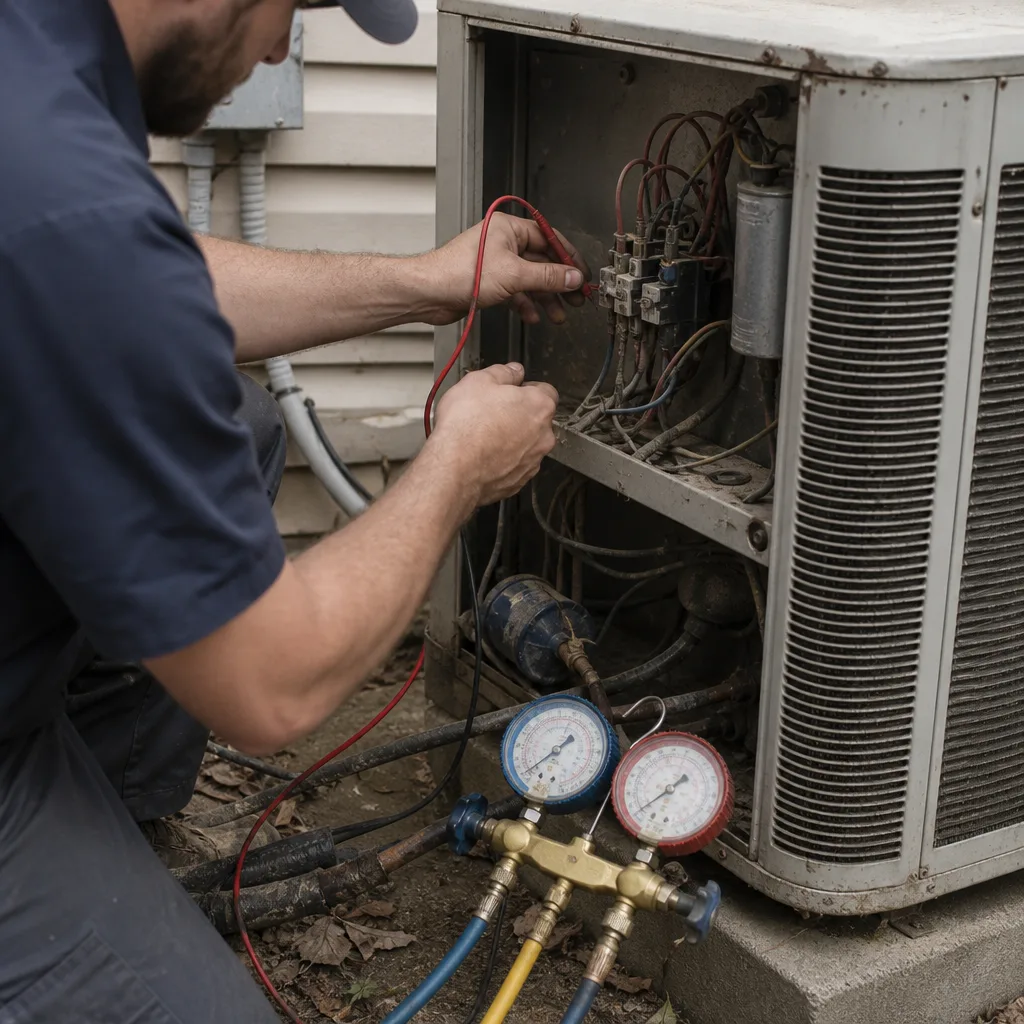 Before
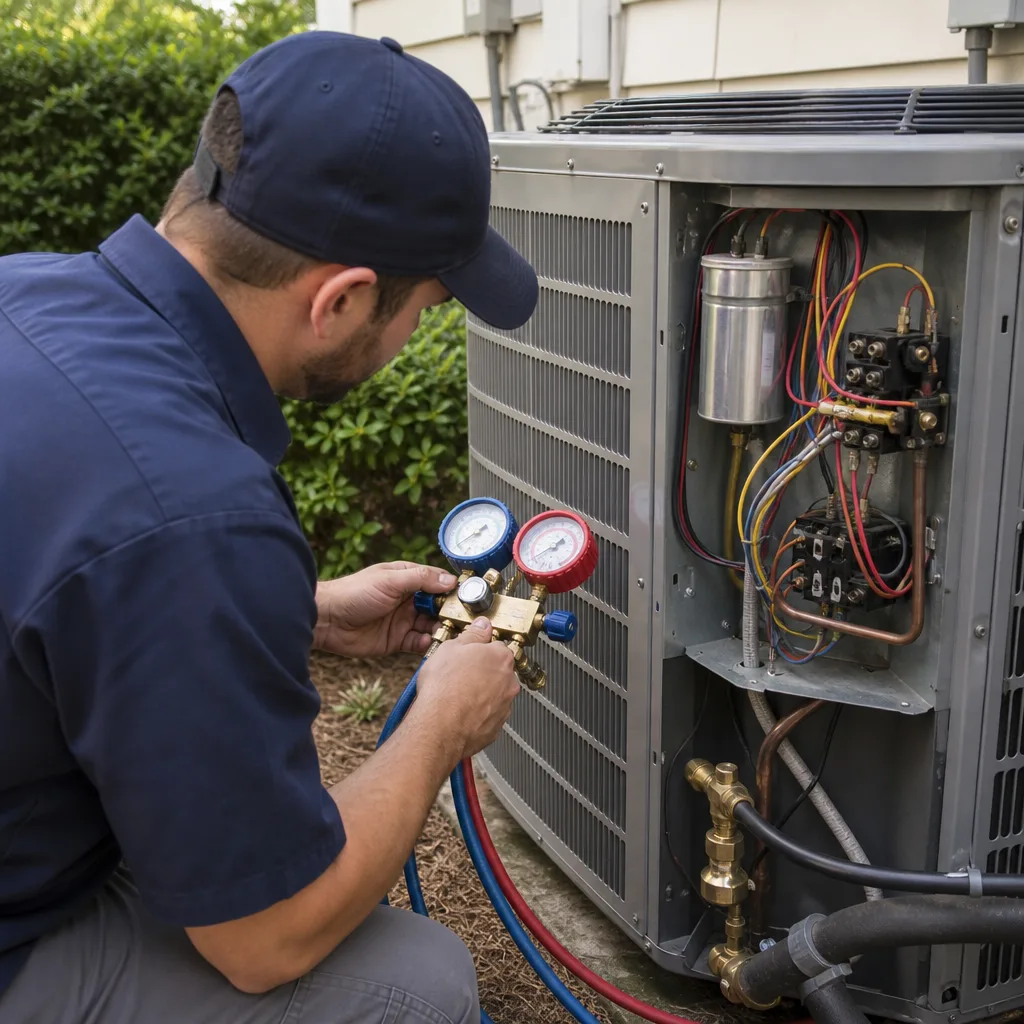
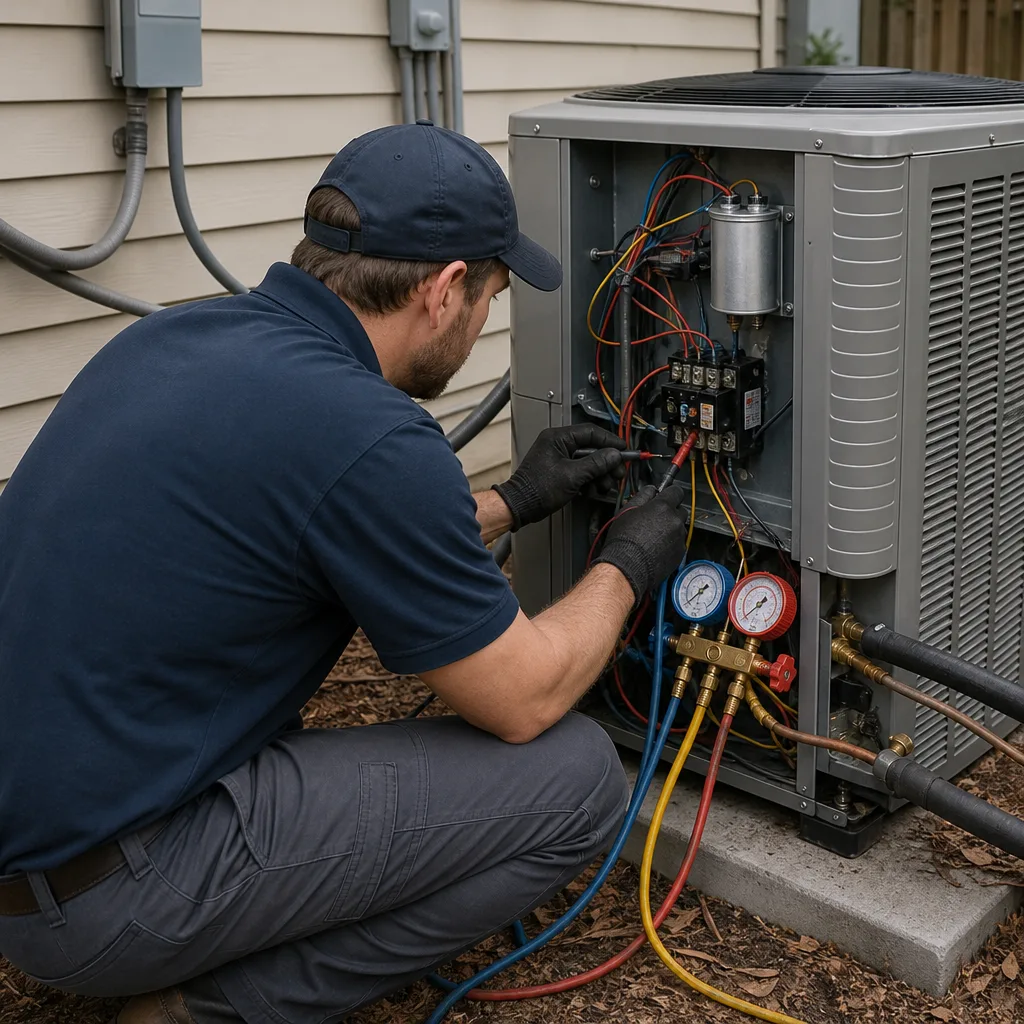
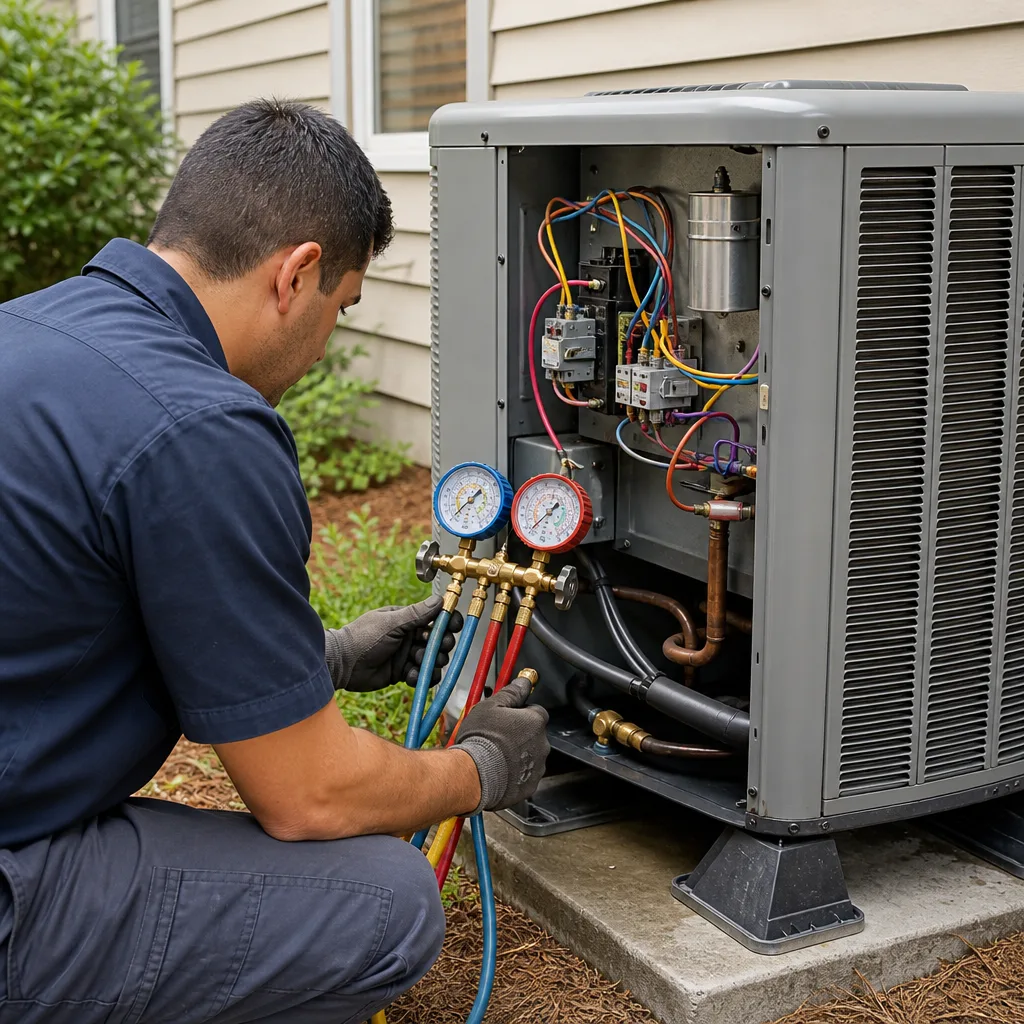 After
After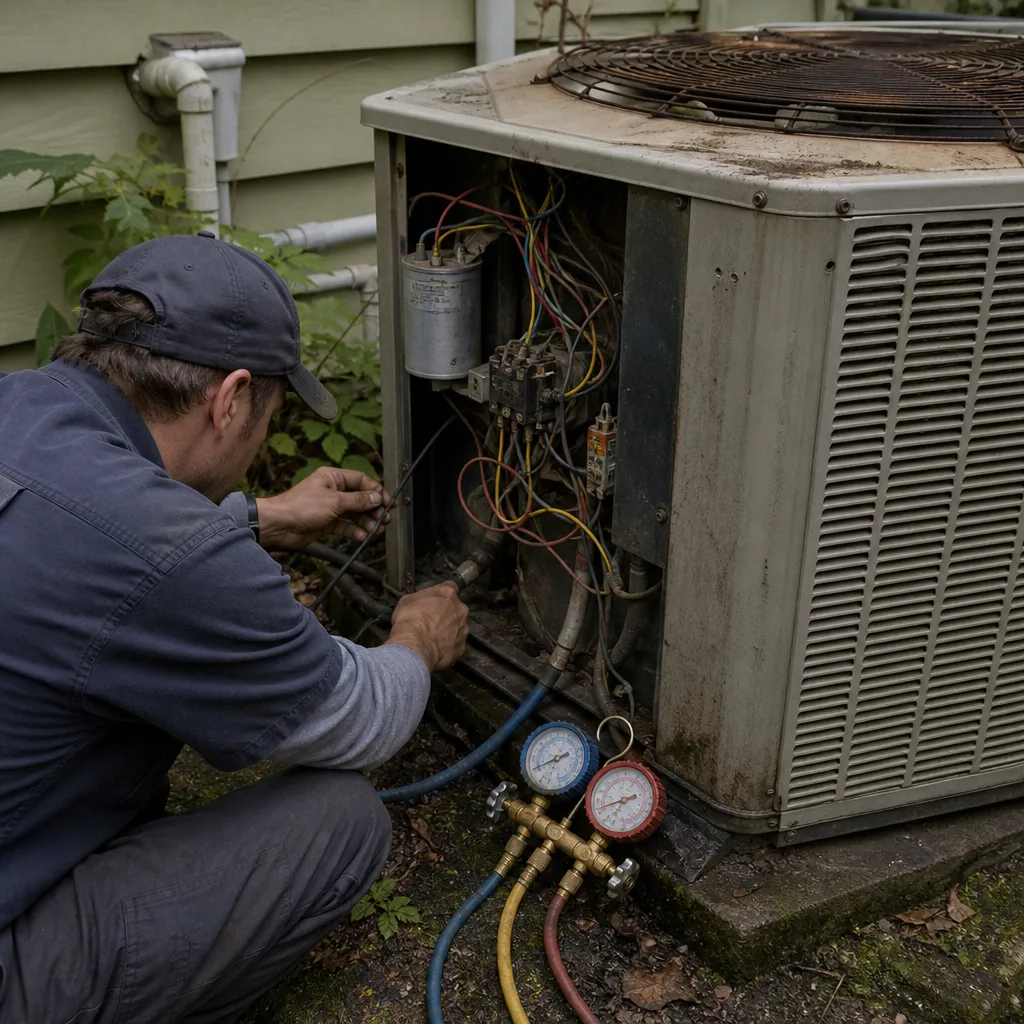 Before
 After
After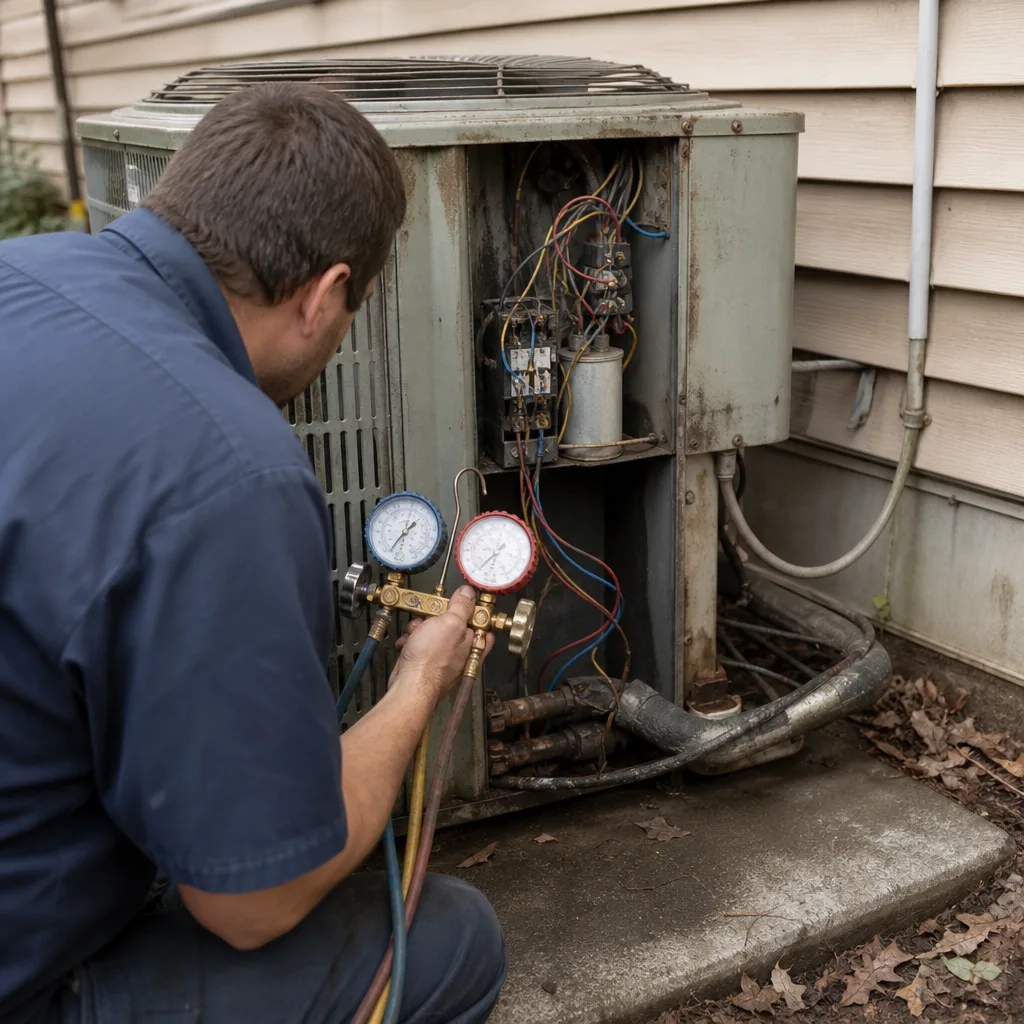 Before
 After
After