

Last updated October 16, 2026
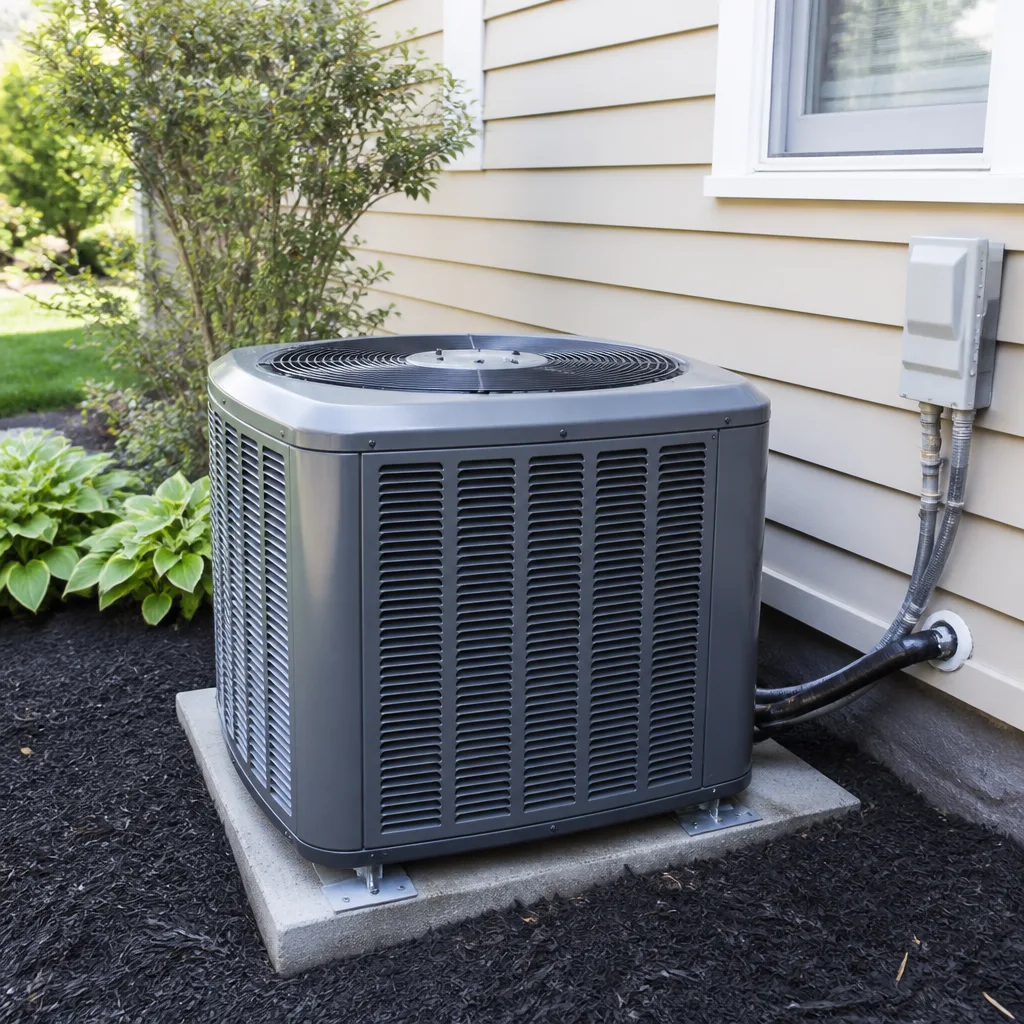 AC repair
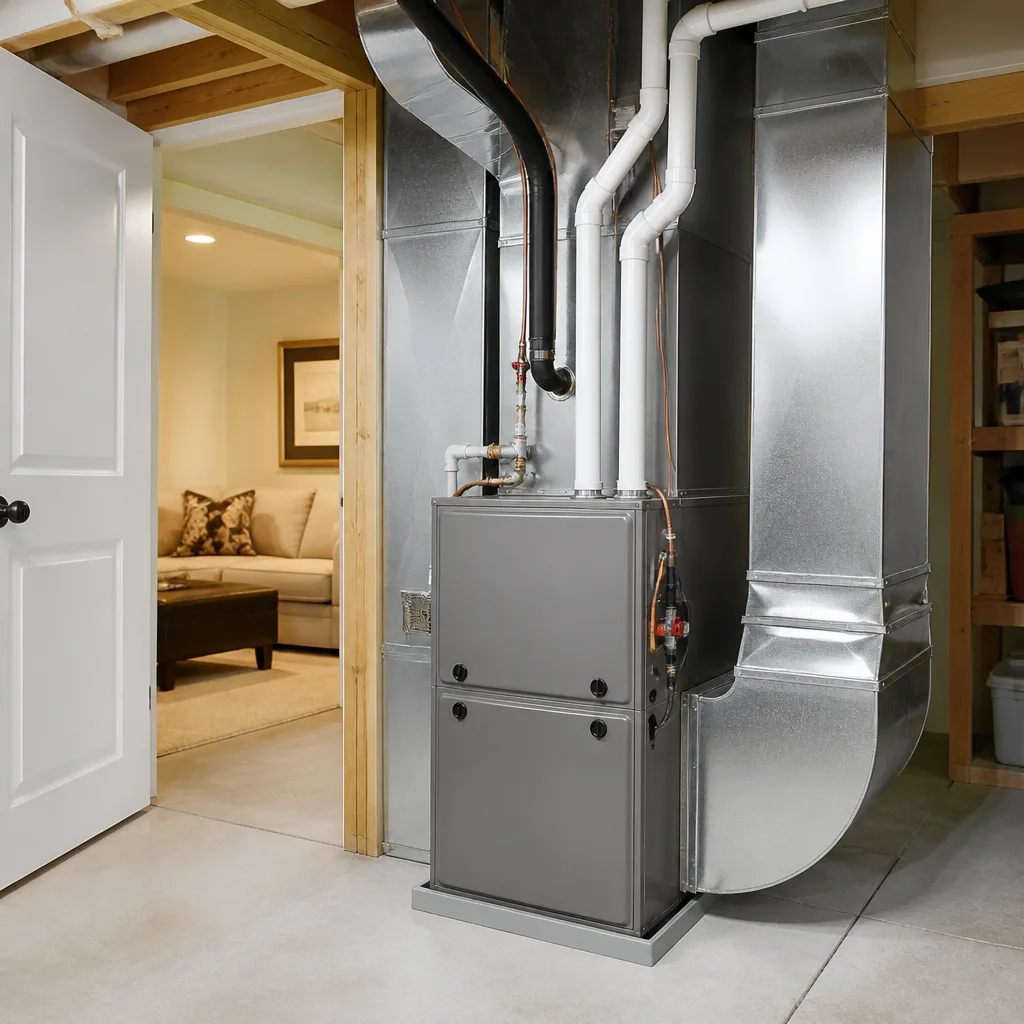 Furnace & heating
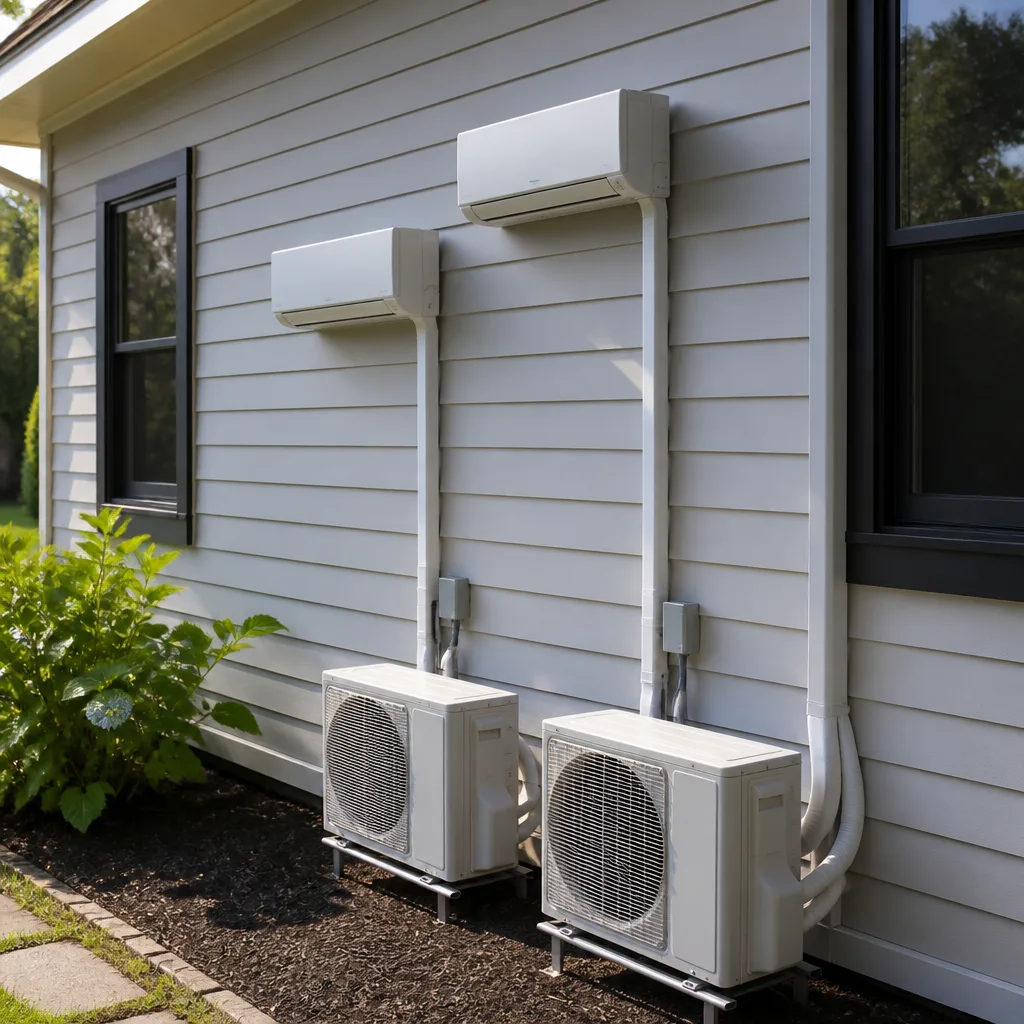 Ductless mini splits
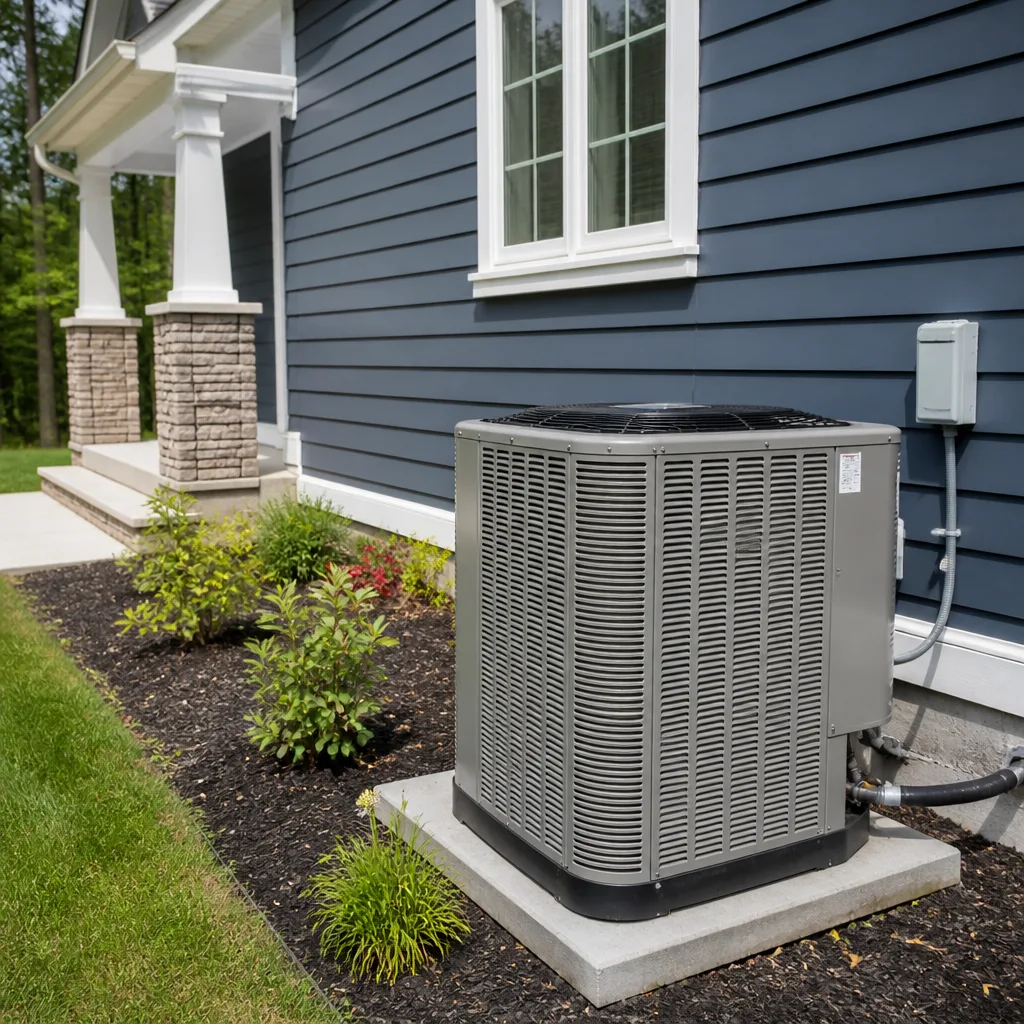 Carrier
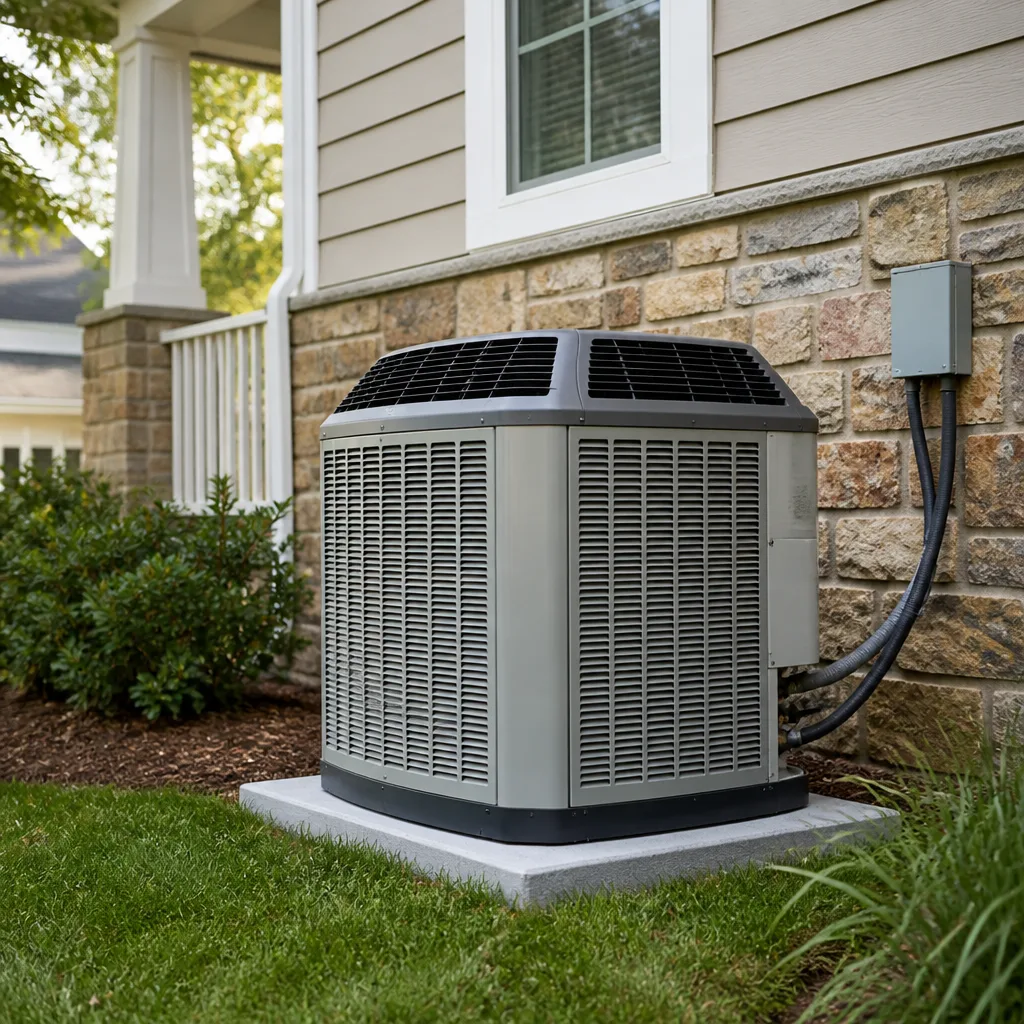 Trane
Trane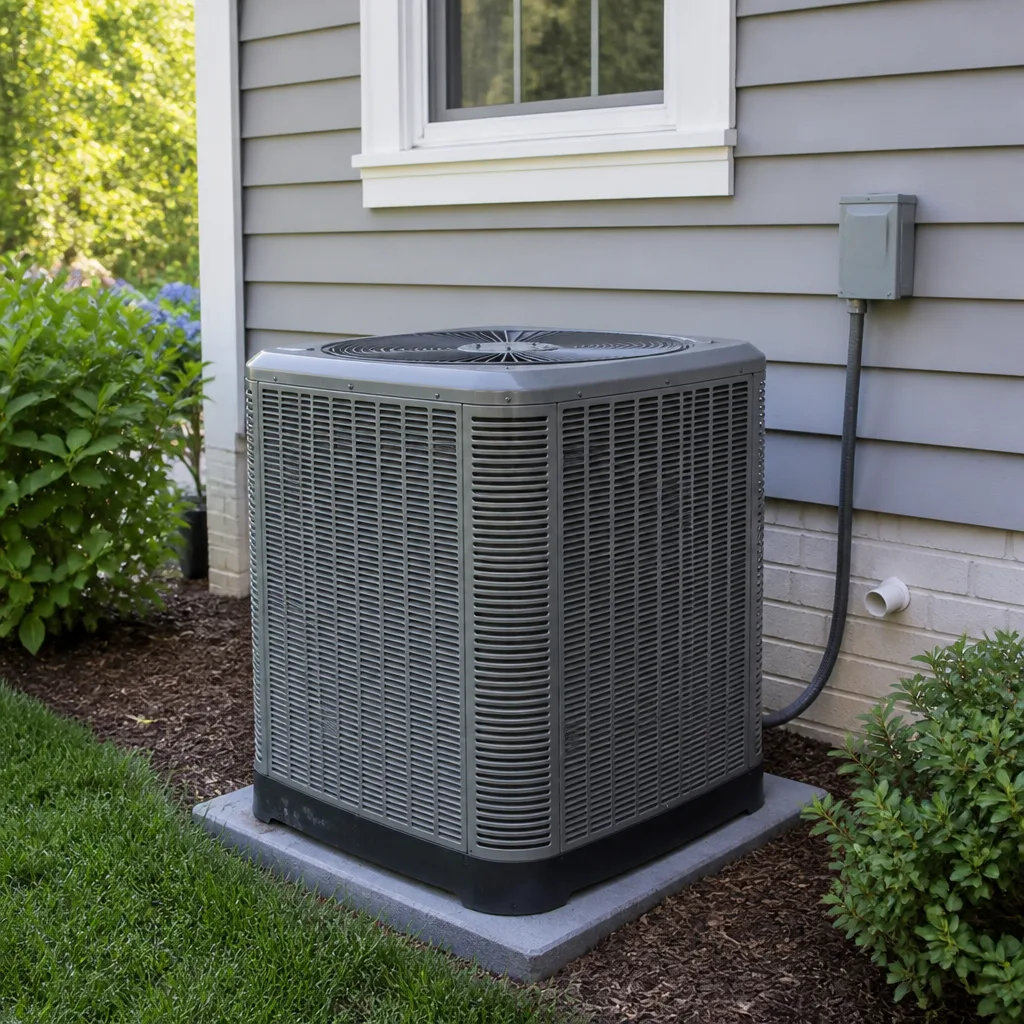 Goodman
Seasonal tune-up and full diagnostic on your Carrier, Trane, or Goodman system - readings shown to you before any repair is proposed
Diagnosis first, numbers second - you approve the repair price before a single part goes in.
Get your free estimateDIY vs Professional HVAC: The Atlanta Homeowner’s Decision Guide
Replacing your own air filter is legal, smart, and takes ten minutes. Recharging your own refrigerant is a federal crime with a $44,539 maximum fine per violation, per day, under EPA Section 608. A surprising number of Atlanta homeowners don’t know where that line sits, and the internet doesn’t help. YouTube makes a capacitor swap look like changing a light bulb, while a refrigerant top-off looks like filling a tire. The reality is messier, especially here in Atlanta, where humidity turns a small mistake into a mold problem faster than almost anywhere else in the country. This guide maps the actual legal boundary, the real warranty stakes, and the honest dollars-and-cents comparison for the five tasks Atlanta homeowners attempt most. You’ll leave knowing exactly what to grab a screwdriver for, what to leave alone, and what costs more when you get it wrong.
Quick Answer
DIY HVAC work is smart for exactly three tasks in Atlanta: filter replacement, condensate line flushing, and thermostat battery changes. Everything else carries legal exposure, warranty voidance, or safety risk that outweighs the savings. For a homeowner with moderate tool experience, a capacitor swap is the one advanced task you can legally do yourself with about $18 in parts and proper precautions. For larger repairs, the break-even math favors calling a licensed pro, and in Atlanta specifically, the humidity makes amateur mistakes more expensive to reverse.
Styles & brands we work with
Table of Contents
- The Legal Boundary Map: What You’re Allowed to Touch
- Warranty Stakes: What DIY Actually Voids
- The Atlanta Humidity Multiplier
- True Cost Comparison: The Five Most Attempted DIY Tasks
- Three Tasks That Fail Most in Atlanta (And One That’s Surprisingly Safe)
- Safety First: What Sends Atlantans to the ER
- How to Hire Right in Atlanta
- Common Mistakes to Avoid
- When to Call a Professional
- Frequently Asked Questions
- The Bottom Line
The Legal Boundary Map: What You’re Allowed to Touch
The DIY-versus-pro conversation usually starts with skill. In Atlanta, it should start with law. Federal regulations, Georgia code, and your equipment warranty each draw different lines, and none of them ask whether you’re handy. Here’s the plain-language map.
What Federal Law Prohibits
EPA Section 608 governs refrigerant handling across the United States, and it’s the big one. If a job requires opening the sealed refrigeration circuit, which includes recharging refrigerant, recovering refrigerant, or replacing components like the compressor, evaporator coil, or TXV (thermal expansion valve, the part that regulates how much refrigerant enters the coil), you need an EPA Section 608 certification. Not a license, not a permit. A certification that requires passing a proctored exam. Homeowners do not hold this. The fine structure is designed to be noticed: $44,539 per day, per violation. That number is not a typo. The EPA has published it as the maximum civil penalty for knowingly venting refrigerant or handling it without certification, and it applies to individuals, not just companies. In our experience, most Atlanta homeowners who attempt a DIY recharge honestly have no idea this law exists. They saw a YouTube tutorial filmed in a state with looser enforcement and assumed it was like topping off wiper fluid.
What Georgia State Law Requires
Georgia requires HVAC contractors to hold a state-issued license through the Georgia Secretary of State’s office for work on systems beyond basic maintenance. Specifically, any installation, replacement, or modification of a heating or air conditioning system, including ductwork, falls under the Georgia State Construction Industry Licensing Board. A homeowner can pull a limited Homestead Exemption permit for work on their own primary residence, but that work must still meet the same code requirements, and that permit does not allow you to touch refrigerant or gas lines in a way that bypasses federal or local rules. The practical effect in Atlanta: a homeowner can legally replace a thermostat or a capacitor in their own single-family home without a contractor’s license. A homeowner cannot legally install a new condenser, run new line sets, or modify a gas furnace without either a licensed contractor or a Homestead permit and a passing inspection. Most DIY HVAC tutorials gloss over this because the creators aren’t in Georgia.
If you’re uncertain where a project falls, the safe answer is usually found in the equipment manual. If the word “refrigerant,” “gas valve,” or “heat exchanger” appears in the instructions for the part you’re about to touch, stop. That’s the line. For anything on the legal-to-DIY side, proceed slowly. For anything past it, AC repair in Atlanta by a licensed pro is the only path that doesn’t put you in regulatory crosshairs.
Warranty Stakes: What DIY Actually Voids
Here’s what almost nobody tells Atlanta homeowners: most HVAC equipment warranties are voided not by the mistake itself, but by the absence of documentation. The warranty language usually reads something like: “Warranty coverage requires installation and service by a licensed HVAC contractor.” Some manufacturers are explicit; Rheem, York, Daikin, and Bryant all include language in their warranty terms that conditions parts coverage on professional service records. That means the question isn’t whether your DIY repair caused the failure. The question is whether you can provide a service record from a licensed contractor at all. If you can’t, the claim is denied before anyone examines the unit.
Let’s put a dollar figure on that. A typical compressor replacement on a mid-range system in Atlanta runs between $1,800 and $3,200 installed. If your compressor fails at year six of a ten-year parts warranty, and you’ve replaced your own contactor twice and flushed your own condensate line without documenting professional maintenance, the manufacturer can deny the parts claim. You just turned a $300 labor-only job into a $2,000-plus full replacement job. The savings from those DIY repairs maybe added up to a few hundred dollars over the previous years. The asymmetry isn’t close.
What Professionals Do Differently
A licensed technician creates the paper trail: dated invoices, diagnostic notes, part numbers, and equipment readings. That’s not bureaucracy. That’s your claim file. When Halden Heating and Air Atlanta performs AC repair in Atlanta, every job includes written documentation. That matters as much for your warranty as it does for your own recordkeeping. We’ve seen warranty claims saved purely because the homeowner had the receipts to show the unit was maintained and serviced by licensed techs at regular intervals. We’ve also seen claims denied because the homeowner couldn’t produce any service history beyond what they’d done themselves on weekends. In Atlanta’s climate, where systems run hard from May through October, that ten-year parts warranty is a real financial asset. Don’t torch it to save $120 on a repair call.
The Atlanta Humidity Multiplier
Atlanta sits in a humid subtropical climate. Summer dew points routinely exceed 70°F, which means the air is saturated with moisture from June through September. Every HVAC system in the metro area, from Buckhead to East Atlanta to Sandy Springs, is doing two jobs: cooling the air and dehumidifying it. When a system is working correctly, it removes gallons of water from your indoor air every day. When a DIY repair interferes with that process, the consequences compound faster here than in Phoenix, Denver, or Las Vegas.
Why Mold Moves Faster in Atlanta
Mold needs three things: organic material, a temperature between 40°F and 100°F, and moisture. The first two are present in every Atlanta home, always. The third is what a functional HVAC system manages. If a DIY repair leaves a drain pan slightly out of level, or a drain line with a low spot, or a coil that isn’t sloped correctly toward the drain, water pools. In Atlanta, interior humidity above 60% creates mold-sustaining conditions within 24 to 48 hours. Visible mold growth on drywall or insulation typically appears within two weeks. A published study from the EPA on mold and indoor air quality notes that in warm, humid climates, mold colonization can begin in as little as 24 to 48 hours on wet materials. Compare that to a drier climate like Colorado, where the same standing water might evaporate before mold ever gets a foothold. Atlanta does not give you a grace period.
We see this most often with DIY condensate line work and coil cleaning. A homeowner uses a household cleaner on the evaporator coil because the internet said it’s fine. The cleaner leaves a residue. The coil doesn’t drain as well. Within two weeks, there’s a musty smell. Within a month, a mold bloom behind the air handler. The cleanup cost, including antimicrobial treatment, drywall repair, and coil restoration, runs $800 to $2,500 depending on where in the Halden Heating and Air Atlanta home service area the home sits and how far the moisture traveled. The professional service that would have prevented it costs $150 to $300. The humidity multiplier is real, and it’s the single most under-discussed factor in the Atlanta DIY HVAC conversation.
True Cost Comparison: The Five Most Attempted DIY Tasks
Let’s look at the actual numbers for the five jobs Atlanta homeowners attempt most often. These figures reflect the metro Atlanta market as of this writing. Your mileage will vary by neighborhood, equipment age, and brand, but the relationships between columns won’t change.
1. Air Filter Replacement
- Part cost: $8 to $25 (disposable 1-inch pleated filter)
- Pro service cost: $30 to $75 (filter provided, typically part of a maintenance visit)
- DIY mistake cost: Near zero, but installing a filter backward or failing to change it for a year can restrict airflow and cause a frozen coil, which turns into a $200 to $500 repair
- Legal status: Fully legal, zero warranty risk
- Verdict: DIY every time. This is the one no-brainer.
2. Thermostat Swap (Like-for-Like Replacement)
- Part cost: $30 to $250 depending on features
- Pro service cost: $150 to $350 including installation and wiring verification
- DIY mistake cost: A miswired thermostat can blow the low-voltage fuse ($5 part) or, worse, the control board ($300 to $700). In Atlanta’s older housing stock, like the bungalows of Candler Park and Grant Park, DIY thermostat swaps on systems with non-standard wiring run into compatibility issues that eat entire weekends.
- Legal status: Legal if it’s a direct replacement with the same voltage, no line voltage work
- Verdict: DIY-friendly for standard systems. Call a pro for anything with a heat pump, dual fuel, or multiple stages. Label every wire before you disconnect it.
3. Condensate Line Flush
- Part cost: $10 to $40 (wet-dry vac, white vinegar, or a purpose-made flush kit)
- Pro service cost: $75 to $175 as a standalone call
- DIY mistake cost: Pushing the clog deeper into the line can turn a simple flush into a $200 drain line replacement. More seriously, failing to confirm the float switch works after the flush means the system can overflow, and in Atlanta’s summer, that means water damage and mold within days. We’ve seen DIY flushes in Midtown condos that ended with $2,000 in ceiling repair for the neighbor below.
- Legal status: Legal, no warranty risk as long as you don’t modify the line
- Verdict: DIY-friendly as a maintenance task. Do it in spring, not when the pan is already full.
4. Capacitor Replacement
- Part cost: $15 to $50 for a dual-run capacitor, depending on microfarad rating and brand
- Pro service cost: $150 to $300 including diagnosis, the part, labor, and a system test
- DIY mistake cost: Installing the wrong capacitance value can overheat the compressor windings and cause a $1,800 to $3,200 compressor failure. A capacitor that is not properly discharged before handling can deliver a shock strong enough to stop a heart, even with the power off.
- Legal status: Legal to replace on your own equipment. Does not void warranties as long as the part matches spec.
- Verdict: This is the one meaningful DIY win in the HVAC world for an Atlanta homeowner who is comfortable with a multimeter and follows a strict discharge process. More on this below.
5. Contactor Swap
- Part cost: $20 to $60
- Pro service cost: $150 to $320 including diagnosis
- DIY mistake cost: A contactor is a switch. If you install one with the wrong amp rating, you can weld the contacts closed, which means the outdoor unit won’t shut off, which can destroy the compressor. A contactor isn’t “just a relay.” Matching the amperage rating, coil voltage, and number of poles to the old part is non-negotiable.
- Legal status: Legal to replace. Warranty risk is manageable if the part matches spec and the system tests normal afterward.
- Verdict: Only for homeowners with real confidence in electrical work. Most people should call AC repair in Atlanta and have it done in under an hour.
A few honest words from our bench: we’ve seen hundreds of DIY capacitor and contactor swaps end well. We’ve also seen enough pitted contactors, blown fuses, and scorched wires to know the gap between a YouTube walkthrough and a real-world unit is wider than it looks. If you are unsure at any point, the cost of confirming with a pro is lower than the cost of discovering your mistake at 2 a.m. in July.
Three Tasks That Fail Most in Atlanta (And One That’s Surprisingly Safe)
Not all DIY HVAC projects fail at the same rate. Here’s what we see most often across metro Atlanta, from Decatur to Buckhead to Roswell.
The Three High-Failure DIY Tasks in Atlanta
- Refrigerant recharge attempts. Homeowners buy a can of refrigerant at an auto parts store or online, thinking it’s the same as a car AC. It’s not. Automotive refrigerant is R-134a or R-1234yf. Residential air conditioners use R-410A or R-22, and they operate at pressures that can cause severe frostbite or burst the can if connected incorrectly. Worse, the owner usually doesn’t find the leak first, so the recharge leaks out and the cycle repeats. In our experience, maybe 15% of DIY recharges we’re called in to fix went as planned, and all of them were illegal under EPA Section 608 regardless of outcome.
- Drain pan removal and reinstallation. The pan sits under the evaporator coil, and getting it out means moving the coil, the condensate line, and often the plenum. In Atlanta’s humid summers, a pan that is reinstalled even slightly off level pools water along one edge. By the time the homeowner notices the musty smell, the drywall behind the unit is already wet. This project has one of the worst cost-to-benefit ratios in all of DIY HVAC.
- Evaporator coil cleaning with household products. Coil cleaner is a specific alkaline or acid-based formula designed to rinse clean without leaving residue. Dish soap, bleach, vinegar, and “all-purpose cleaner” are not substitutes. They leave a film that traps dust and moisture. In Atlanta, that film becomes a mold food source in under two weeks. A proper professional coil cleaning runs $150 to $350. Remediating the aftermath of the DIY version runs $800 to $2,500. The brand-name coil cleaner that the pros use costs $25 at a supply house, but the right product isn’t the only variable; the rinsing, the drain pan pitch, and the airflow verification all matter.
The One Surprisingly Safe Advanced Task: Capacitor Swap
For a confident Atlanta homeowner, replacing a capacitor is the single best DIY win in HVAC. The part costs $15 to $50. The fix takes 30 to 45 minutes. No special tools beyond a multimeter and a screwdriver are required. You don’t open the refrigerant circuit. You don’t touch the gas line. You don’t risk voiding the warranty as long as the replacement matches the microfarad (µF) and voltage ratings printed on the side of the old part.
The exact process looks like this:
- Kill power at the breaker and at the outdoor disconnect box next to the condenser.
- Remove the service panel and visually confirm the capacitor’s location, rating, and wire configuration. Take a photo before touching anything.
- Use an insulated screwdriver to discharge the capacitor by bridging the terminals. Do this even if the power is off. Capacitors store energy.
- Disconnect the wires one at a time and remove the old capacitor.
- Match the new capacitor’s µF and voltage ratings exactly. A tolerance of ±5% on µF is the accepted standard. Do not substitute a different value.
- Install the new capacitor, reconnect the wires exactly as they were in the photo, and restore power.
- Test the system by running the AC and listening for a clean compressor start.
If any step in that sequence feels unclear, stop. Call a pro. The difference between a successful capacitor swap and an emergency AC repair in Atlanta is entirely in the preparation. This is not a casual Saturday-morning project, but it is a legal, doable one for the right person. We’ll say it plainly because nobody else in the industry does: capacitor replacement is the one task where a reasonably handy homeowner can genuinely save $150 to $250 without taking on serious risk.
Safety First: What Sends Atlantans to the ER
High-voltage electricity is the most obvious danger, but it’s not the one that surprises people. Here’s what the data and our own service history show.
The Risks, Ranked
- Un-discharged capacitors. A dual-run capacitor in a residential AC can hold 370 to 440 volts for hours after the power is off. A shock at that voltage can cause cardiac arrhythmia or burns. This is the single most common serious injury in DIY HVAC, and it’s completely preventable.
- Refrigerant burns and frostbite. Liquid refrigerant escaping at pressure drops to -40°F instantly. Contact with skin causes deep frostbite. Contact with eyes causes permanent damage. This is on top of the legal exposure.
- Falls from ladders and attic access points. Atlanta homes often have HVAC equipment in attics with pull-down stairs. Working alone, in summer heat, in 120°F attics, carrying tools and parts, creates real fall and heat-stroke risk. Every summer we hear about a homeowner who passed out or slipped.
- Gas leaks on furnace work. The gas valve, manifold, and burners on an Atlanta furnace are not DIY territory under any reasonable interpretation. A mistake here doesn’t just void your warranty; it can kill you. Carbon monoxide is odorless and heavier than air, and the first sign of a leak is often a headache that doesn’t go away.
Our rule of thumb from two decades of Atlanta service work: the moment a repair involves electricity at the breaker panel, refrigerant, gas, or working in an attic in August, the risk-reward calculation has already been made for you. Call a pro. The savings from a DIY fix disappear instantly against a single emergency room bill, and that says nothing of the long-term medical consequences.
How to Hire Right in Atlanta
If you’ve read this far, you’ve probably concluded that some of your HVAC work should be professional. The next question is how to choose without getting burned. Atlanta has no shortage of options, from solo operators to national chains, and the quality spread is wide.
What to Ask Before You Book
- Is the price in writing before work starts? If the answer is anything but a direct yes, keep looking. A written price before work begins is the single best predictor of an honest HVAC experience.
- What is the guarantee, and is it in writing? Every repair should have a stated coverage window. Ask for it in writing before the tech arrives.
- Can I book online and track the tech? In 2026, there’s no reason an HVAC company can’t offer online booking and live arrival tracking. Companies that still run on four-hour windows are operating on an old model, and it usually shows up elsewhere in their service.
- Who is answering the phone at 2 a.m.? If your AC fails on a July night in Atlanta, you need a human. Not a voicemail, not a callback promise. A human. Ask directly: “Is there a live person on calls 24/7?”
- Which brands do you service? If a company says they work on “all brands” but can’t name the ones they see most, be cautious. Real technicians can tell you immediately whether they regularly service Rheem, York, Daikin, Bryant, or whatever you have.
Halden Heating and Air Atlanta operates on a straightforward standard: book online, get a live arrival time with tracking, receive a written price before any work starts, and get a written guarantee on every repair with a free second visit if the repair fails within the coverage window. That’s the Relay Standard that our company was built around through the Relay Home Co. network. We’re independently owned and operated, not a franchise, and we work on all major brands. For a deeper look at what happens during a professional visit, see our guide to AC repair in Atlanta.
When to Hire for Installation Work
One topic that deserves its own section: installation. DIY installation of a full HVAC system in Atlanta is not a realistic path for almost any homeowner, for reasons that go well beyond skill. A proper AC installation requires sizing calculations (Manual J load calculation), line set brazing, refrigerant charging by weight, electrical circuit work, and code-compliant permits. Get any one of those wrong and you’re looking at a system that runs inefficiently, fails early, and probably voids its own warranty on day one. The cost of a professional installation in Atlanta, including permitting, typically runs $6,000 to $14,000 for a full system replacement depending on SEER rating, brand, and home size. That’s a significant purchase, but the alternative, a DIY install that fails inspection or underperforms for a decade, is far more expensive. For Atlanta homeowners considering a replacement, AC installation in Atlanta is a better place to start than any big-box store.
Furnace Work: The Winter Side of the Equation
Atlanta winters are short, but they’re not optional. When temperatures drop into the 20s in January and February, a furnace failure becomes a real emergency. The same legal boundaries from the AC side apply in reverse. Gas valve work, heat exchanger inspection, and combustion analysis all require a licensed contractor. The carbon monoxide risk is non-negotiable. A cracked heat exchanger can leak CO into your home silently, and the only reliable way to detect it is with professional combustion testing equipment, not the $20 detector on your hallway ceiling. Every year, Atlanta fire departments respond to CO calls that started with a homeowner who wanted to save money on a furnace fix. The math doesn’t work. Furnace repair in Atlanta is one category where the DIY conversation should end before it starts.
Common Mistakes to Avoid
- Using automotive refrigerant in a residential system. It’s the wrong chemical, the wrong pressure, and the wrong fitting. Every year, Atlanta homeowners destroy compressors this way. The $40 “savings” becomes a $3,000 replacement.
- Changing filters on an annual schedule instead of a monthly check. Atlanta’s pollen season, which runs from late February through May, clogs filters faster than a generic maintenance calendar assumes. Check monthly. Change when dirty.
- Ignoring the drain pan until water appears on the ceiling. By the time water is visible, the mold process is already weeks along. Float switches and wet-sensor alarms are $30 prevention for a $2,000 problem.
- Buying the cheapest capacitor online and trusting the spec on the listing. Counterfeit and mislabeled electrical parts are common. Buy from a reputable supply source, and verify the rating printed on the new part matches the old part exactly.
- Doing electrical work without killing power at the breaker AND the outdoor disconnect. The outdoor disconnect is a pull-out handle or breaker box near the condenser. Kill both, then verify with a multimeter. Every time.
- Assuming a working AC is a healthy AC. Just because the house is cool doesn’t mean the drain line isn’t clogging, the capacitor isn’t failing, or the coil isn’t dirty. Atlanta systems need a professional checkup at least once a year, ideally in spring before the humidity arrives.
When to Call a Professional
Call a pro when refrigerant is involved, any time. Call a pro when the repair involves the circuit breaker, the main electrical panel, or 240-volt wiring. Call a pro when you smell gas, hear grinding from the outdoor unit, see ice on the lines, or notice water anywhere it shouldn’t be. Call a pro when you’ve already attempted a DIY fix and the problem came back within a month, because a recurring failure is a symptom of something upstream, and you’re spending money on bandages. And call a pro in advance of Atlanta’s summer, not during it, because every company in the metro area is at capacity in July. Maintenance is cheaper in April than emergency repair in August, every single time. Halden Heating and Air Atlanta offers free estimates throughout the Atlanta area, and you can reach us at (912) 616-5481 at any hour, with a real person answering.
Frequently Asked Questions
No. Recharging refrigerant requires an EPA Section 608 certification, which homeowners do not have. Attempting it carries federal fines up to $44,539 per violation, plus the likelihood of equipment damage. Call a licensed professional instead.
It can, even if your repair didn’t cause the failure. Most manufacturers, including Rheem, York, Daikin, and Bryant, require professional service records to honor parts warranties. Without documentation from a licensed contractor, a claim can be denied before anyone examines the unit.
Capacitor replacement. The part costs $15 to $50, it’s legal, it doesn’t open the refrigerant circuit, and it doesn’t void warranties when done correctly. Discharge the old capacitor first, match the ratings exactly, and you can save $150 to $250.
Atlanta’s humid subtropical climate means interior air is already moisture-heavy. When a DIY repair leaves standing water, a mold bloom can begin in 24 to 48 hours and become visible within two weeks. In drier climates, the same mistake often evaporates before it becomes a problem.
Most professional AC repairs run between $150 and $500 depending on the part and the labor involved. A DIY capacitor swap costs $15 to $50 in parts. A DIY mistake that damages the compressor costs $1,800 to $3,200 to fix. The savings are real on one or two specific tasks; the downside is catastrophic on everything else.
For most Atlanta homeowners, yes. A spring maintenance visit that catches a failing capacitor, a clogging drain line, or a low refrigerant charge costs $100 to $200. The emergency repair that results from letting those problems ride, plus the cost of water damage or a compressor failure, runs four to ten times higher.
The Bottom Line
The DIY-versus-professional HVAC decision in Atlanta is not really about skill. It’s about law, warranty documentation, and humidity. You can legally and safely handle filter changes, condensate line flushes, thermostat batteries, and, for the confident few, capacitor swaps. Everything beyond that, refrigerant in particular, carries consequences that make the savings irrelevant. In a city where humidity turns a small mistake into mold in two weeks, where summers push systems to their limits, and where warranty language demands professional records, the smart play is to do the small things yourself, schedule a professional tune-up every spring, and have a company you trust on speed dial for the rest. Halden Heating and Air Atlanta has been serving the Atlanta area since 2004, with written prices, written guarantees, and a live person on the phone 24/7. When the job is beyond the DIY line, call (912) 616-5481. When it isn’t, follow the steps above, and do it safely.
Written by Andre Fuller, Owner at Halden Heating and Air Atlanta, serving Atlanta since 2004.
See the difference
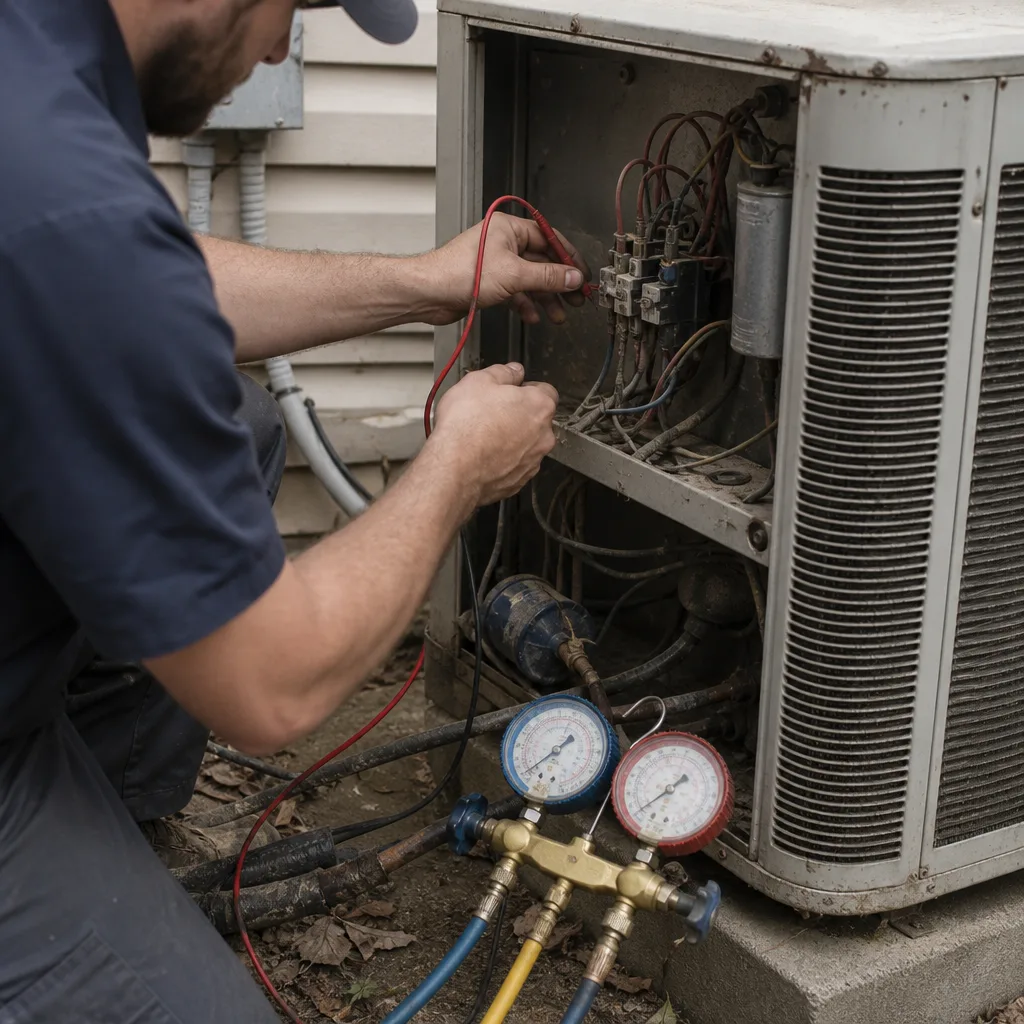 Before
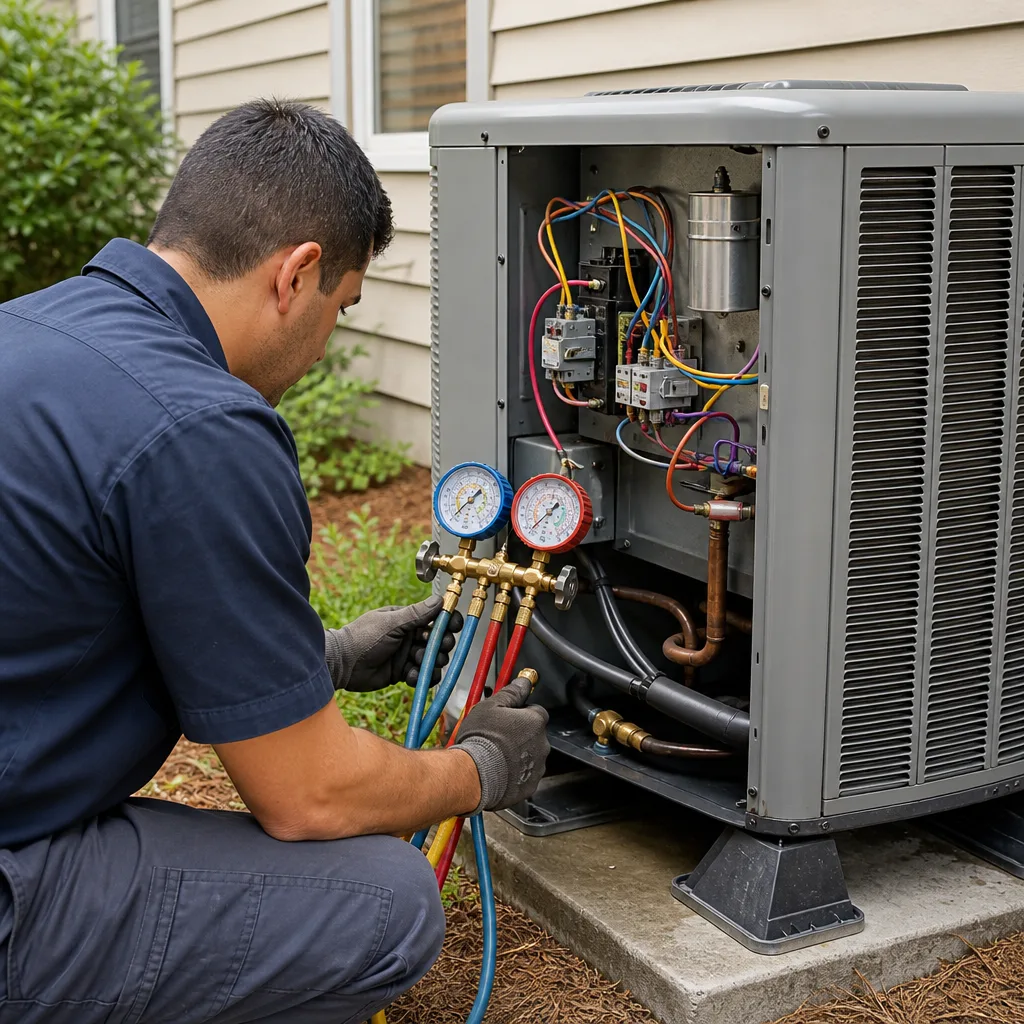 After
After Before
 After
After Before
 After
After