
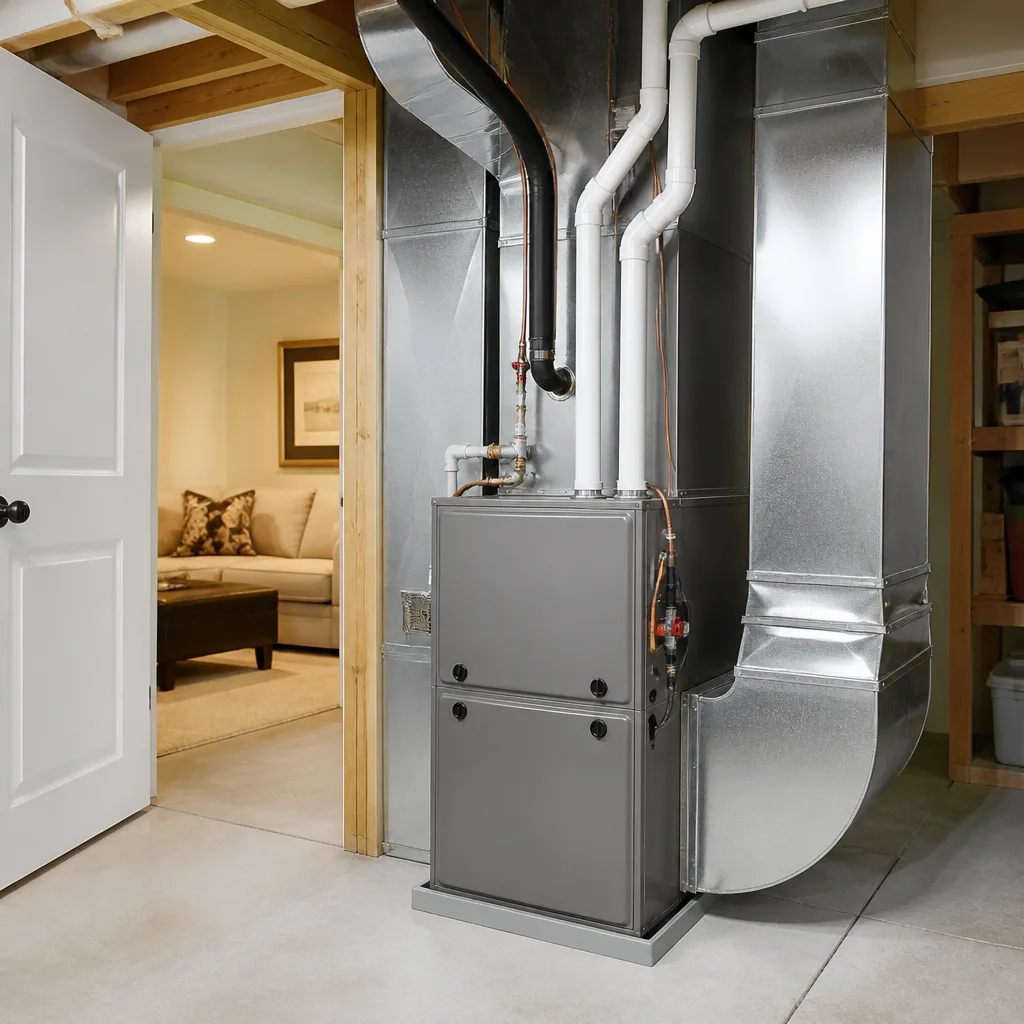
 Furnace & heating
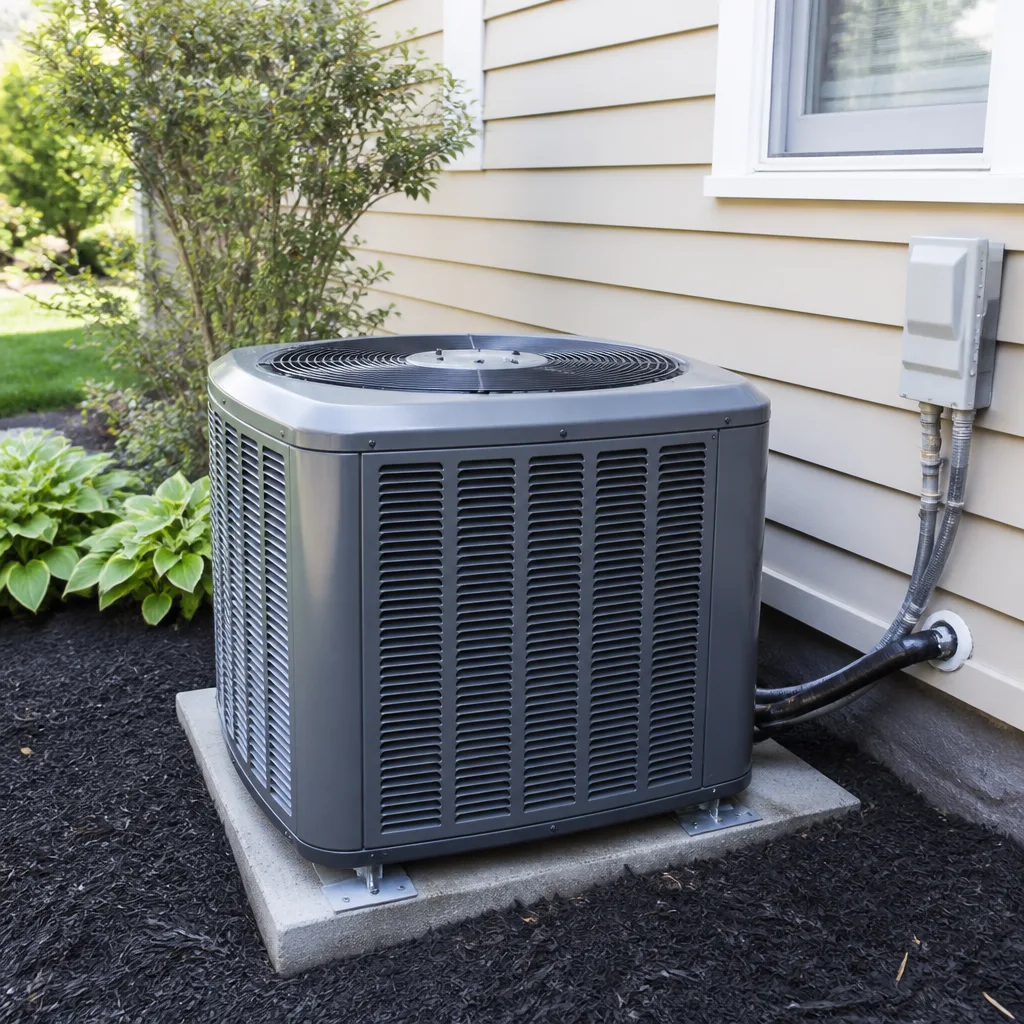 AC repair
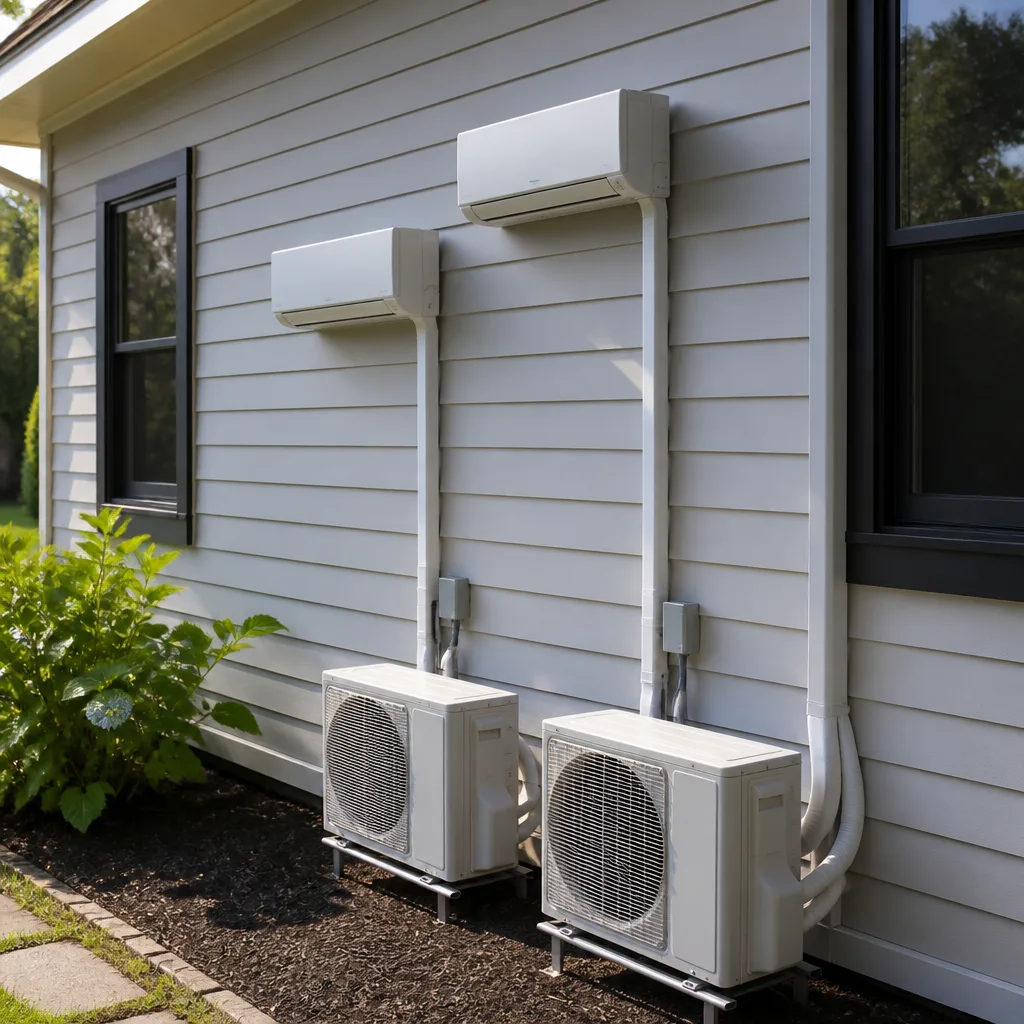 Ductless mini splits
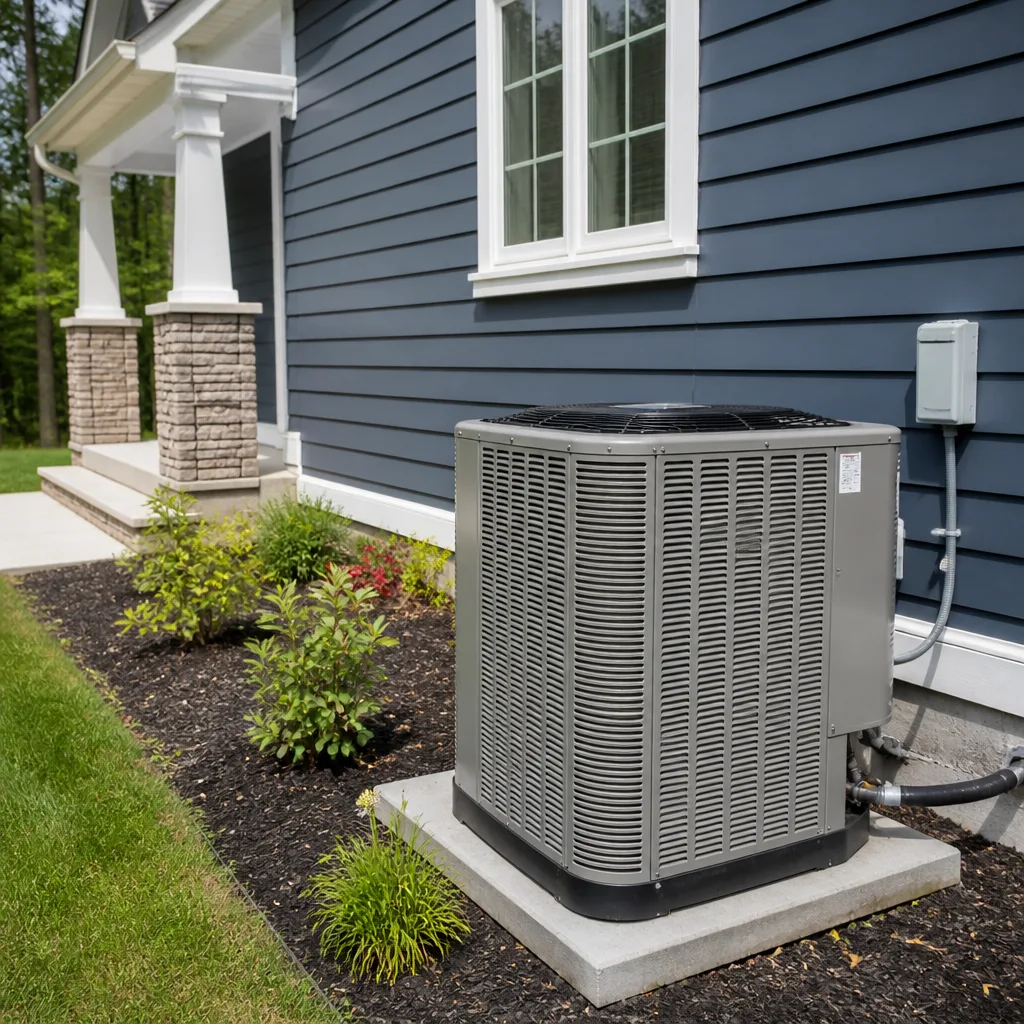 Carrier
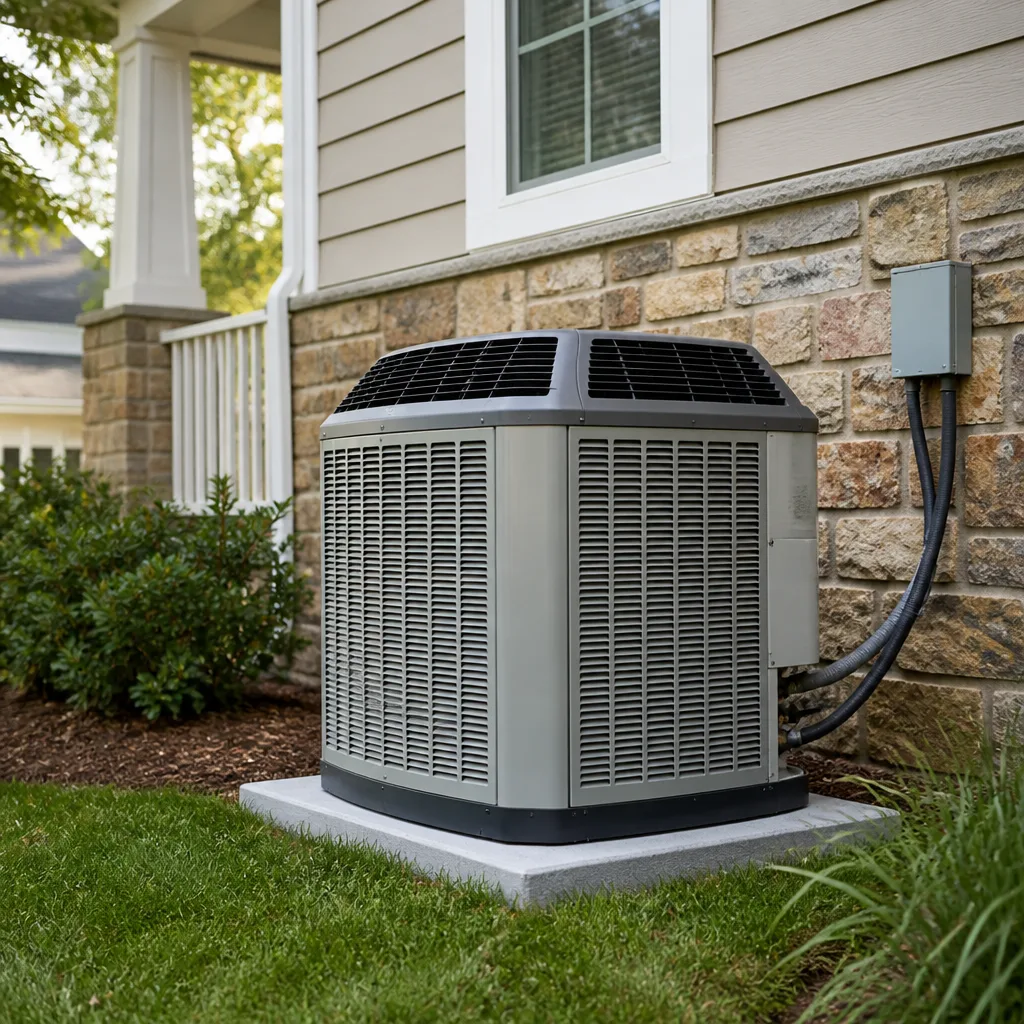 Trane
Trane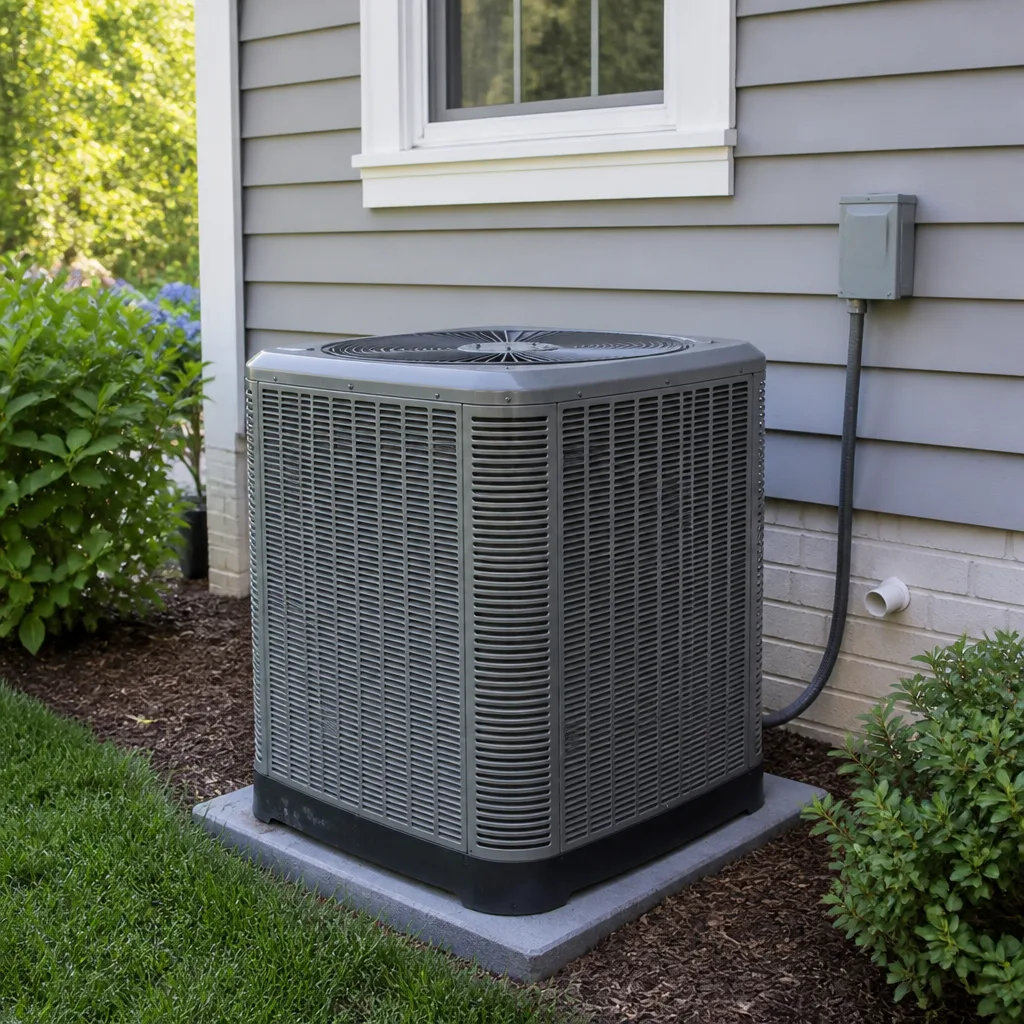 Goodman
Seasonal tune-up and full diagnostic on your Carrier, Trane, or Goodman system - readings shown to you before any repair is proposed
Diagnosis first, numbers second - you approve the repair price before a single part goes in.
Get your free estimateAmerican Standard Heat Pump Service: The Atlanta Owner’s Guide
We stock American Standard-specific heat pump parts on our trucks and install them same day in most Atlanta neighborhoods. A typical American Standard heat pump repair in Atlanta runs $150 to $650 installed, depending on the part that failed. Most owners figure out something’s wrong the same way: their heat pump is running but the air coming out isn’t cold enough in July, or it’s blowing cold air when it should be heating in January. Sometimes it’s the thermostat acting up, sometimes it’s a capacitor that gave out, and sometimes it’s the compressor contactor or the defrost control board. The symptom is almost always the same story though: the unit runs, but it’s not doing its job.
Here’s what we tell every Atlanta homeowner who calls us about a American Standard heat pump: don’t guess at the part. American Standard units are built well, but they use specific voltage ratings, capacitor microfarad values, and control board revisions that vary by model year and series. A universal part might work for a season, and then you’re back where you started when the compressor locks up on a 95-degree day in Buckhead. We write the part number down, match it to your unit’s data plate, and quote you a fixed price before we touch anything. That’s how Andre Fuller runs every call at Halden Heating and Air Atlanta, and it’s why we get so many referrals in Midtown, Decatur, and the older neighborhoods around Inman Park where heat pumps from the early 2000s are hitting their second or third major repair cycle.
Which American Standard Models This Applies To
American Standard heat pumps fall into a few broad families, and the part compatibility changes between them. The Gold series (sometimes labeled as the 14, 15, and 16 SEER units) and the Platinum series (18 to 20 SEER, variable-speed) use different control boards, different ECM motor modules, and different defrost sensors than the entry-level Silver series. Even within the same series, a 2020 unit and a 2012 unit may have different capacitor specs or a different revision of the defrost control board. The data plate on the side of the outdoor unit is the first thing we check. It has the model number, serial number, and electrical specs that tell us exactly which part goes in. If the plate is faded or damaged, we can still usually pull the model information from the indoor air handler or from the compressor itself up to a point, not a textbook.
One compatibility gotcha we see in Atlanta homes with American Standard split systems: the indoor and outdoor units were sometimes installed years apart. So the condenser outside might be from 2015, but the air handler in the attic is older (or newer). That matters because American Standard’s communicating systems (the ones with the AccuLink or Nexia thermostat, for that reason) require matched components. If you put a standard 24-volt control board into a communicating system, the unit will run, but it’ll run at one speed like a basic builder-grade unit, and your energy bill will show it. We always check both pieces before ordering or installing a part.
On the OEM-versus-aftermarket question: we stock genuine American Standard OEM parts for the most common failures and a short list of high-quality aftermarket equivalents, like the capacitors and contactors that have been proven across enough service calls that we know exactly how they’ll hold up in Georgia’s humidity. For control boards, ECM motor modules, and defrost sensors, we use OEM parts. The aftermarket boards often have subtle relay timing differences that cause intermittent issues, and nobody wants to chase a ghost problem in a 2-story house in Dunwoody in August.
For the record, we’re an independent service provider. We are not affiliated with American Standard, but we’ve worked on their equipment for years and we carry the parts that fail most often in this climate.
Styles & brands we work with
Signs Your American Standard Heat Pump Service Is Failing
- Unit runs constantly but doesn’t cool or heat well. This points to a failing compressor capacitor, low refrigerant charge, or a reversing valve that’s sticking. The capacitor is the most common and cheapest fix; the reversing valve is the biggest job.
- Breaker trips every time the heat pump kicks on. A failing compressor or a shorted crankcase heater is usually behind this. Don’t just reset the breaker and hope it holds. It’s tripping for a reason, and that reason is usually electrical.
- Outdoor unit won’t start at all. Capacitor failure is the first suspect, followed by a dead contactor. Both are relatively affordable parts and we replace them same day in most cases.
- Outdoor fan spins, but the compressor doesn’t come on. This is often a dual-run capacitor issue, and the fan end is still working while the compressor end has failed. It can also be a voltage problem at the contactor.
- Unit is iced over in summer or blowing cold air in winter. The defrost control board or defrost sensor gets blamed here, and sometimes that’s right. But low refrigerant or a bad temperature sensor can also be the cause. We check the easy things first before condemning a board.
See the difference
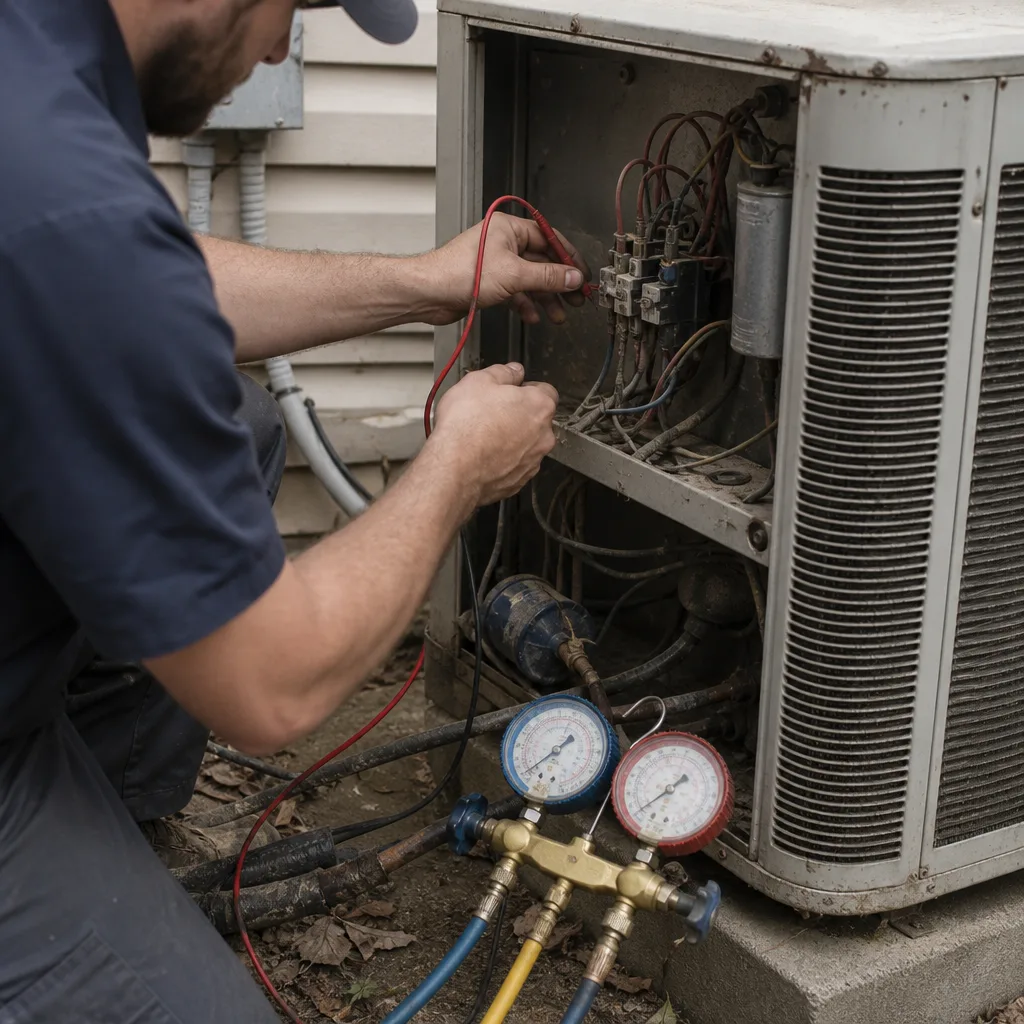 Before
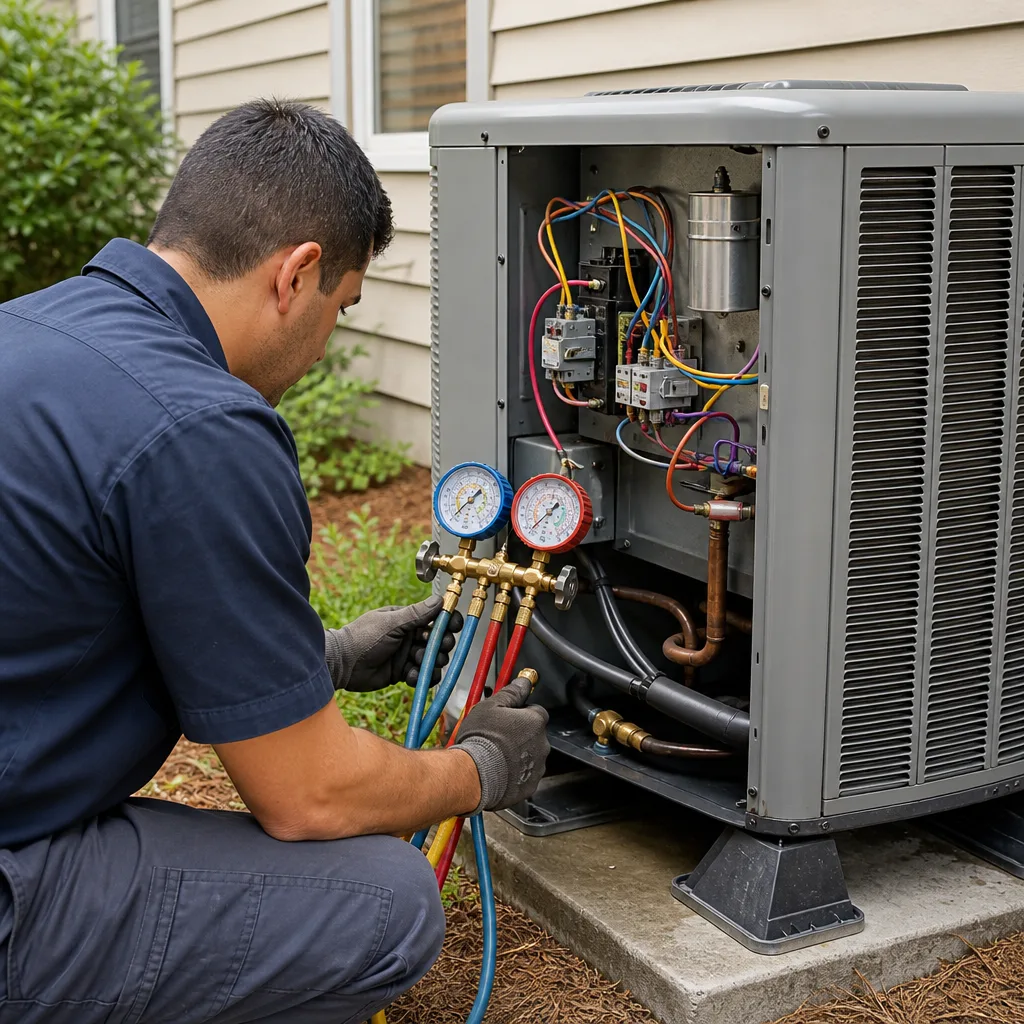 After
After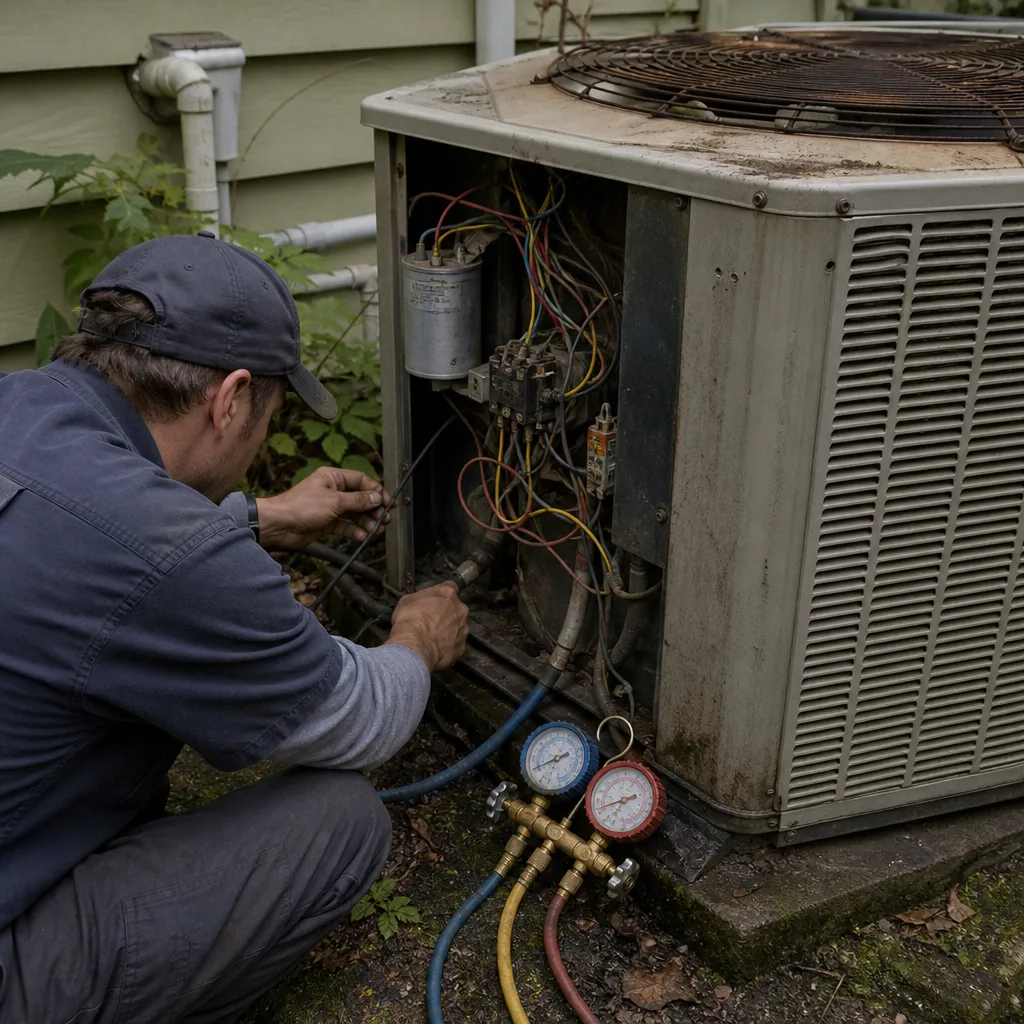 Before
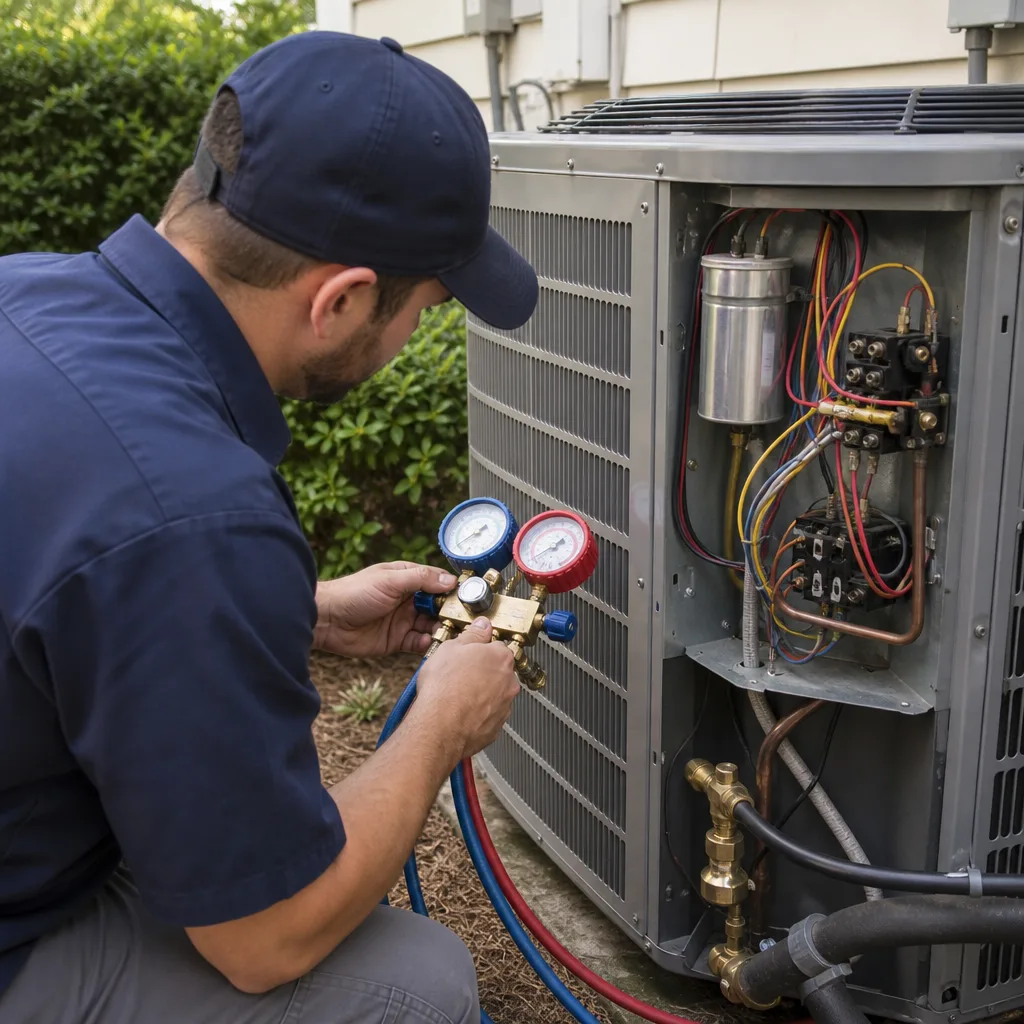 After
After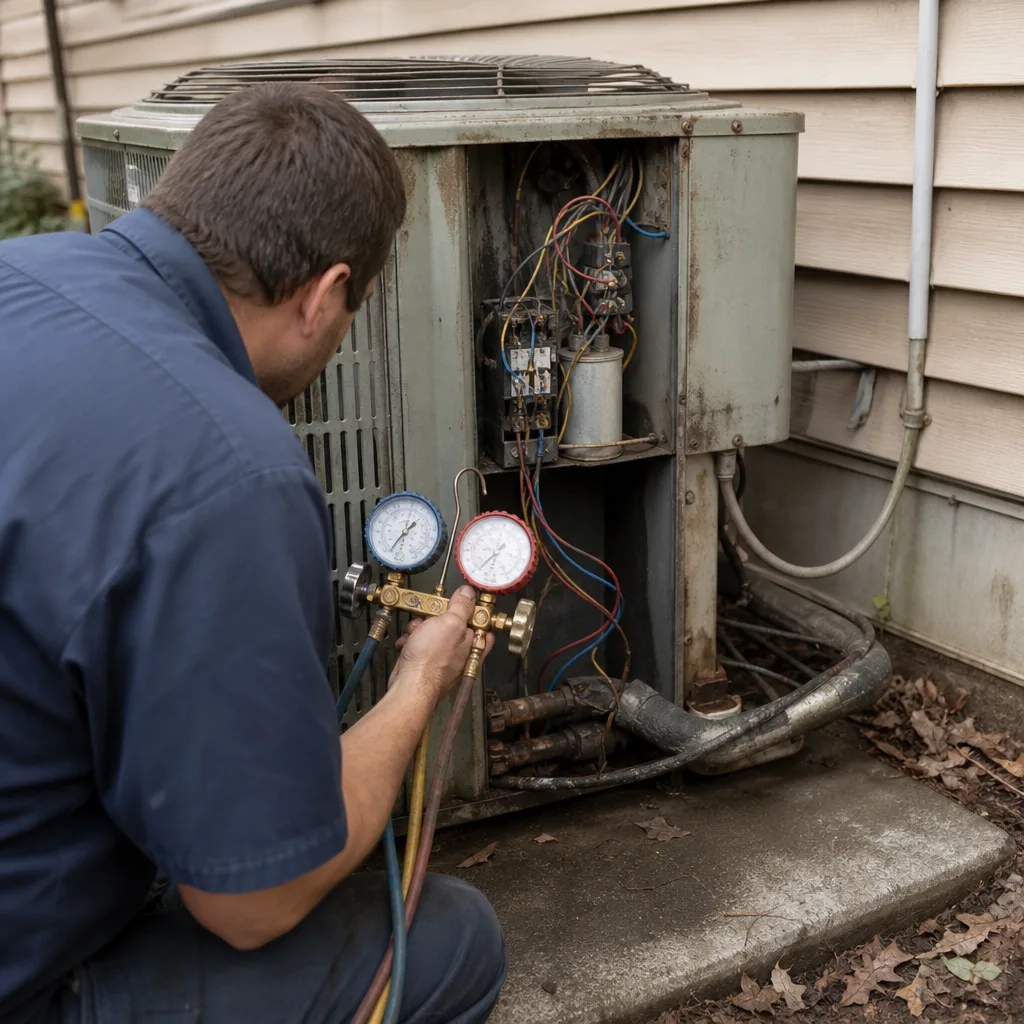 Before
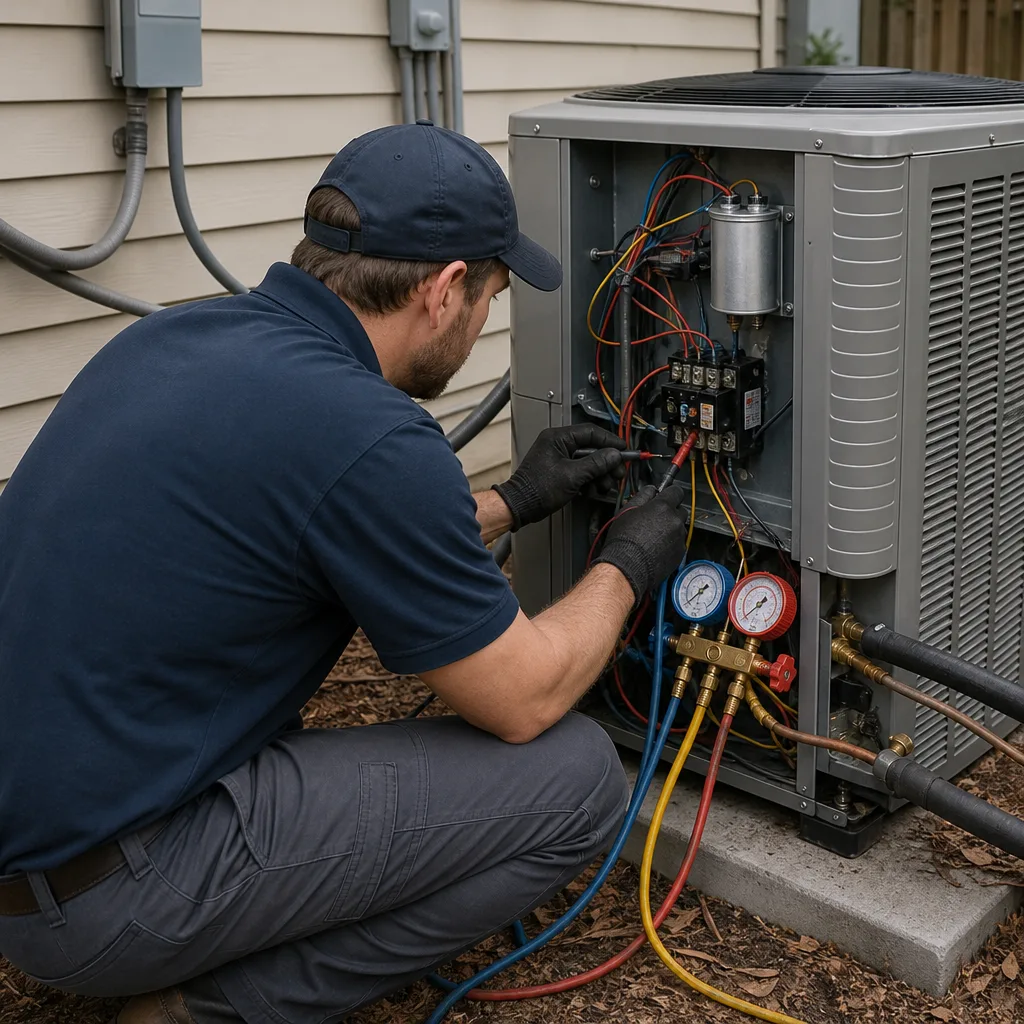 After
AfterReplacement Cost & What’s Included
Most American Standard heat pump repairs in Atlanta land between $150 and $650. The low end covers things like a capacitor or contactor replacement, which are the most common failures. The higher end covers things like a defrost control board, a blower motor module, or a reversing valve replacement, which are less common but more involved. Any repair involving the compressor itself can exceed that range, and at that point you’re making a repair-or-replace decision that we’ll walk you through honestly, with the numbers written down.
What’s included with every repair we do: the part, the labor to install it, a written price before any work starts, and a written guarantee on the repair. If the repair fails within the coverage window, we come back at no charge, automatically. That’s not an add-on and it’s not something you have to ask for. It’s the 365-Day Done Right Promise, and it’s just how we operate.
Andre will tell you himself: he writes the quote down by hand before he opens a tool bag. You’ll see the part cost, the labor, the total, and the warranty terms, all on paper, before you say yes. No surprises at the door.
DIY or Call Us?
Here’s the honest split. There are a few things you can safely do: check that the thermostat is in the right mode, make sure the breaker is fully seated, and look at the outdoor unit to see if there’s obvious damage or debris. Anything beyond that, and you’re dealing with 240 volts at the condenser plus stored electrical charge in the capacitor. A capacitor can hold a charge even when the power is off, and that voltage can hurt you badly. We’ve seen homeowners in Atlanta order a $12 capacitor online, install it wrong, and then call us to fix both the capacitor and the compressor that got damaged when the unit started running against a bad part.
American Standard heat pumps are worth repairing. They’re good equipment. But these are not toaster ovens. If the unit isn’t doing what it should, call (912) 616-5481 or book online. We’ll send a background-checked, uniformed technician with a live arrival time you can track to your door. You’ll get a real diagnosis, a written price, and a heat pump that works. Simple as that.
FAQs
In Atlanta’s climate, with our summers that push heat pumps hard and our humid shoulder seasons, you can expect 12 to 15 years from a well-maintained American Standard heat pump, though the parts inside it (capacitors, contactors, defrost boards) will typically fail and get replaced multiple times before the compressor itself gives up. A capacitor lasting 5 to 8 years is normal here, and that’s not a sign the whole unit is dying. Call us at (912) 616-5481 and we’ll tell you if the part you’re dealing with is normal wear or a sign of bigger trouble.
Most heat pump parts are replaceable, not repairable. A capacitor, contactor, control board, defrost sensor, or fan motor is typically swapped for a new one, which is actually the better outcome for you because a new part comes with a clean warranty and a much longer expected lifespan than any kind of repair. The main exception is the compressor, and even there a proper diagnosis matters more than a quick answer. Give us a call and we’ll give you a straight answer on your specific unit.
Most repairs are done in 60 to 90 minutes once the technician arrives and diagnoses the issue. Capacitors and contactors are the fastest; defrost control boards and fan motors take a little longer; anything involving the reversing valve or compressor can stretch into a half-day job. We’ll tell you the expected time when we give you the written quote, so you’re never left guessing.
Yes. We stock the most common American Standard heat pump parts on our trucks, including capacitors, contactors, defrost sensors, and fan motors. For less common items like specific control boards or ECM motor modules, we can usually have the part the same day or early the next morning through our local supply network, and we’ll give you the timeline before you pay anything. We also keep parts for Carrier, Trane, and Lennox systems, so if you have a mixed household, we’ve got you.
Written by Andre Fuller, Owner, Halden Heating and Air Atlanta at Halden Heating and Air Atlanta, serving Atlanta and nearby areas.