
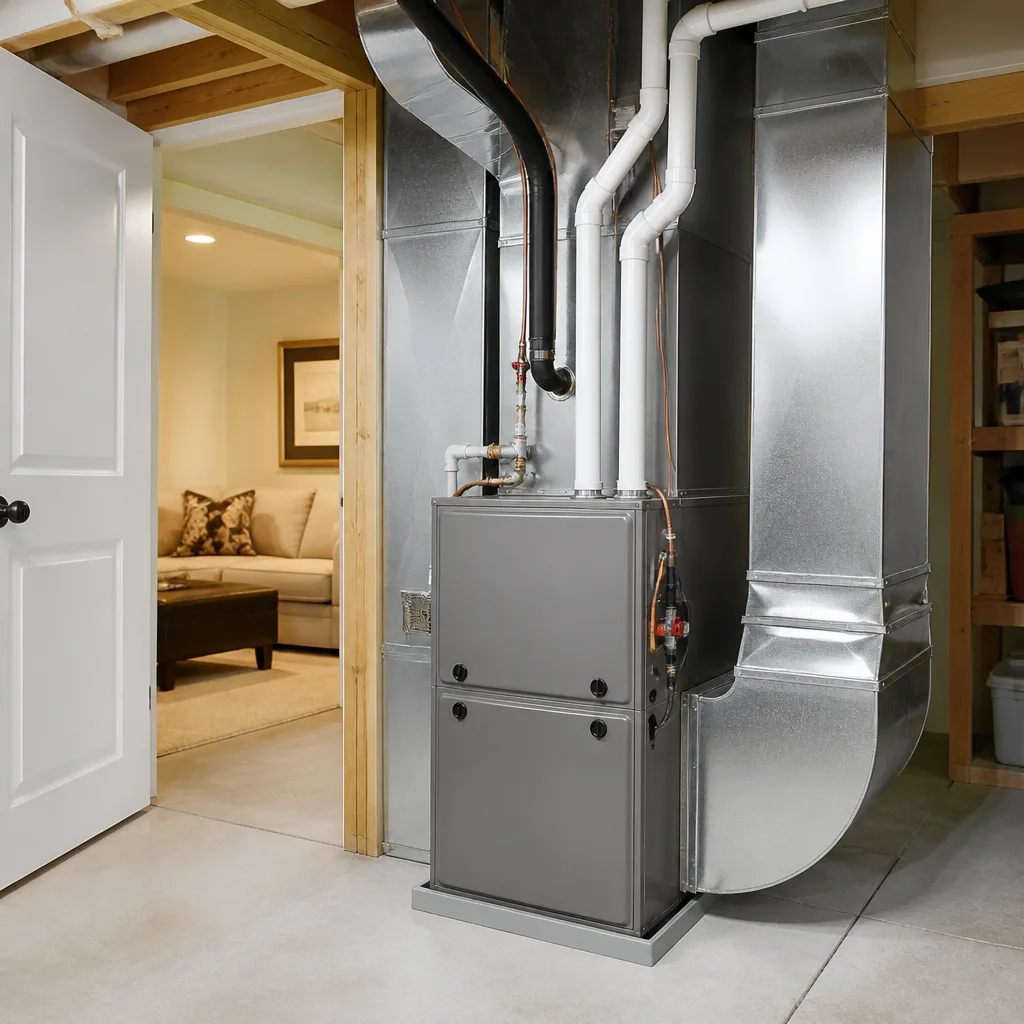
 Furnace & heating
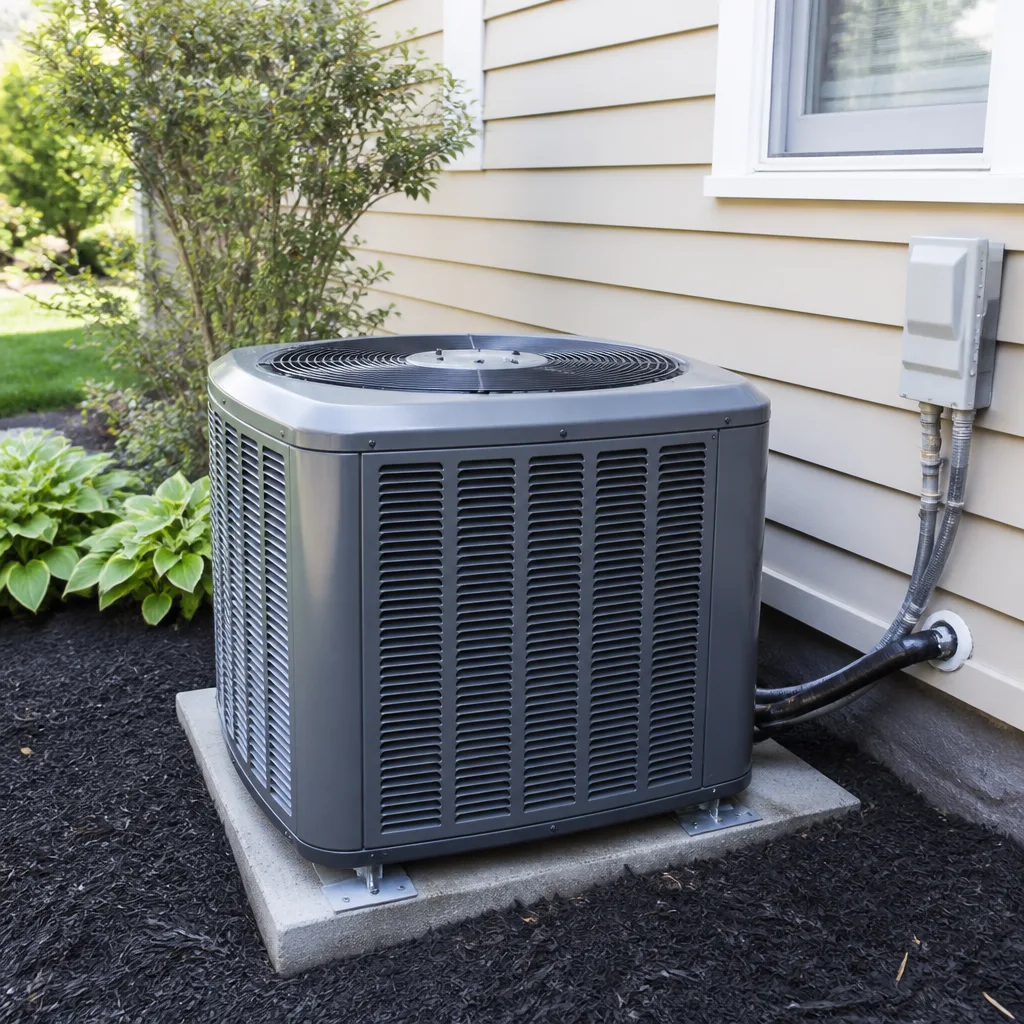 AC repair
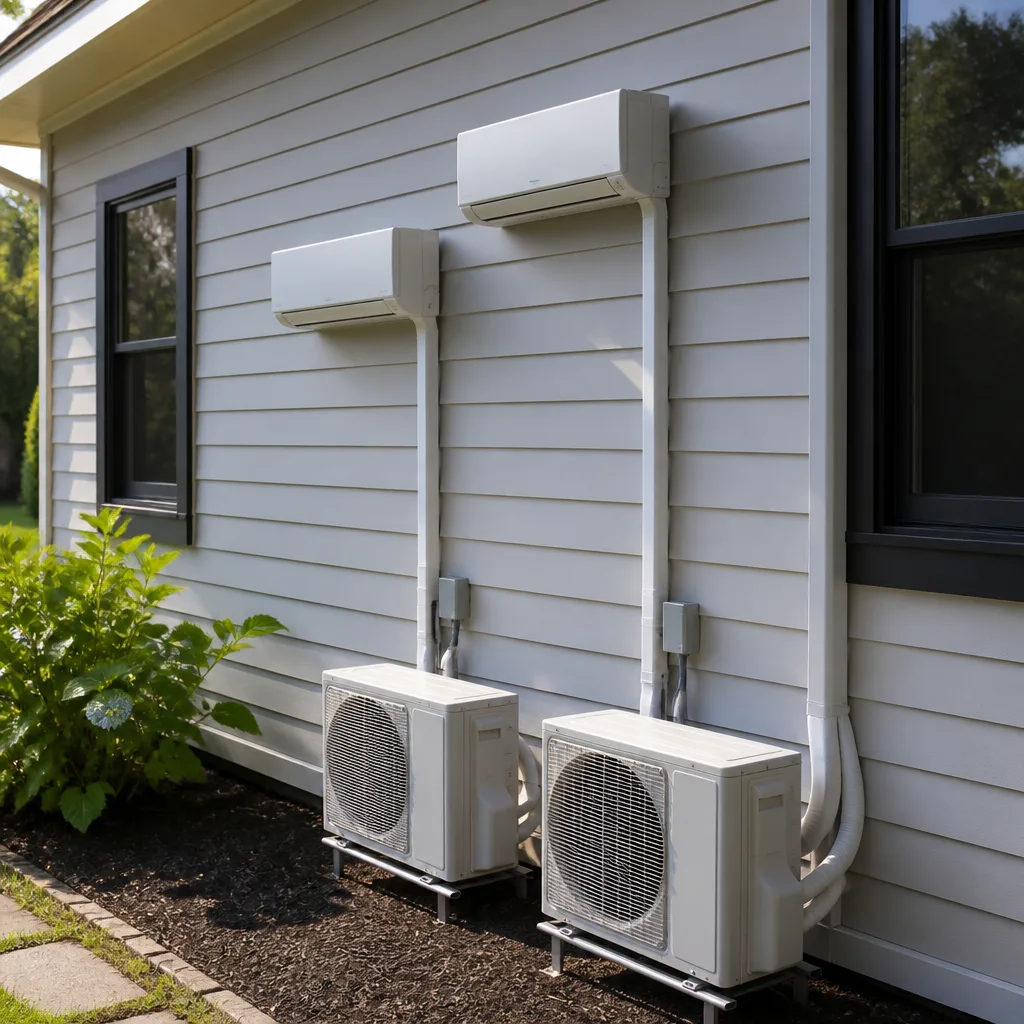 Ductless mini splits
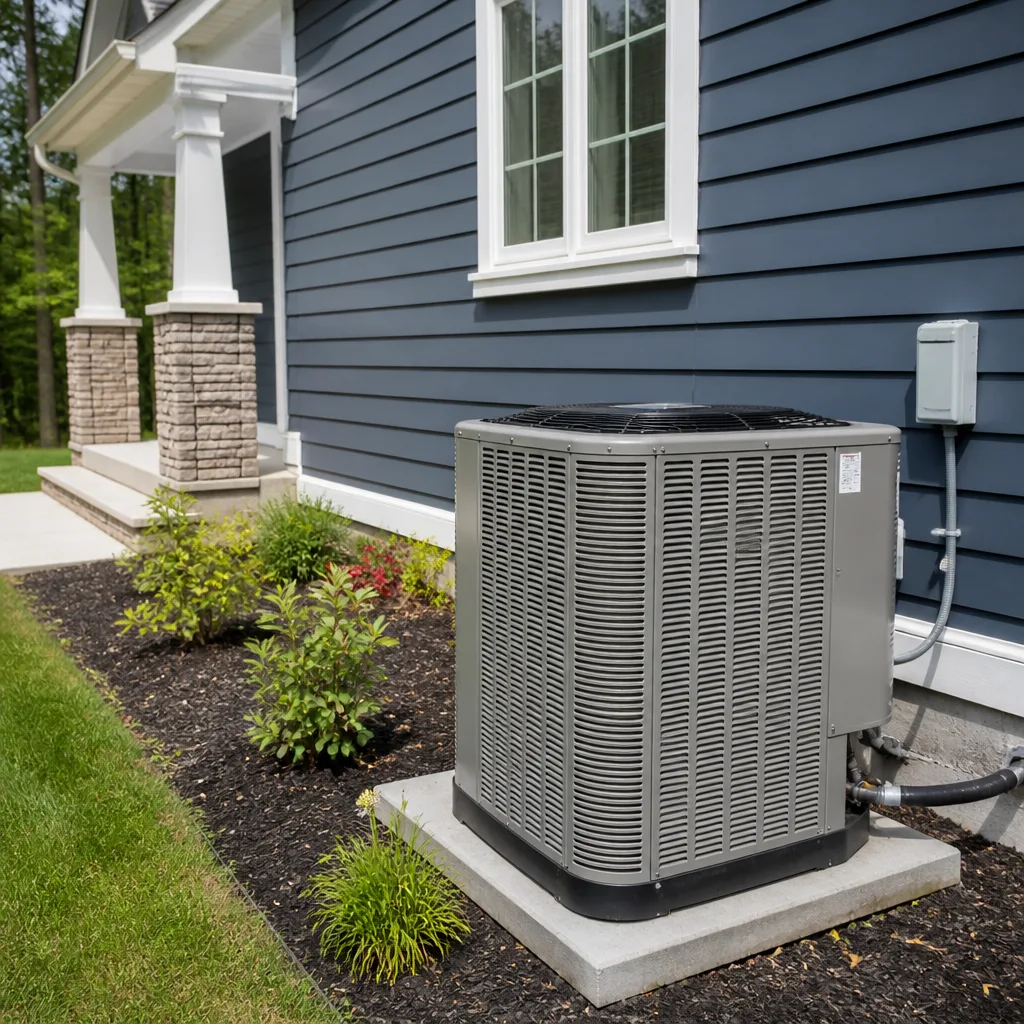 Carrier
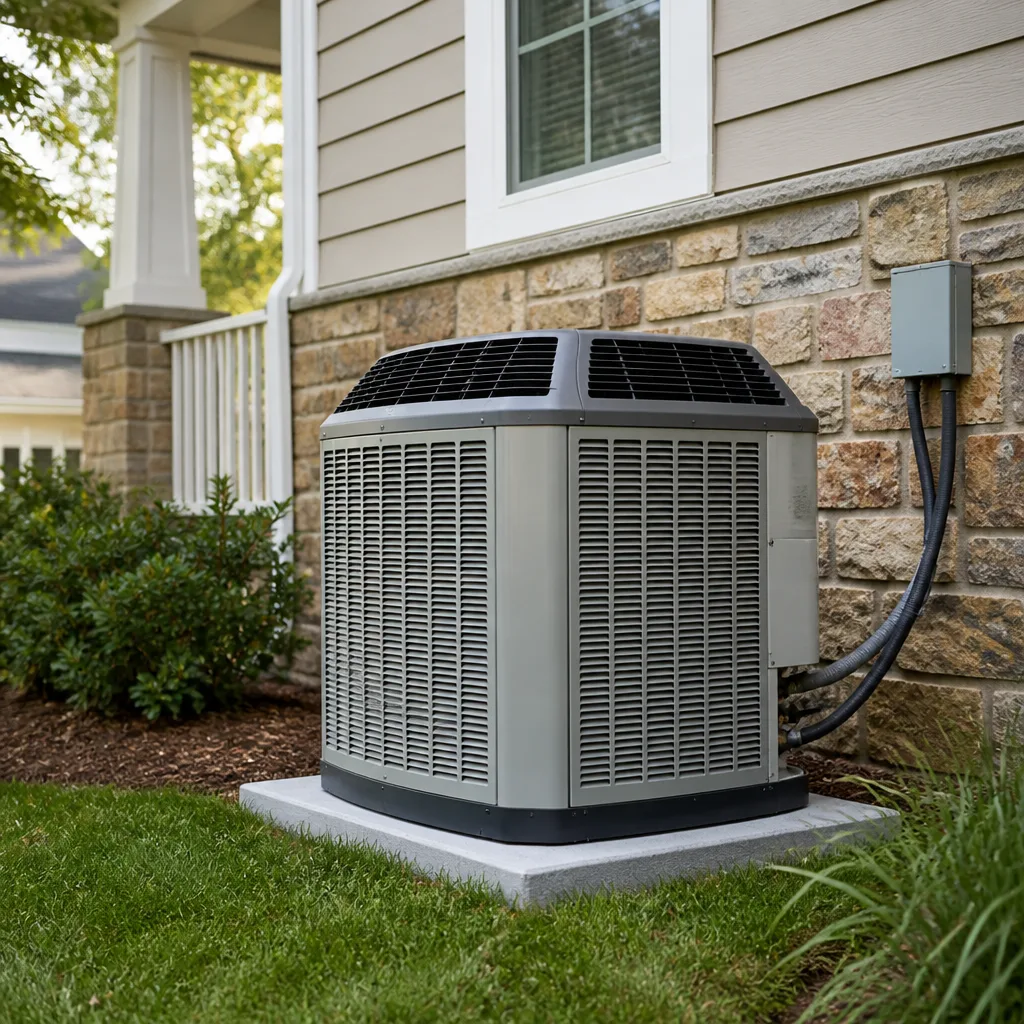 Trane
Trane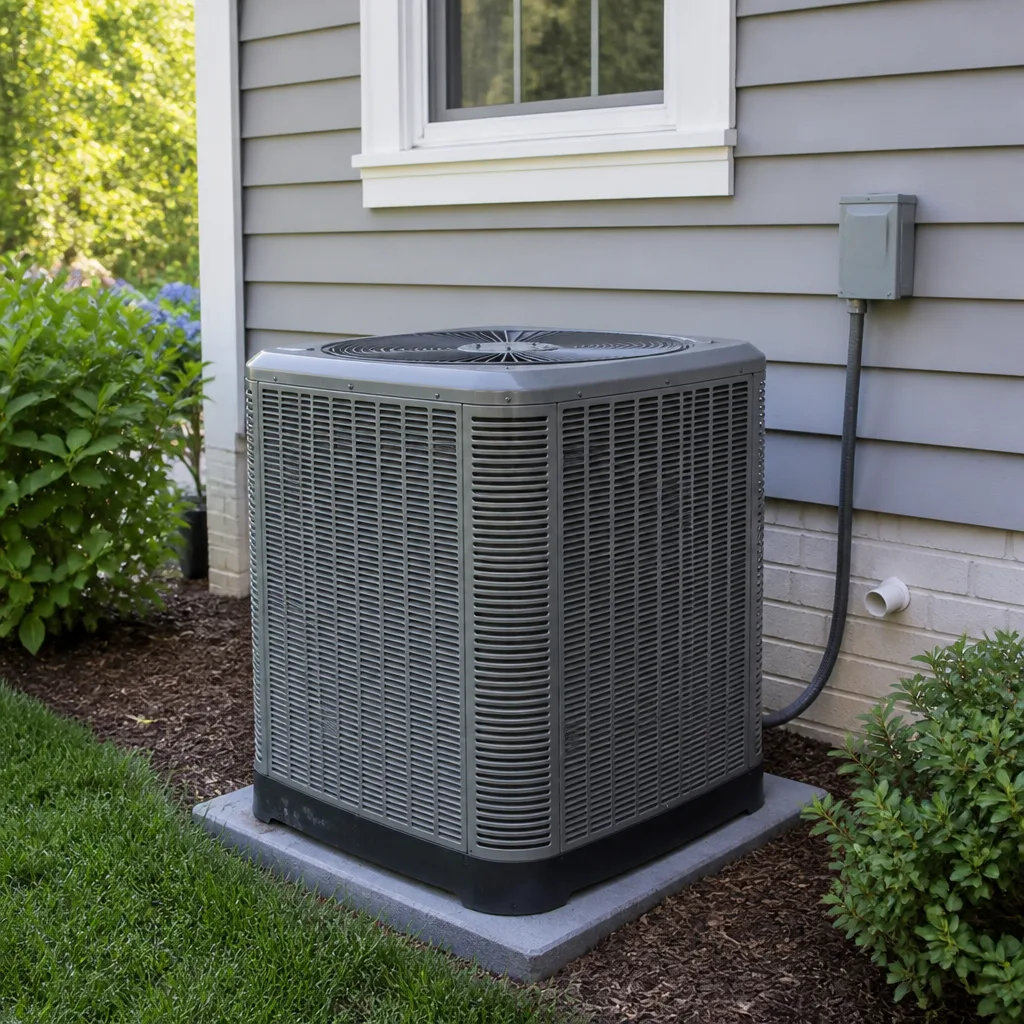 Goodman
Seasonal tune-up and full diagnostic on your Carrier, Trane, or Goodman system - readings shown to you before any repair is proposed
Diagnosis first, numbers second - you approve the repair price before a single part goes in.
Get your free estimateCarrier Heat Pump Service: The Atlanta Owner’s Guide
Carrier heat pump service in Atlanta typically runs $150 to $650 for most repairs, depending on which part has failed and whether your unit is still under factory warranty. We stock common Carrier-compatible parts on our trucks, so most service calls are same-day jobs, not “we’ll order it and come back next week” situations. Homeowners usually discover the problem the same way: the heat pump runs constantly without the house ever reaching the set temperature, or it stops switching between heating and cooling mode, or there’s a faint burning smell coming from the air handler. Something’s failed, and it’s almost always one of about six components.
We’re an independent Atlanta HVAC company that services Carrier equipment. We’re not a Carrier corporate entity, but we’ve been repairing Carrier heat pumps across metro Atlanta since 2004, and we know the brand’s quirks better than most.
Which Carrier Models This Applies To
This service coverage applies broadly across Carrier’s residential heat pump lines: the Infinity series (25VNA, 25HNB), Performance series (25HPA, 25HPB), and Comfort series (25HCC, 25HCE), plus the older 38YDB and 38YKC models that are still running in thousands of Atlanta homes. We also service Carrier’s ductless heat pump lines under the Infinity and Performance names, though parts delivery for those units runs longer than for conventional split systems.
Here’s the compatibility gotcha most Atlanta homeowners don’t know: Carrier heat pumps built after 2010 use a communicating control system on the Infinity and higher-tier Performance lines. A generic control board from an aftermarket supplier may physically plug in but won’t talk to the thermostat or the outdoor unit correctly. On those systems, we strongly recommend OEM Carrier parts or certified-equivalent replacements, never universal boards. The older Comfort series and pre-2010 models are far more forgiving and accept quality aftermarket parts in nearly every position except the compressor and the reversing valve.
To identify your exact model, check the data plate on the side of the outdoor unit. You’ll see the model number, refrigerant type (most Atlanta homes run R-410A, but pre-2010 systems may still be on R-22, which changes parts availability and cost significantly), and serial number. Text us a photo of that plate and Andre or one of our techs can identify the right part before anyone drives out.
Styles & brands we work with
Signs Your Carrier Heat Pump Service Is Failing
- The system blows warm air in cooling mode during an Atlanta summer. The usual culprit is a failed reversing valve or a dead run capacitor. The reversing valve is what switches your heat pump between heating and cooling, and when it sticks, your system basically becomes an air conditioner running backwards. A blown capacitor just means the compressor or fan motor can’t start at all.
- Ice builds up on the outdoor coil in August. That’s not normal, and it usually points to low refrigerant charge or a failing defrost control board. The defrost board tells the system to briefly reverse itself to melt the frost, and when that board fails in Georgia’s humid weather, the coil ices over fast.
- The outdoor unit makes a loud buzzing or clicking sound when it should be running. The contactor (the electrical relay that turns your outdoor unit on and off) is one of the most common Carrier heat pump failures we see. Contacts wear down after thousands of cycles, especially in Atlanta’s long cooling seasons.
- The system short-cycles, turning on and off every few minutes. A failing temperature sensor or a dirty, corroded circuit board is sending bad information, so the system shuts down before it completes a cycle. This also drives up your power bill, and we see it constantly in older systems around Buckhead and Decatur.
- The heat pump runs fine in air conditioning mode but won’t produce heat in winter. Here in Atlanta, we don’t get the deep freezes that test heat pumps further north, but the auxiliary heat strips still fail from infrequent use. If your strips burn out and the reversing valve also has an issue, you’ll get no heat at all on the few nights you actually need it.
See the difference
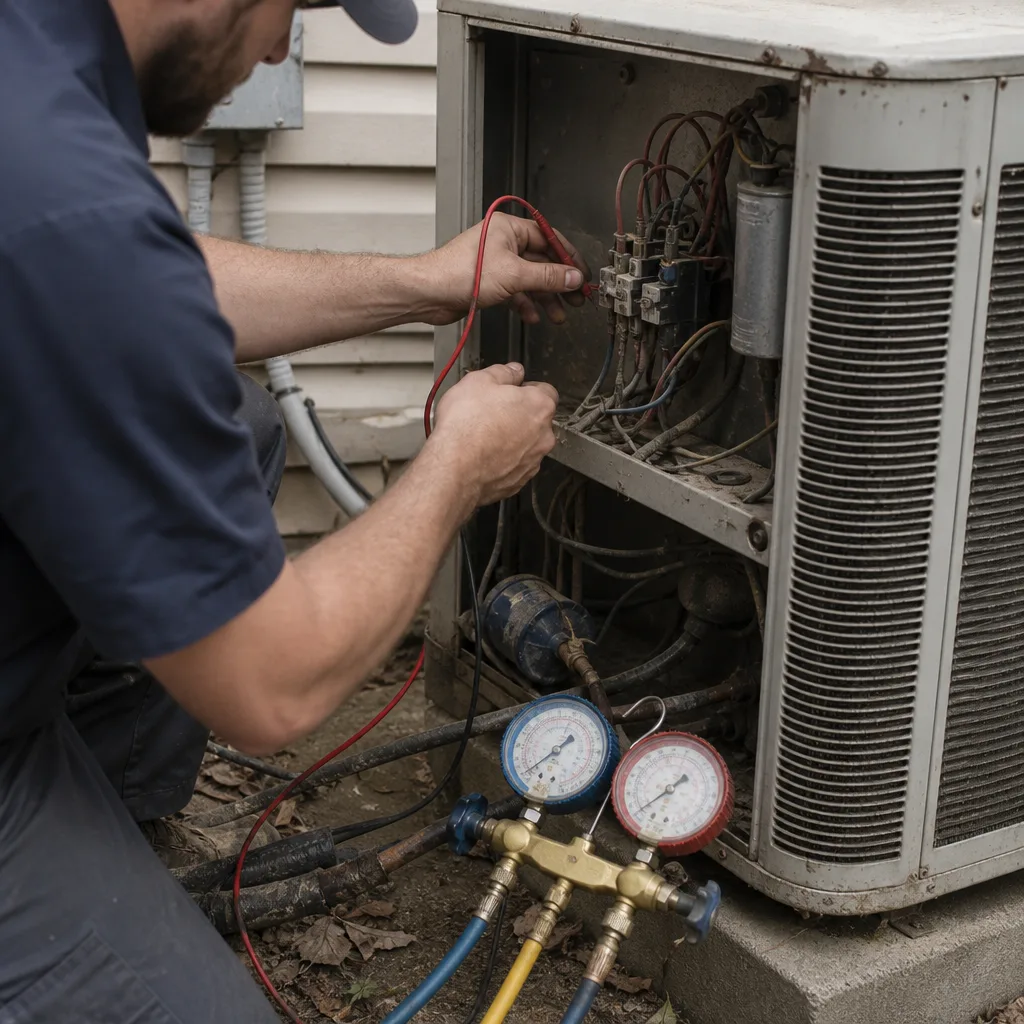 Before
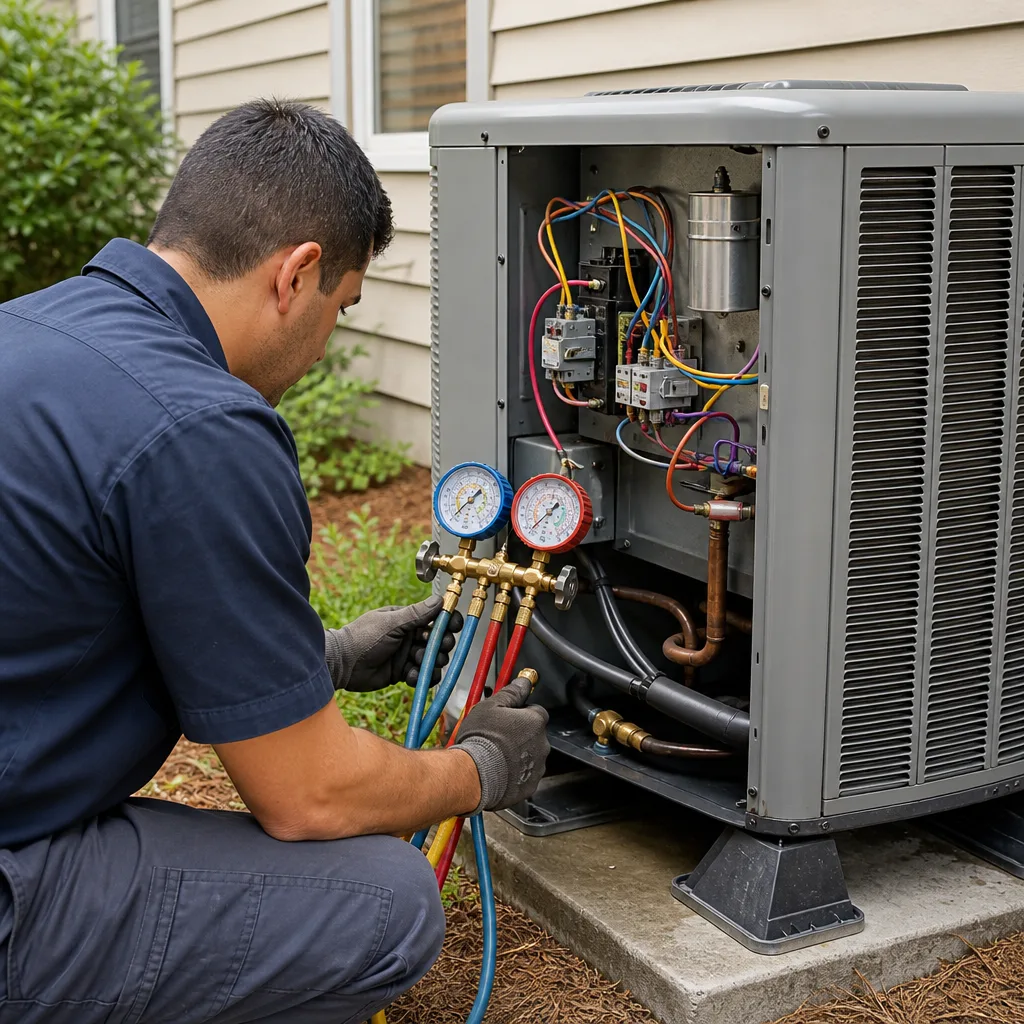 After
After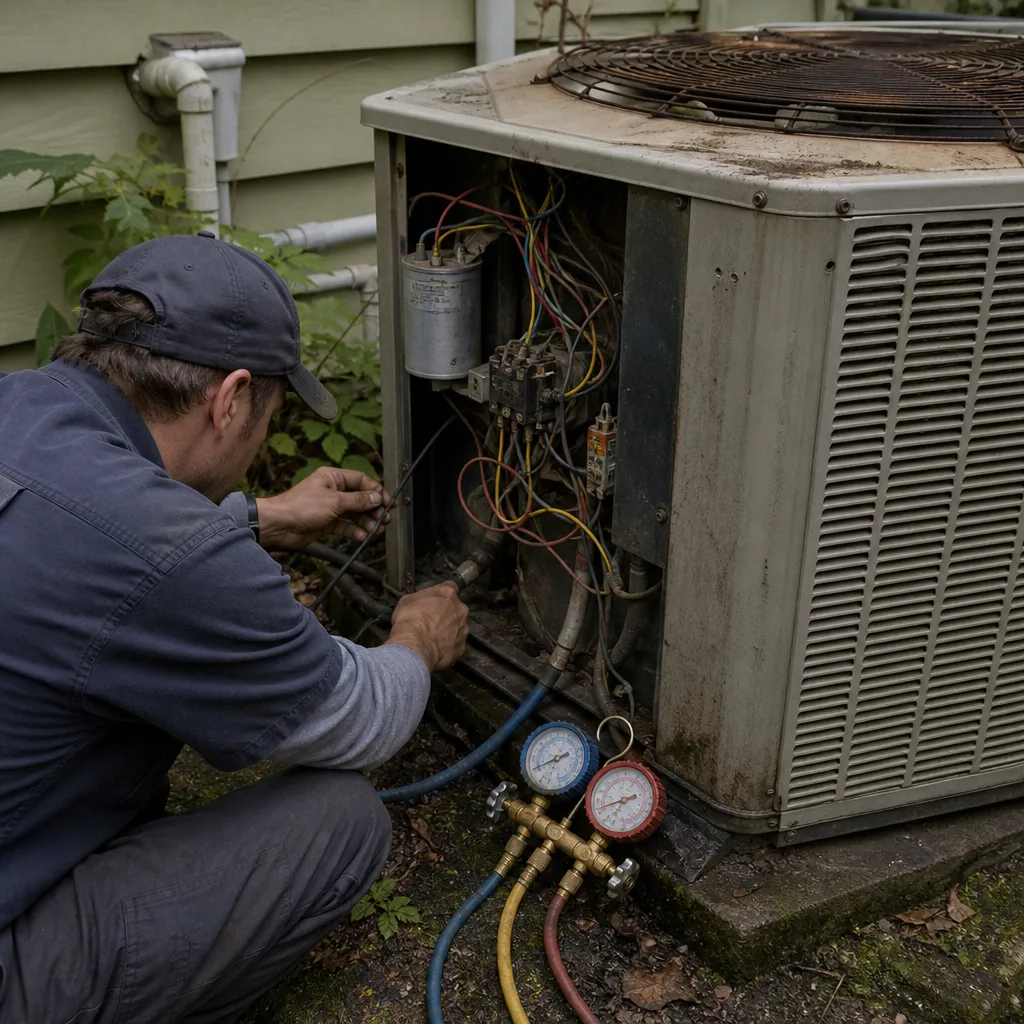 Before
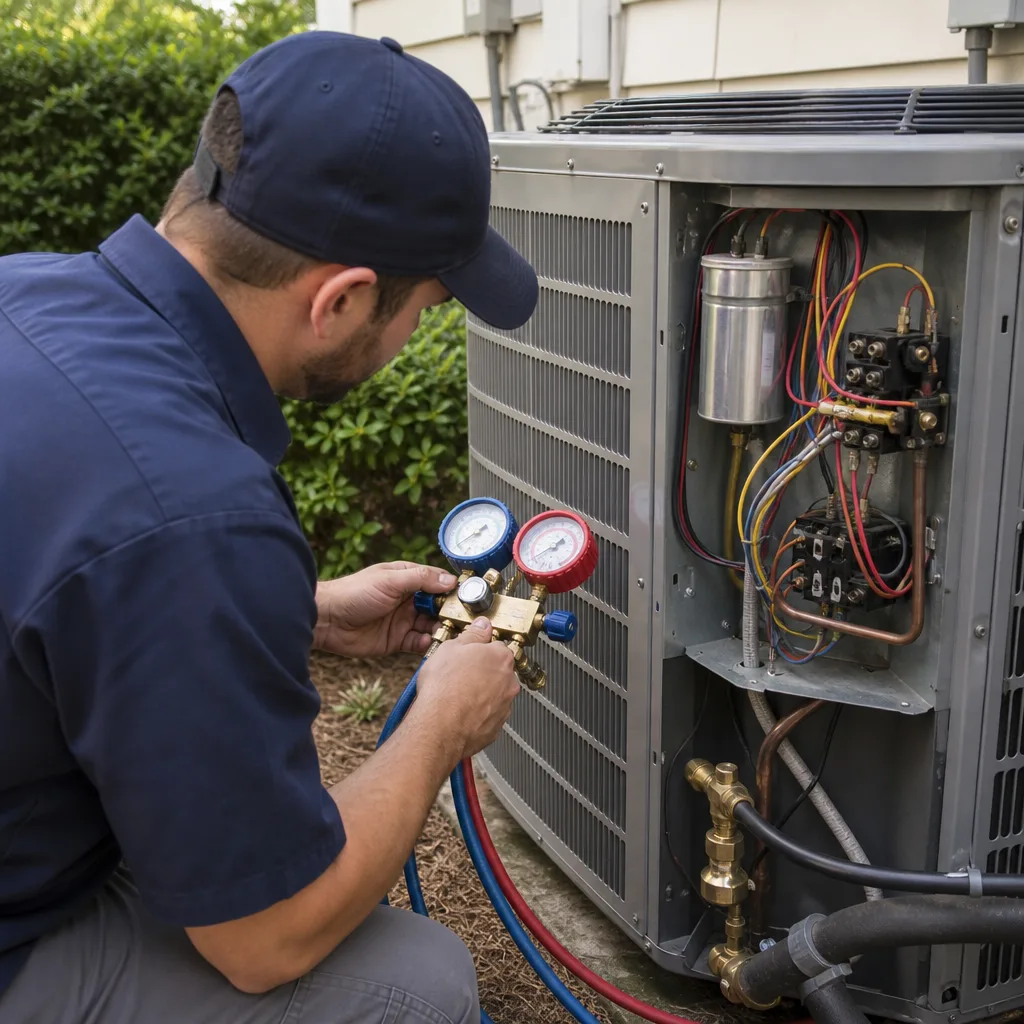 After
After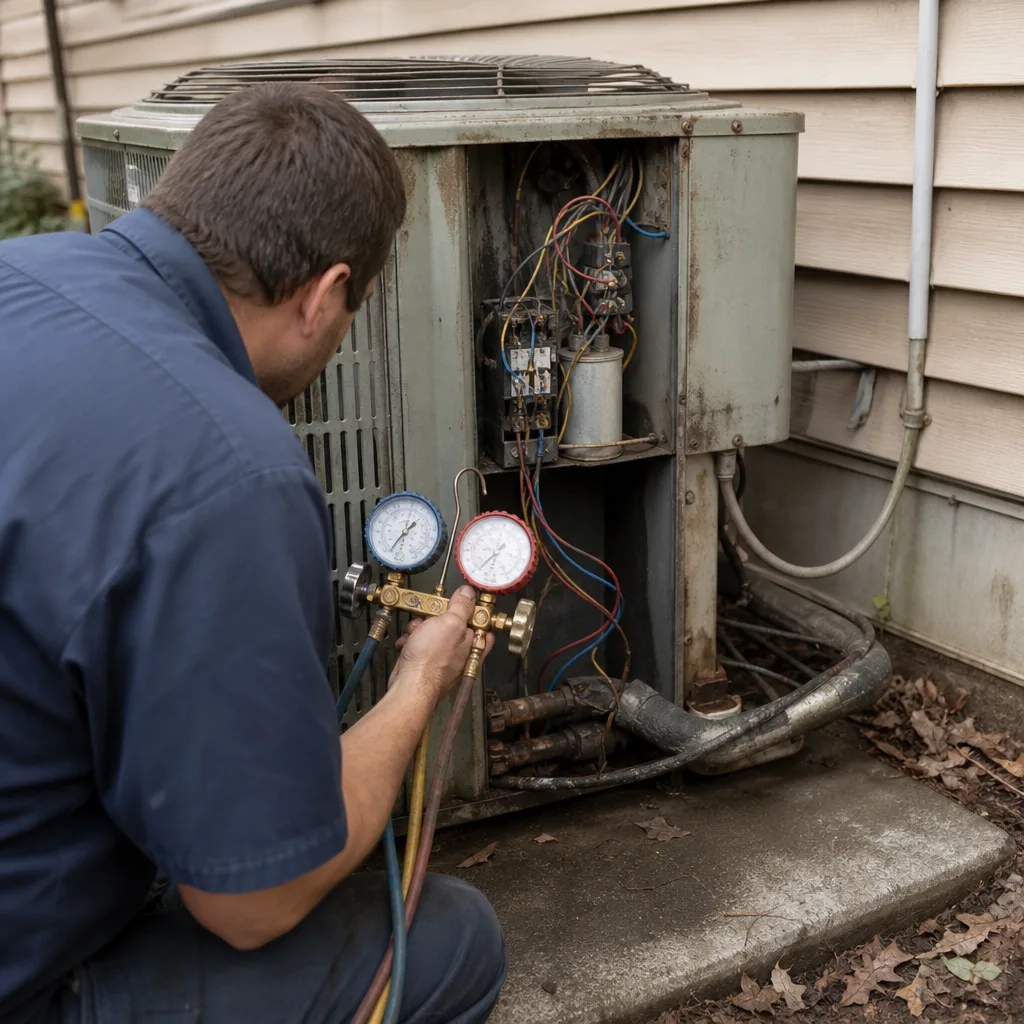 Before
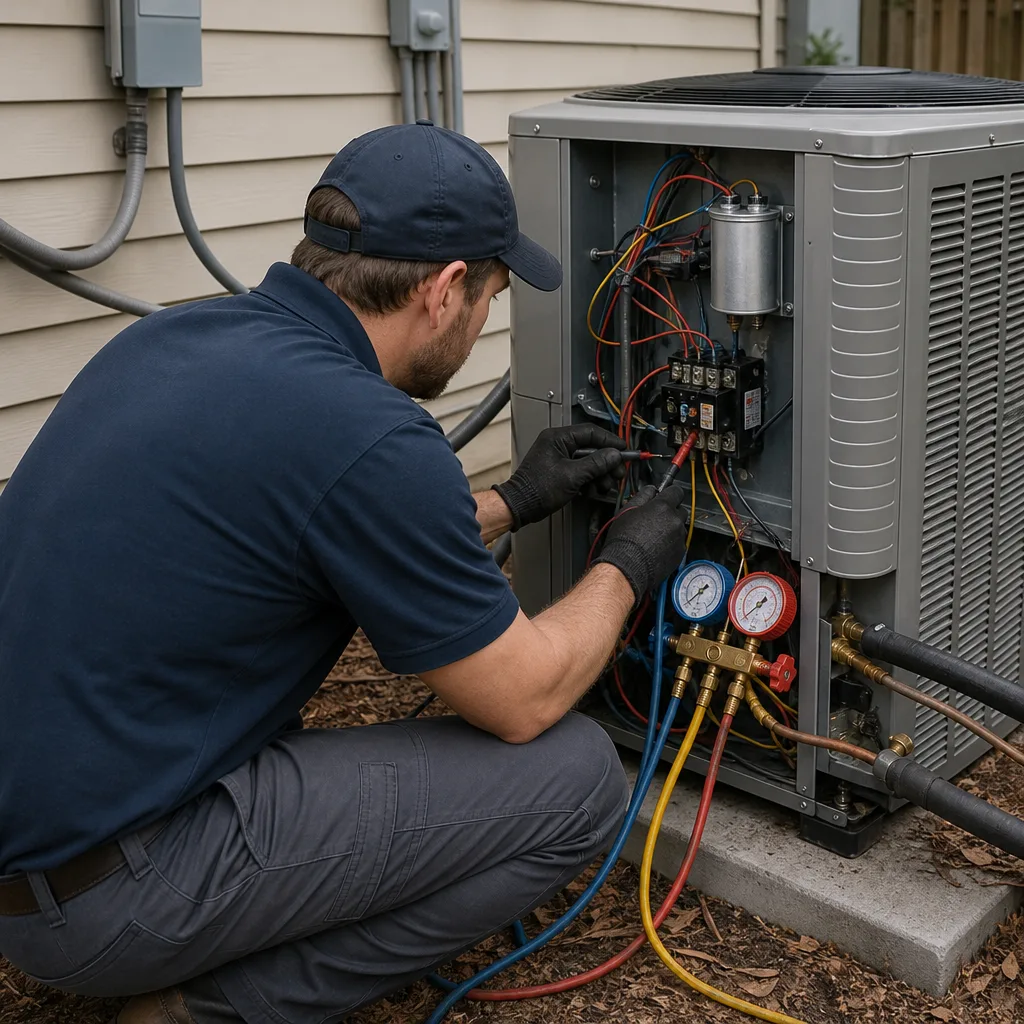 After
AfterReplacement Cost & What’s Included
Most Carrier heat pump repairs in Atlanta fall between $150 and $650 installed, and the specific part determines where you land in that window. A run capacitor or contactor swap usually lands around $150 to $300. A defrost control board runs $250 to $450. A reversing valve is the expensive one: $500 to $650 because the repair involves recovering refrigerant, replacing the valve, brazing the lines, pulling a vacuum, and recharging the system properly. That’s half a day of skilled labor, not a quick parts swap.
Every quote is written down before we touch anything. The price includes the part, the labor, the refrigerant if needed, and the written guarantee on the work. If your Carrier unit is still under factory warranty, we handle the parts claim for you and you only pay labor. If we’re wrong about which part failed, we don’t charge you for our bad guess. You get a fixed price, not an estimate that drifts upward when the tech is already in your attic.
DIY or Call Us?
There are safe checks you can do: confirm the thermostat is set correctly, check that the breakers at the panel and the disconnect box near the outdoor unit haven’t tripped, and verify the outdoor coil isn’t blocked by leaves or dryer lint. Overgrown foliage around your unit in an Atlanta yard will choke airflow and mimic a failing part every single time. A clean coil and clear airflow fix a surprising number of “my heat pump is dead” phone calls.
Anything involving the electrical side, refrigerant lines, or the reversing valve is not a DIY project. Heat pump systems carry 240 volts at the outdoor unit, even when the system is off. The capacitor can hold a charge that knocks you off a ladder. And opening a refrigerant line without a recovery machine is illegal and dangerous. If you’ve done the safe checks and the unit still won’t run, call us at (912) 616-5481. We write it down before we touch anything, that’s not a policy, that’s just respect.
FAQs
Most Carrier heat pumps in metro Atlanta last 12 to 15 years, though units that get annual maintenance regularly hit 18. Georgia’s heat and humidity mean the system runs hard for seven or eight months a year, which ages electrical components faster than in milder climates. Atlanta’s pollen season also clogs coils fast, and a heat pump that’s running with restricted airflow works itself to death prematurely.
It depends on the part. Capacitors, contactors, defrost boards, and sensors are always replaced, never repaired. A reversing valve can sometimes be freed with a rap from a rubber mallet, but that’s a temporary fix that will fail again, usually at the worst possible time. We don’t patch heat pump components that are designed to be swapped. A $300 part replaced today is cheaper than the same part failing again in January when the house is 55 degrees.
Most part swaps, like capacitors, contactors, defrost boards, and sensors, take one to two hours from arrival to a running system. A reversing valve, compressor, or indoor coil replacement is a four- to six-hour job that usually runs into the next day depending on when we can get the part from our Atlanta distributor. We’ll tell you the timeline before we start and give you a written price upfront either way.
We stock the most common failure parts for Carrier systems: capacitors in multiple sizes, contactors, defrost boards, universal temperature sensors, and fan motors. For less common parts or OEM Carrier Infinity components, we source them same-day from local Atlanta distributors in most cases. We also carry compatible parts for Trane and Lennox systems, since a lot of Atlanta homes have mixed brands across floors.
Written by Andre Fuller, Owner, Halden Heating and Air Atlanta at Halden Heating and Air Atlanta, serving Atlanta and nearby areas.